Istorijski kontekst
Ištarina kapija bila je osma kapija ka unutrašnjem gradu Vavilonu i najgrandioznija arhitektonska izjava kralja Nabukodonosora II (vladao 605-562. pre n.e.), najmoćnijeg vladara Novovavilonskog carstva i monarha čiji je opsežan program izgradnje transformisao Vavilon u najveličanstveniji grad antičkog Bliskog istoka. Nabukodonosorov Vavilon, koji je zauzimao ogromno područje na obe obale reke Eufrat u današnjem centralnom Iraku, bio je grad legendarne raskoši, čuven u antici po svojim masivnim dvostrukim zidinama (za koje je Herodot tvrdio da su dovoljno široke da se zaprežna kola sa četiri konja okrenu na njima), po visokom ziguratu Etemenanki (verovatnom inspiracijom za biblijsku Vavilonsku kulu) i po Visećim vrtovima, ubranim među Sedam svetskih čuda antičkog sveta. Ištarina kapija, posvećena mesopotamskoj boginji ljubavi i rata, služila je kao severni ulaz u ceremonijalno srce grada, stojeći na čelu Procesijskog puta (Aj-ibur-šabu), širokog bulevara uokvirenog zidovima ukrašenim glaziranim lavovima koji je vodio na jug ka velikom hramu Marduka, zaštitnog boga Vavilona. Tokom godišnjeg novogodišnjeg festivala (Akitu), najvažnijeg verskog obreda u vavilonskom kalendaru, kipovi bogova nošeni su duž ovog puta i kroz kapiju u spektakularnom javnom ritualu koji je potvrđivao kosmički poredak i kraljev božanski sankcionisan autoritet.
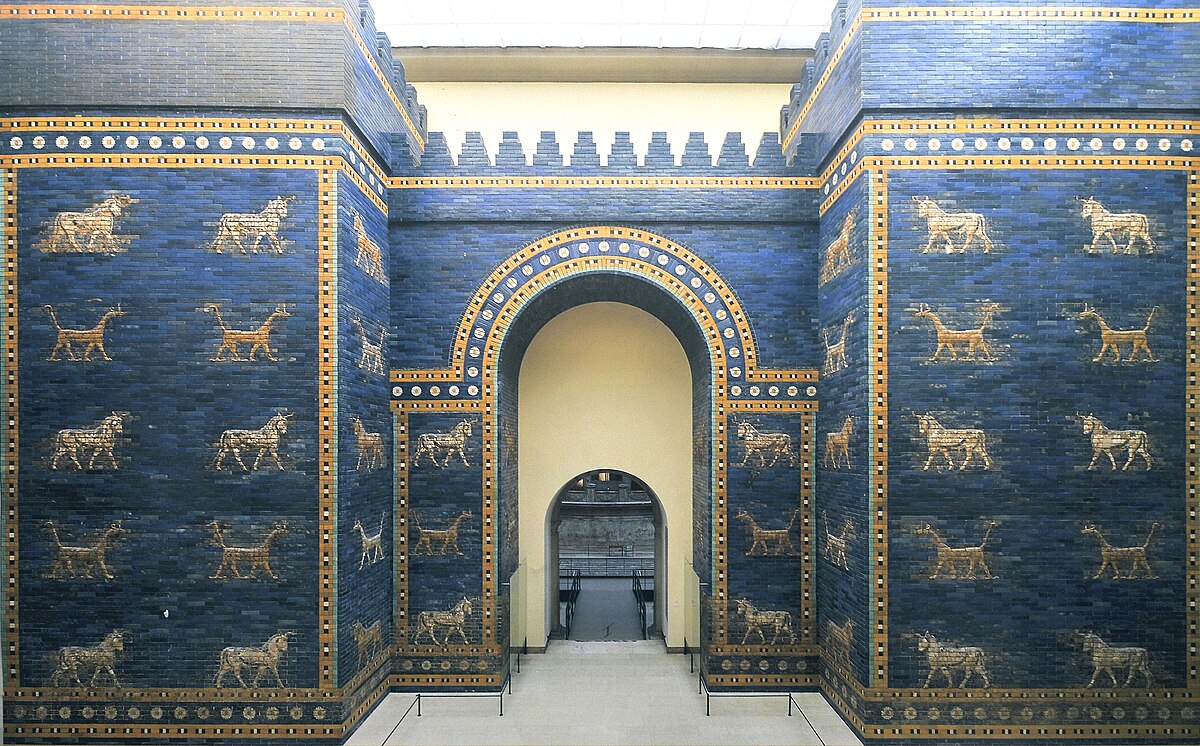
Kapija je iskopana između 1902. i 1914. od strane nemačkog arheologa Roberta Koldeveja, koji je vodio sistematsko iskopavanje Vavilona za Nemačko orijentalno društvo tokom izvanredne osamnaestogodišnje kampanje. Koldevejev metod pažljive stratigrafije, napredan za svoje vreme, otkrio je da je Ištarina kapija građena u više faza, počevši od ranije, neglazirane verzije ukrašene oblikovanim ali neobojenim reljefima u opeci i kulminrajući u spektakularnoj glaziranoj verziji čiji su ostaci u stotinama sanduka otpremljeni u Berlin. Rekonstrukcija kapije u Pergamonskom muzeju, završena 1930. korišćenjem originalnih glaziranih opeka dopunjenih modernim reprodukcijama, predstavlja samo manji, prednji deo onoga što je prvobitno bila mnogo veća dvostruka kapija; veća zadnja kapija ostaje neiskopana ispod savremenog nivoa podzemnih voda u Iraku. Čak i u svojoj delimičnoj rekonstrukciji, kapija se uzdiže na visinu od skoro petnaest metara i pruža jedno od vizuelno najzadivljujućih iskustava u bilo kom muzeju antičke umetnosti, njeni svetlucajući plavi zidovi prenose posetioca u ceremonijalni svet novovavilonske kraljevske vlasti.
Formalna analiza
Vizuelni uticaj kapije proizilazi prvenstveno iz njene izvanredne površinske obrade: hiljade pojedinačno oblikovanih i glaziranih opeka raspoređenih u preciznim obrascima kako bi formirale sjajnu plavu pozadinu i reljefne figure svetih životinja koje maršuju u svečanoj procesiji preko zidova. Tehnika glaziranja, koja predstavlja kulminaciju mesopotamske keramičke tradicije koja se proteže unazad više od jednog milenijuma, podrazumevala je nanošenje glazura na bazi minerala — jedinjenja bakra za plavu, antimona i olova za žutu, mangana za crnu i oksida gvožđa za crveno-braon — na prethodno oblikovane opeke, koje su zatim pečene na visokim temperaturama da bi se dobila vitrifikovana, staklu slična površina izvanrednog sjaja i trajnosti. Dominantna plava, postignuta kroz alkalnu glazuru na bazi bakra, intenziteta je i ujednačenosti koji ostaju vizuelno zadivljujući nakon dva i po milenijuma, njena luminozna površina dizajnirana je da evocira nebeski svod i natprirodni sjaj božanskog prisustva. Tehnički izazov koordiniranja oblikovanja, glaziranja, pečenja i montaže hiljada pojedinačnih opeka za proizvodnju koherentnih figurativnih kompozicija velikih razmera — svaka životinjska figura obuhvata desetine zasebno napravljenih opeka koje su morale precizno da se poklope pri montaži — zahtevao je nivo radioničke organizacije i kontrole kvaliteta koji svedoči o sofisticiranoj industrijskoj infrastrukturi novovavilonske države.
Dekorativni program kapije prikazuje dve vrste svetih životinja raspoređenih u naizmeničnim horizontalnim registrima: divlji bik (rimi), moćni bik povezan sa bogom vremena Adadom, i mušhušu (siruš), složeno stvorenje nalik zmaju sa zmijskim telom, mačjim prednjim nogama, grabljivačkim zadnjim nogama, rogatom glavom i rašljastim jezikom, sveto za Marduka, vrhovnog boga vavilonskog panteona. Ova stvorenja izvedena su u niskom reljefu koji se izdaje približno pet do osam centimetara od zidne površine, njihova tela artikulisana sa pažljivim obračanjem na mišićnu anatomiju (u slučaju bikova) i fantastičnu anatomsku doslednost (u slučaju mušhušua, čija je složena forma prikazana sa naturalističkim ubeđenjem koje čini nemoguće stvorenje uverljivim). Životinje koračaju u profilu odmerenim, ceremonijalnim korakom, njihovo ponavljanje preko površine kapije stvara ritmički vizuelni obrazac koji sugeriše uređeni, procesijski karakter rituala izvođenih pred i kroz strukturu. Procesijski put koji vodi do kapije prikazivao je treću životinju, koračajućeg lava svetog za samu Ištar, izvedenog u istoj tehnici glazirane opeke na zidovima duboko plave boje, stvarajući imerzivni hodnik božanske ikonografije koji bi transformisao iskustvo prilaženja kapiji u prolaz kroz sveti prostor.
Značaj i nasleđe
Značaj Ištarine kapije u okviru istorije umetnosti antičkog Bliskog istoka leži u njenoj demonstraciji monumentalnih mogućnosti medija glazirane opeke, tehnologije koja je bila jedinstveno mesopotamska i koja je dostigla svoj najpotpuniji izraz u novovavilonskoj arhitekturi. Za razliku od programa reljefa u kamenu u asirskim palatama, koji su se oslanjali na klesanje uvezenih krečnjačkih ploča, vavilonska tradicija glazirane opeke eksploatisala je najobilniji prirodni resurs regiona — aluvijalnu glinu rečne ravnice Tigra i Eufrata — transformišući skromnu opeku od blata u medij izvanrednog hromatskog sjaja primenom napredne keramičke tehnologije. Ova materijalna inovacija imala je i estetske i ideološke dimenzije: svetlucajuće, svetlost hvatajuće površine glaziranih opeka stvorile su arhitekturu blistavog vizuelnog spektakla koja je otelotvljavala bogatstvo i moć novovavilonske države, dok je radno intenzivan proizvodni proces — koji je zahtevao čitave armije specijalizovanih opekara, staklara i graditelja — demonstrirao kraljevu vlast nad ljudskim i materijalnim resursima ogromnih razmera. Dekorativni program kapije, sa svojim disciplinovanim redovima svetih životinja, komunicirao je teologiju kosmičkog poretka održavanog kroz kraljevsku pobožnost i božansko pokroviteljstvo, poruku pojačanu klinopisnim natpisima u kojima se Nabukodonosor hvalio svojim graditeljskim dostignućima i prizivao zaštitu Marduka i Ištare.
Savremeni posmrtni život kapije kao muzejskog predmeta pokrenuo je uporna i sve urgentnija pitanja o etici arheološke akvizicije i kulturnoj politici izlaganja monumentalnih antikviteta uklonjenih iz njihovih izvornih konteksta. Prebacivanje glaziranih opeka Ištarine kapije iz Iraka u Nemačku početkom dvadesetog veka dogodilo se u okviru pravnog okvira Osmanskog zakona o antikvitetima, koji je dozvoljavao podelu nalaza između institucije koja vrši iskopavanja i osmanske države, ali je sam taj pravni okvir bio proizvod imperijalnih odnosa moći koji su privilegovali evropski naučni pristup bliskoistočnom nasleđu. Irak je više puta zahtevao povratak kapije, a šira debata o repatrijaciji kulturnog vlasništva — pojačana pljačkom Iračkog muzeja 2003. i namernim uništavanjem antičkih lokaliteta od strane ISIL-a — stavila je Ištarinu kapiju u centar globalnih razgovora o tome kome pripada prošlost i ko ima pravo da je izlaže. Kapija, ipak, ostaje jedan od najposećenijih i najslavljenijih predmeta u Pergamonskom muzeju, a njen lik je postao ikona antičke mesopotamske civilizacije, reprodukovan u udžbenicima, dokumentarnim filmovima i popularnoj kulturi širom sveta, obezbeđujući da umetničko dostignuće Nabukodonosorovog Vavilona nastavlja da zaokuplja pažnju i izaziva divljenje koje je zamišljeno da inspiriše.