Istorijski kontekst
Skidanje sa krsta, izvedeno između 1612. i 1614. za Katedralu Naše Gospe u Antverpenu, delo je u kome je Peter Paul Rubens najodlučnije najavio svoj povratak sa osam godina u Italiji i svoju ambiciju da postane vrhunski slikar severne Evrope. Monumentalni triptih — čiji centralni panel sam meri 421 sa 311 centimetara — naručio je Gild arkebuzijerа (Kolvenirsgilde), jedan od antverpskih građanskih vojnih gildova, za njihov oltar u katedrali. Zaštitnik gilda bio je Sveti Hristofor, čije ime potiče od grčkog Christophoros, što znači „nosac Hrista”, i narudžbina je zahtevala od Rubensa da uključi temu nošenja ili prenošenja Hrista u oltarsku sliku. Rubens je ispunio ovaj zahtev sa karakterističnom ingenioznošću: centralni panel prikazuje fizički čin spuštanja Hristovog mrtvog tela sa krsta, dok unutrašnja krila pokazuju Vizitaciju (trudna Bogorodica koja nosi Hrista u svom telu) i Prikazanje u hramu (ostareli Simeon koji drži novorođenog Hrista u naručju). Svaki panel tako predstavlja varijaciju na temu nošenja Hrista, zadovoljavajući ikonografske zahteve gilda dok stvara jedinstven triptih izuzetne tematske koherencije.
Formalna analiza
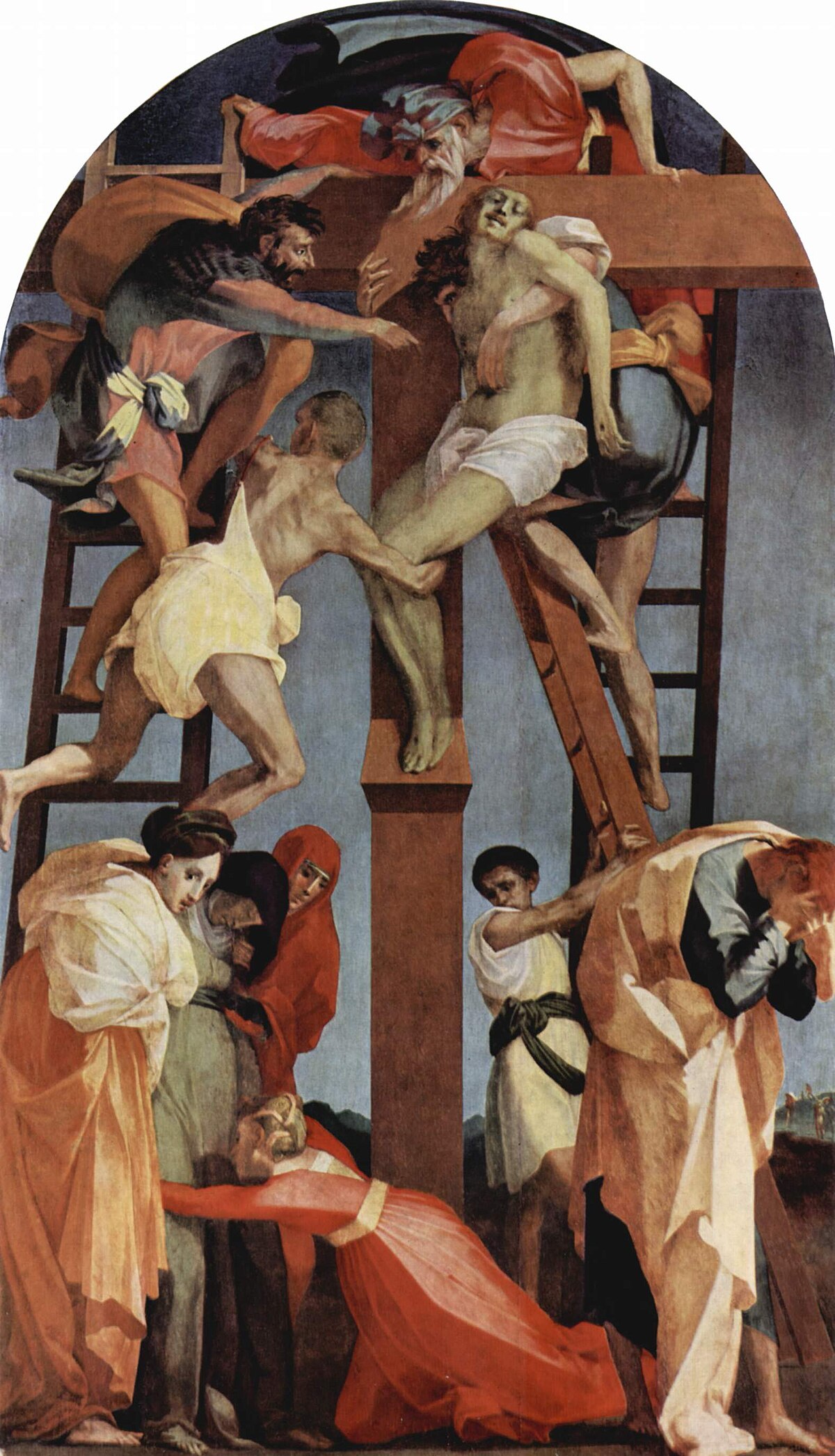
Centralni panel organizovan je oko jednog smelon kompozicionog postupka: dramatične dijagonale spuštanja Hristovog tela od gornjeg desnog ka donjem levom uglu, vođene sjajnim belim pokrovom koji istovremeno služi kao praktični element narativa — laneno platno korišćeno za spuštanje tela — i kao najsnažniji kompozicioni instrument slike. Pokrov hvata i preraspoređuje svetlost, stvarajući sjajan kaskadni efekat koji neodoljivo privlači pogled od vrha krsta nadole kroz Hristov bledi, beživotni torzo ka ispruženim rukama Magdalene i Bogorodice dole. Ovaj dijagonalni pokret generiše dinamičnu energiju koja stoji u namernom kontrastu sa statičnim, simetričnim kompozicijama ranijih holandskih oltarskih slika, uključujući veliko Skidanje sa krsta Rožijea van der Vejdena iz oko 1435, koje je Rubens sigurno poznavao. Dok su Rožijeove figure raspoređene u plitkom, frizolikom reljefu, Rubensove se uzburkavaju i uvijaju u trodimenzionalnom prostoru, njihova tela se uklapaju u složenu vajarsku grupu koja se rotira oko centralne ose krsta.
Ikonografija i simbolika
Hristovo telo je gravitacioni i emocionalni centar kompozicije, i Rubens ga prikazuje sa majstorstvom anatomskog slikarstva koje odražava njegovo intenzivno proučavanje klasične skulpture i dela Mikelanđela tokom italijanskih godina od 1600. do 1608. Telo je teško, opipljivo otežano smrću — glava mlitavo pada na jednu stranu, ruka klizi preko ramena jednog od onih koji ga spuštaju, noge se podvijaju. Ovo insistiranje na fizičkoj težini mrtvog ljudskog tela teološki je značajno unutar protivreformacijske devocione prakse: Tridentski sabor je naglasio realnost Hristovog patnje i smrti kao temelj redemptivne teologije, i slikari su bili podsticani da prikazuju Stradanje dovoljno živopisno da pokrenu verne na saosećanje, pokajanje i obnovljenu veru. Rubens to postiže sa razarajućom delotvornošću. Posmatrač ne kontemplira Hristovu smrt samo kao apstraktnu teološku propoziciju; posmatrač oseća napor u rukama muškaraca koji spuštaju telo, vidi bledilo nedavno ugašenog života u Hristovoj puti i oseća intimnu nežnost sa kojom Magdalena prima njegova stopala.
Osam figura koje okružuju krst čine repertoar ljudskih odgovora na događaj — tugu, poštovanje, fizički napor i nežno saosećanje — svaki prikazan sa specifičnošću gesta, izraza i telesnog stava koji je Rubens izvedaeo iz svog proučavanja i Karavađovog teatralnog naturalizma i klasične tradicije retoričkog gesta (actio) kodifikovanog u antičkom besedništvu i oživljenog od strane renesansnih teoretičara. U gornjem desnom uglu, Nikodim i Josif iz Arimateje upiiru se o težinu tela koje se spušta, njihove mišićave ruke i leđa naprežu se od napora. Sa leve strane, Bogorodica se pruža napred, lica pogođenog ali mirnog, njen plavi ogrtač stvara hladan hromatski kontrapunkt toplim tonovima puti Hristovog tela. Dole, Marija Magdalena, njene zlatne kose koje se talasaju preko ramena, drži Hristova stopala sa izrazom intimne tuge koji se graniči sa erotskim — spajanje svetog i čulnog osećanja koje je karakteristično za Rubensa i koje bi protivreformacijski posmatrači razumeli kao otelotvorenje mističke tradicije svadbene duhovnosti.
Rubensovo slikanje puti u Skidanju postiže sjaj i taktilnu ubedljivost koja je uspostavila standard za barokno figuralno slikarstvo širom Evrope. Njegova tehnika uključivala je izgradnju tonova puti u translucidnim slojevima glaziranih i utrljanin pigmenata preko tople podloge, dozvoljavajući donjim slojevima da svetle kroz površinu i stvarajući efekat žive providnosti koji oponaša optičke osobine stvarne kože. Kontrast između Hristove hladne, pepeljaste bledoće i toplih, rumenih tonova živih figura koje rukuju njegovim telom prikazan je sa izvanrednom hromatskom suptilnošću — Rubens moduliše put od biserno belih i plavosivith tonova u mrtvom Hristu do ružičastih, zlatnookerih i duboko crvenih u napregnutim rukama onih koji ga spuštaju. Ova hromatska opozicija nosi jasnu teološku poruku: razliku između smrti i života, između žrtvovanog tela Iskupitelja i živih tela onih koje je on iskupio.
Spoljna krila triptiha, vidljiva kada je oltarska slika zatvorena, prikazuju Svetog Hristofora kako nosi Hristovo dete preko reke — najdoslovnije ispunjenje patronalne teme gilda. Ova monumentalna figura, naslikana u grizaju da simulira kamenu skulpturu, demonstrira Rubensovo majstorstvo u još jednom slikarskom modusu i otkriva njegovo razumevanje triptiha kao multimedijalnog predmeta koji transformiše svoj izgled prema liturgijskom kalendaru. Oltarska slika je otvarana nedeljom i praznicima, otkrivajući sjajno obojene unutrašnje panele, i zatvarana radnim danima, predstavljajući austeriiji grizaj eksterijera. Ova alternacija između skrivanja i otkrivanja, strogosti i sjaja, na materijalnom nivou izvodila je liturgijski ritam pokajanja i slavlja, običnog vremena i svetog praznika.
Recepcija i nasleđe
Skidanje sa krsta bilo je Rubensova najvažnija antverpska narudžbina do tog trenutka i odmah po instaliranju prepoznato je kao remek-delo koje prevazilazi sve što je prethodno viđeno u crkvama grada. Uspostavilo je Rubensa kao vodećeg slikara protivreformacije u Španskim Nizozemima i generisalo kaskadu daljih narudžbina — od jezuita, od antverpske gradske uprave i od evropskih dvorova. Uticaj slike bio je dubok i neposredan: Entoni van Dajk, Rubensov najtalentovaniji učenik, intenzivno ju je proučavao, a njene kompozicione strategije — kaskadna dijagonala, uzajamno uklopljeena figuralna grupa, dinamična upotreba draperije kao kompozicione armature — postale su fundamentalni elementi baroknog slikovnog vokabulara koji se proširio iz Antverpena u Pariz, Madrid, Beč i Rim.
Skidanje ostaje na svom originalnom mestu u Katedrali Naše Gospe, jedna od retkih velikih baroknih oltarskih slika koja nikada nije uklonjena sa mesta za koje je stvorena. Ovaj kontinuitet konteksta je ključan za doživljavanje dela onako kako ga je Rubens nameravao: slika interaguje sa gotskom arhitekturom katedrale, njenim vitraž prozorima i treperavim svetlom sveća na načine koje nijedna muzejska instalacija ne može replicirati. Razmera triptiha — preko četiri metra visine — kalibrisana je za ogromni brod katedrale, a pogled naviše potreban da bi se obuhvatila kompozicija smešta posmatrača u fizički stav pobožnosti, gledajući naviše ka krstu kao što su verni činili dva milenijuma. Stajati pred Skidanjem u Katedrali Naše Gospe znači susresti ne samo jedno od vrhunskih ostvarenja evropskog slikarstva, već živi liturgijski predmet koji nastavlja da funkcioniše u devocionom kontekstu za koji je zamišljen.