Istorijski kontekst
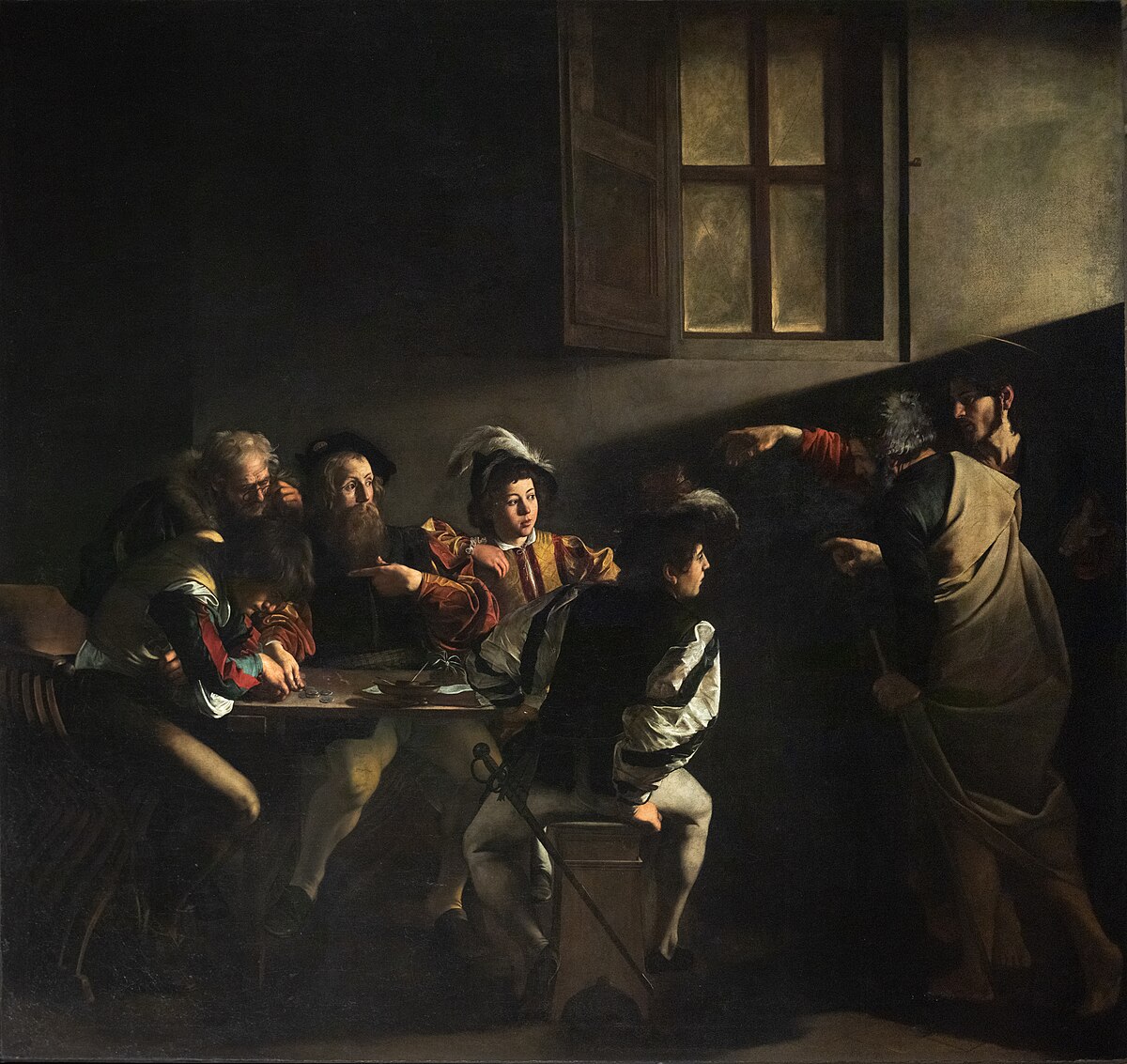
Pozivanje Svetog Mateja naručeno je 1599. godine kao deo ciklusa slika za Kontareli kapelu u crkvi San Luiđi dei Frančezi, francuskoj nacionalnoj crkvi u Rimu. Kardinal Mateo Kontareli zaveštao je sredstva za dekoraciju kapele decenijama ranije, ali se projekat odugovlačio sve dok kardinal Frančesko Marija del Monte, Karavađov najuticajniji patron, nije obezbedio narudžbinu za mladog lombardijskog slikara. Ugovor je zahtevao tri monumentalna platna koja prikazuju epizode iz života Svetog Mateja — Pozivanje, Inspiraciju i Mučeništvo. Bila je to najprestižnija javna narudžbina koju je Karavađo primio, a rezultat će trajno izmeniti putanju evropskog slikarstva. Pozivanje, instalirano na levom zidu kapele, prikazuje trenutak opisan u Jevanđelju po Mateju (9:9) kada Hrist ulazi u kancelariju za naplatu poreza i naređuje carinik Leviju da ga sledi. Karavađo je ponovo zamislio ovaj sveti narativ ne kao daleku biblijsku epizodu, već kao događaj koji se odvija u sirovom sadašnjem vremenu Rima krajem šesnaestog veka.
Formalna analiza
Najrevolucionarnije formalno dostignuće slike jeste njena primena tenebrizma — ekstremnog, teatralnog kjaroskura u kome forme izranjaju iz gotovo totalne tame u blistavo, kosno osvetljenje. Jedan snop svetlosti ulazi iz gornjeg desnog ugla, prateći pravac Hristove ispružene ruke, i pada preko grupe figura koje sede za drvenim stolom za brojanje. Ova svetlost funkcioniše istovremeno na naturalističkoj i teološkoj ravni: to je empirijska svetlost prozora ili vrata koja se otvaraju na rimsku ulicu, i to je lux divina, nestvorena svetlost božanske milosti koja prodire u tamu greha. Tehnika je bila bez presedana u svojoj oštirini. Raniji slikari, uključujući Tintoreta i braću Karači, koristili su dramatično osvetljenje, ali niko nije gurnuo kontrast do takvih ekstrema niti mu pridao tako precizno narativno i doktrinarno značenje. Tama nije samo odsustvo osvetljenja; ona je pozitivna, obavijajuća sila — moralna atmosfera iz koje figure moraju biti spasene.
Jedna od najnamiernije provokativnih odlika slike jeste njeno anahrono kostimiranje. Poreznici i njihovi pratioci nisu obučeni u biblijske odežde, već u savremenu modu rimskog uličnog života — šešire sa perjem, rasečene prsluke, kratke ogrtače i čarape. Jedino Hrist i Sveti Petar, delimično skriveni u senci na desnoj ivici kompozicije, nose bezvremensku klasičnu draperiju. Ova juktapozicija kolapsira vremensku distancu između biblijskog događaja i sveta posmatrača, insistirajući da drama spasenja nije bezbedno ograničena na antiku, već eruira u mundan sadašnjicu. Karavađo je poznato regrutovao svoje modele iz rimske populacije — uličnih nasilnika, prostitutki, radnika i kockara — umesto iz idealizovanog repertoara klasične skulpture i renesansne konvencije. Ova praksa je šokirala neke savremenike, koji su ga optužili za nedostatak disenja i za degradiranje svetih tema. Pa ipak, upravo je ovo insistiranje na telesnoj stvarnosti dalo njegovim religioznim slikama njihovu izvanrednu emocionalnu snagu, usklađujući njegovu umetnost sa protivreformacijskim zahtevima za dela koja bi pokrenula verne kroz direktan, viscealan angažman.
Ikonografija i simbolika
Uporna i fascinantna umetničko-istorijska debata okružuje identifikaciju samog Mateja unutar kompozicije. Tradicionalno tumačenje, dugo prihvaćeno bez pitanja, identifikuje Mateja kao bradatog čoveka u centru stola koji pokazuje na sebe sa izrazom zapanjenosti, kao da pita „Ja?” Ovo tumačenje osporeno je krajem dvadesetog veka od strane naučnika koji su argumentovali da figura koja pokazuje na sebe zapravo gestom upućuje na mladog čoveka na kraju stola, pognute glave nad svojim novcima, koji ostaje toliko uronjen u brojanje novca da još nije registrovao Hristovo prisustvo. U ovom tumačenju, psihološka drama se produbljuje: Matej je figura koja se najviše opire pozivu, najzarobljenija zemaljskom privrženošću, i svetlost ga još nije potpuno dosegla. Ambivalentnost je možda namerna — Karavađo, slikar vrhovne narativne inteligencije, razumeo je da nerešiva tenzija između tumačenja može intenzivirati, a ne umanjiti moć slike.
Kompozicija nosi pažljivo razmotreno dugovanje Leonardovoj Tajnoj večeri, delu koje je Karavađo proučavao tokom formativnih godina u Lombardiji. Raspored figura duž stola, naglašeni gestovi i trenutak dramatičnog prekida — sve odzvanja Leonardov mural. Hristova ispružena ruka, sa opuštenim, gotovo mlitavim prstima, direktno citira gest Boga Oca u Mikelanđelovom Stvaranju Adama na tavanici Sikstinske kapele — referenca koja bi bila odmah čitljiva rimskim posmatračima i koja uzdiže Matejevo pozivanje na drugi čin stvaranja. Prostorna konstrukcija je rigorozno teatralna: scena se odvija paralelno sa slikovnom ravni, kao na plitkoj pozornici, sa zadnjim zidom koji zatvara svako povlačenje u dubinu. Ova kompresija prisiljava posmatrača na blizinu sa događajem, uskraćujući udobnu distancu koju bi perspektivna dubina mogla pružiti.
Teološki sadržaj slike tesno je usklađen sa protivreformacijskim naglascima na delatotvornosti božanske milosti i sakramentu pokajanja. Tridentski sabor (1545-1563) je potvrdio da opravdanje dolazi jedino milošću, ne ljudskom zaslugom, i da čak i najzatvrđeniji grešnik može biti otkupljen Božjom nezasluženom intervencijom. Karavađov snop svetlosti izvodi ovu doktrinu sa izvanrednom vizuelnom ekonomijom: milost stiže nepozvana, netražena i neodoljiva, probijajući moralnu tamu prostorije posvećene pohlepi. Matejevo pozivanje bilo je omiljena protivreformacijska tema upravo zato što je demonstriralo da božanski izbor može pasti na najneverovatnije kandidate — korumpiranog poreznika u službi rimske imperijalne vlasti. Slika je tako služila kao vizuelna propoved o univerzalnosti iskupljenja, direktno se obraćajući kongregaciji koja je uključivala i kardinale i obične Rimljane.
Reakcija Karavađovih savremenika bila je neposredna i polarizovana. Đovani Pjetro Belori, klasicistički biograf, žalio je što je Karavađo napustio lepo zarad samo prirodnog, dok je Đovani Baljone, rival slikar, priznao snagu dela čak i dok je prezirao njegovog tvorca. Međutim, slikarevi pristalice prepoznali su nešto istinski novo: modus svetog slikarstva koji kombinuje monumentalnu razmeru i ambiciju visokorenesansne javne umetnosti sa gotovo brutalnom neposrednošću crpljenom iz opservanog života. Slike Kontareli kapele učinile su Karavađa najslavnijim — i najkontroverznijim — slikarom u Rimu praktično preko noći, generirajući potok narudžbina od crkava i privatnih kolekcionara širom Italije.
Recepcija i nasleđe
Uticaj Pozivanja Svetog Mateja širio se po sedamnaestovekovnoj Evropi izuzetnom brzinom. Žorž de la Tur u Loreni apsorbovao je tenebrizam i intimne atmosfere osvetljene svećama; Husepe de Ribera preneo je karavađizam u Napulj i Španiju; utrehtski karavađisti — Hendrik ter Bruhen, Dirk van Baburen, Gerard van Honthort — preneli su stil u Holandiju, gde je uticao čak i na rane istorijske slike mladog Rembrants. Izvan ovih direktnih sledbenika, dublje nasleđe slike leži u njenoj validaciji naturalizma kao sredstva za najviše teme, njenom insistiranju da se sveto može pronaći u svakodnevnom i savremenom, i njenoj demonstraciji da sama svetlost može poneti pun teret teološkog značenja. Ovi principi odjeknuće kroz Velaskeza, Vermera i konačno u fotografski realizam devetnaestog veka, čineći Pozivanje Svetog Mateja jednom od istinskih prekretnica u istoriji zapadne umetnosti.