Istorijski kontekst
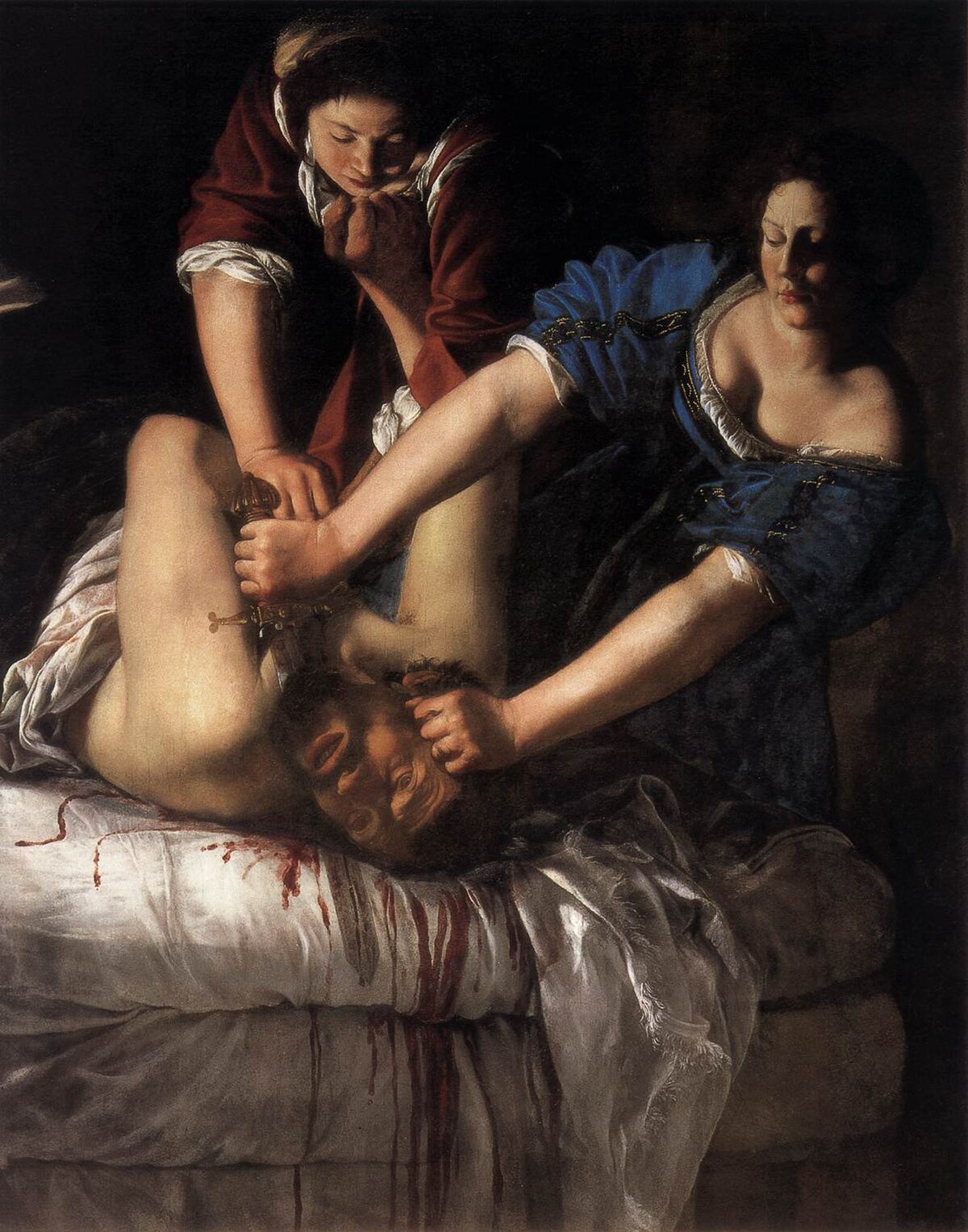
Judita ubija Holoferna Artemizije Đentileski, naslikana oko 1620. godine i danas u Galeriji Ufici u Firenci, spada među najvisceralnija i najkonfrontacionalija dela u čitavom kanonu zapadne umetnosti. Slika prikazuje kulminacioni trenutak iz deuterokanonske Knjige o Juditi u kome mlada izraelska udovica Judita, ušavši u šator asirskog generala Holoferna pod izgovorom zavođenja, hvata ga za kosu i seče mu vrat njegovim sopstvenim mačem. Đentileskijeva prikazuje scenu sa beskompromisnom fizičnošću koja nema prethodnika u ranijim obradama ove teme. Krv ne curi pristojno; šiklja u pritisnutim lukovima preko belih čaršava. Holofern ne umire graciozno; grči se, lice mu je izobličeno u agoniji i šoku, njegove masivne ruke guraju madrac u uzaludnom pokušaju da ustane. Judita ne skreće pogled; naginje se ka činu sa odlučnim, mišićavim naporom žene koja obavlja naporan fizički posao, čelo joj je namršteno u koncentraciji, a ne u odvratnosti.
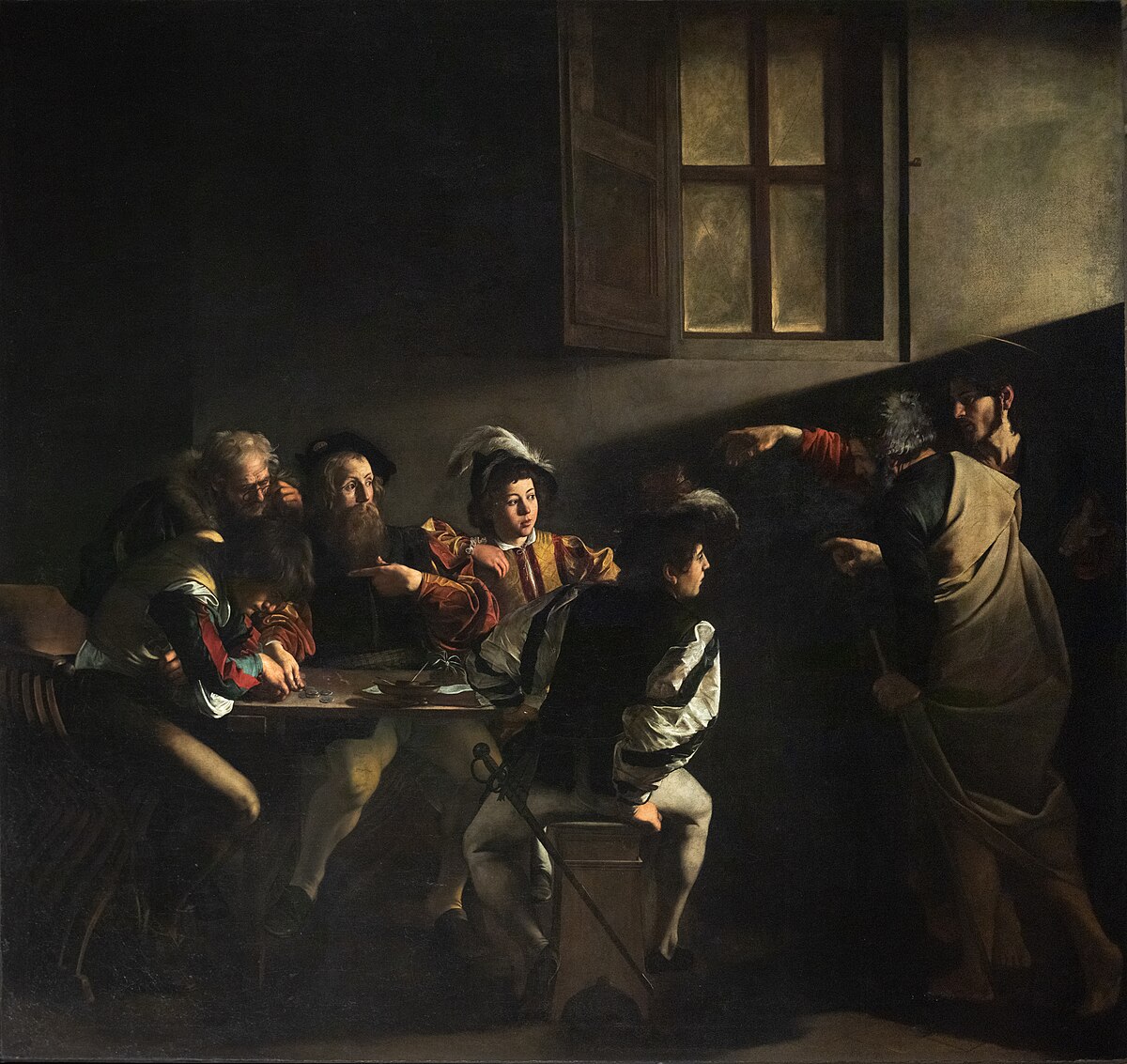
Izvanredna moć slike velikim delom proizilazi iz aktivne, saradničke uloge koju Đentileskijeva dodeljuje Juditinoj služavki, Abri. U biblijskom tekstu i u većini ranijih slikarskih tretmana — uključujući Karavađovu slavnu verziju iz približno 1598-1599, sada u Palaci Barberini u Rimu — služavka stoji pasivno na periferiji, držeći otvorenu vreću da primi odsečenu glavu. Đentileskijeva je transformiše u punog fizičkog učesnika: Abra pridržava Holoferna za ramena, zasukanih rukava, težine bačene napred, tela oslonjenog nasuprot njegovom otimanju. Ovaj prikaz dve žene koje deluju zajedno da savladaju fizički nadmoćnog muškog protivnika nema paralelu u umetnosti savremenika Đentileskijeve i učinio je sliku centralnom ikonom feminističke istorije umetnosti od pionirskog istraživanja Meri Garad osamdesetih godina dvadesetog veka. Kolaborativna ženska agensnost prikazana ovde preokretne odnose moći koji su prožimali kako slikarsku tradiciju, tako i društvenu realnost Italije sedamnaestog veka.
Formalna analiza
Biografska dimenzija obrade ove teme od strane Đentileskijeve bila je u fokusu umetničko-istorijske pažnje od uticajnog eseja Roberta Longija iz 1916, u kome je opisao Artemiziju kao „jedinu ženu u Italiji koja je ikada znala o čemu se radi u slikarstvu”. Artemizija Đentileski rođena je u Rimu 1593. godine, kao kćerka slikara Oracija Đentileskija, jednog od najranijih i najvršnijih sledbenika Karavađa. Godine 1611, kada je Artemizija imala sedamnaest godina, silovao ju je Agostino Tasi, slikar i specijalista za perspektivu koga je Oracio angažovao da podučava njegovu kćerku. Naknadni sudski proces za silovanje 1612, čiji transkripti su sačuvani u rimskim državnim arhivima, izložio je Artemiziju javnom poniženju, uključujući mučenje palčevima — standardnu rimsku sudsku proceduru namenjenu potvrđivanju istinitosti svedočenja. Tasi je osuđen, ali nikada nije odslužio kaznu. Trauma ovih događaja neizbežno je obojila tumačenja Artemizijanih ponovljenih prikaza Judite i Holoferna, Suzane i staraca i drugih tema koje uključuju ženski otpor muškom nasilju. Dok su reduktivna biografska čitanja koja tretiraju slike kao puke činove terapeutske osvete s pravom kritikovana, jednako je reduktivno potpuno negirati biografski odjek. Đentileskijeva je kanalisala životno iskustvo u slikarsku formu sa specifičnošću i emocionalnim autoritetom koji njeni muški savremenici jednostavno nisu mogli da repliciraju.
Slika Đentileskijeve ulazi u trajan i namerni dijalog sa Karavađovom obradom iste teme, naslikanom otprilike dve decenije ranije. Karavađova Judita je vitka, gotovo nežna mlada žena koja drži Holoferna na dohvat ruke, lica koje registruje izraz bliži gađenju nego odlučnosti. Njeno telo je okrenuto od čina, a njeni delikatni zglobovi jedva da izgledaju sposobni za pokret sečenja potreban da se preseče ljudski vrat. Đentileskijeva ispravlja ovu neuverljivost sa nemilosrdnom logikom. Njena Judita je snažna, punog tela žena koja drži mač obema rukama i probija ga kroz meso i tetive snagom čitavog gornjeg dela tela. Geometrijska struktura pojačava ovu fizičnost: Juditine ruke, mač i Holofernov vrat formiraju čvrst trougao presečenih dijagonala koji koncentriše energiju kompozicije na tačku odsecanja. Tamo gde je Karavađo estetizovao nasilje, Đentileskijeva insistira na njegovoj materijalnoj realnosti — otporu kosti, klizavosti krvi, čistom mišićnom naporu potrebnom da se ubije čovek oštricom.
Tenebrizam slike — dramatičan kontrast između duboke senke i koncentrisanog osvetljenja koji je Karavađo pionirski razvio — primenjen je sa majstorskom preciznošću. Svetlost pada sa gornje leve strane, obuhvatajući tri figure i krvlju natopljeni krevet dok pozadinu ostavlja u neprobojnoj tami. Ovaj ekstreman kjaroskuro služi višestrukim funkcijama istovremeno: koncentriše pažnju posmatrača na centralan čin, stvara klaustrofobičnu intimnost koja ne dozvoljava nikakvu psihološku distancu od nasilja, i svrstava sliku uz kontrareformacijski zahtev za umetnošću koja angažuje emocije posmatrača kroz direktan, neposredovan čulni uticaj. Koloristička paleta dominirana je dubokim plavim, zlatnim tonovima i živim karminom arterijske krvi na belom lanenom platnu — hromatska shema koja sceni daje sumornu bogatost čak i dok naglašava pokolj. Rukovođenje Đentileskijeve tkaninom, telom i metalnim površinama otkriva slikarku u punoj vlasti nad tehnikom ulja, sposobnu da prikaže prozirnost kože, sjaj svile i tupi blesak krvlju potamnjenog sečiva sa jednakim ubeđenjem.
Ikonografija i simbolika
Tema Judite i Holoferna imala je dugu i složenu ikonografsku istoriju do vremena kada je Đentileskijeva naslikala svoju verziju. Srednjovekovni i renesansni umetnici — uključujući Donatela, Botičelija, Mantenju, Kranaha i Đorđonea — prikazivali su različite trenutke u narativu, od Juditinog ulaska u asirski logor do njenog trijumfalnog povratka u Betuliju sa odsečenom glavom. U kontrareformacijskom Rimu, tema je dobila obnovljenu relevantnost kao amblem trijumfa Crkve militantne nad jeresima: Judita je čitana kao alegorijska figura katoličke vere, a Holofern kao otelovljenje protestantske ili osmanske pretnje. Đentileskijeva, međutim, skida ove alegorijske superstrukture i vraća se sirovom narativnom jezgru priče — žena ubija muškarca. Teološke i političke dimenzije nisu odsutne, ali su podređene brutalnoj fizičkoj činjenici čina, prikazanog sa specifičnošću koja transcendira alegoriju i suočava posmatrača sa nesvodivom realnošću nasilja.
Recepcija i nasleđe
Karijera Artemizije Đentileski nakon slike Judite bila je izvanredna po svom geografskom opsegu i profesionalnoj ambiciji. Radila je u Firenci pod pokroviteljstvom velikog vojvode Medičija Kozima II, bila je prva žena primljena u Akademiju umetnosti crtanja 1616, a potom se etablirala u Napulju, gde je postala vodeća slikarka grada. Putovala je u London 1638-1639. da pomogne svom ostarelom ocu Oraciu na plafonskim slikama za Kuću kraljice u Griniču, narudžbinu kralja Čarlsa I i Henrijete Marije. Njeni pokrovitelji uključivali su Filipa IV od Španije, a njena dela su kolekcionarana širom Evrope. Uprkos ovom uspehu, gotovo je potpuno izbrisana iz istorije umetnosti u vekovima posle njene smrti oko 1656, ponovo otkrivena tek u dvadesetom veku zahvaljujući naporima Longija i, u novije vreme, Garadove, Bisela i drugih naučnika koji su u njenom delu prepoznali ne samo biografsku kurioznost, već opus slikarstva najvišeg tehničkog i intelektualnog reda.
Judita ubija Holoferna ostaje najslavljenija i najdiskutovanija slika Đentileskijeve, delo koje kristalizuje presek ličnog iskustva, umetničke tradicije, tehničkog majstorstva i kulturne politike koji definiše njeno dostignuće. Postala je jedna od najreproducovanijih i najreferenciranijih slika u savremenom feminističkom diskursu, pojavljujući se na koricama knjiga, protestnim transparentima i digitalnim mimovima — svedočanstvo sposobnosti slike da govori kroz vekove publici daleko udaljenoj od njenog izvornog kontrareformacijskog konteksta. Pa ipak, njena moć je u krajnjoj instanci slikarska, a ne samo politička. Slika uspeva zato što je Đentileskijeva bila izvanredno nadarena slikarka koja je razumela kako da orkestrira kompoziciju, boju, svetlo i anatomsku formu u službi emocionalnog i narativnog intenziteta. Videti je samo kroz objektiv biografije ili rodne politike znači umanjiti dostignuće koje transcendira oboje, čak i dok je od njih neodvojivo.