Istorijski kontekst
Ekstaza Svete Tereze naručena je od strane kardinala Federika Kornara za njegovu porodičnu kapelu u crkvi Santa Marija dela Vitorija u Rimu, projekat koji je zaokupljao Berninija s prekidima od 1647. do 1652. godine. Porodica Kornaro, ugledna venecijanska dinastija koja je dala jednog dužda i nekoliko kardinala, tražila je dekoraciju kapele koja bi istovremeno služila kao žarište pobožnosti, porodični memorijal i demonstracija umetničke veličanstvenosti. Bernini, već dominantan vajar-arhitekta baroknog Rima i miljenk uzastopnih papa, primio je narudžbinu na vrhuncu svojih moći i odgovorio delom koje je prevazišlo svaku konvencionalnu granicu između vizuelnih umetnosti. Kapela nije jednostavno okruženje za skulpturu; ona je jedinstveni ambijent u kome su skulptura, arhitektura, slikarstvo, prirodno svetlo i iluzionistički prostor stopljeni u ono što bi kasniji kritičari nazvali Gesamtkunstwerk — totalno umetničko delo u kome se nijedan element ne može odvojiti od celine bez umanjenja njegovog efekta.
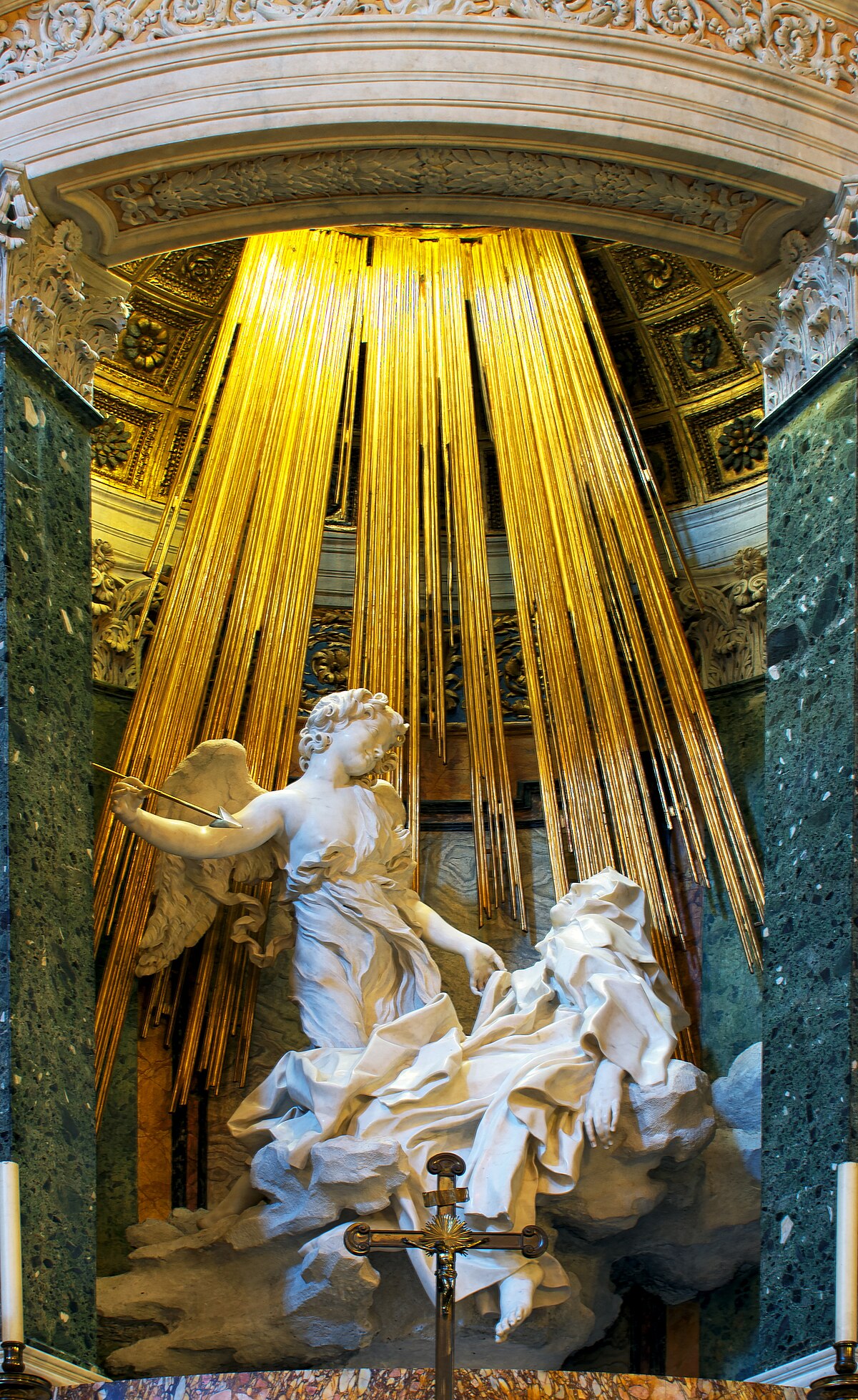
Skulpturalna grupa u centru kapele prikazuje specifičan trenutak iz autobiografije Svete Tereze Avilske (1515-1582), velike španske karmelićanske mistikinje i Učiteljice Crkve. U svojoj Vida, Tereza je opisala viziju koja se ponavljala, u kojoj se pred njom pojavljivao anđeo koji je nosio dugo zlatno koplje sa plamenim vrhom: „Činilo mi se da ga s vremena na vreme zabada u moje srce i probada moju samu utrobu; kada ga je izvlačio, činilo se da ih izvlači sa sobom, ostavljajući me svu u plamenu velike ljubavi prema Bogu. Bol je bio tako velik da me je naterao da jecam; a ipak je tako nenadmašna bila slast te preterane boli, da joj se nisam mogla poželeti osloboditi.” Bernini prevodi ovaj odlomak u mermer sa gotovo uznemirujućom doslovnošću: Tereza leži na talasastom oblaku, telo joj je savijeno unazad, glava zabačena, oči poluotvorene, usne razdvojene u izrazu koji lebdi između agonije i blaženstva, dok nasmejani, mladi anđeo nežno podiže njen ogrtač i sprema se da joj zabode strelu u srce.
Formalna analiza
Tumačenje ove scene kao istovremeno religiozne i erotske nije moderna projekcija, već neizbežna dimenzija kako samog Terezinog teksta, tako i Berninijeve vizuelne interpretacije. Terezin jezik — probadanje, vatra, pomešani bol i slast, jecanje — direktno se preslikava na vokabular seksualnog iskustva, a Berninijevo prikazivanje njenog tela — kaskadne, turbulentne draperije koje sugerišu fizičku konvulziju, golo levo stopalo koje mlitavo visi, izraz lica koji bi renesansni i barokni posmatrači prepoznali kao vizuelni kod za orgazmičko ushićenje — pojačava, a ne ublažava ovo čitanje. Kontrareformacijska teologija nije zazirala od ovog konvergiranja; mistično iskustvo shvatano je kao predukus konačnog sjedinjenja duše sa Bogom, a najintenzivniji telesni oseti smatrani su legitimnim analogijama za duhovni transport. Bernini, pobožni katolik koji je praktikao Duhovne vežbe Ignacija Lojole, shvatio bi erotsku dimenziju ne kao skandaloznu, već kao teološki primerenu — znak da je Terezina ekstaza angažovala čitavu osobu, telo i dušu, u susretu sa božanskim.
Tehnički domet skulpturalne grupe je izvanredan čak i po Berninijevim merilima. Beli kararijski mermer isklesan je do stepena tankoće i prozirnosti koji kao da prkosi prirodi samog materijala: Terezin teški karmelićanski habit prikazan je kao da je stvarna tkanina uhvaćena u vetru natprirodnog porekla, njegovi duboki nabori i oštri grebeni stvaraju pejzaž svetla i senke koji se dramatično menja sa položajem posmatrača i dobom dana. Oblak na kome figure počivaju izgleda kao da lebdi bez oslonca u niši obloženoj zlatnim bronzanim zracima koji se šire iz skrivenog izvora. U stvarnosti, oblak i figure podržane su skrivenom gvozdenom armaturom, ali je Bernijev inženjering tako pažljivo zamaskiran da je iluzija bestežinosti potpuna. Anđelov ogrtač, isklesan iz zasebnog bloka, prianja uz telo u tankim, vijugavim naborima koji kontrastiraju teškoj turbulenciji Terezinog habita, uspostavljajući vizuelnu dijalektiku između nebeske lakoće i zemaljske gravitacije.
Ikonografija i simbolika
Berninijev pristup kapeli kao jedinstvenom teatralnom okruženju centralan je za značenje i efekat dela. Iznad skulpturalne grupe, naslikani plafon Đovanija Batiste Gaulija (mada se ponekad pripisuje Gvidobaldu Abatiniju) prikazuje oblake i pute u iluzionističkom otvaranju ka nebesima, proširujući prostor kapele naviše u fiktivno nebo. Iza pozlaćenih bronzanih zrakova, skriveni prozor propušta prirodno svetlo koje pada direktno na mermernu grupu, tako da su figure osvetljene ne svećama ili veštačkim sredstvima, već dnevnim svetlom koje varira sa vremenom i satom — svetlosni efekat koji je Bernini projektovao sa preciznošću scenskog dizajnera. Zlatni zraci, koji konvergiraju odozgo, transformišu ovo prirodno svetlo u vidljivu metaforu za božansku milost koja silazi na sveticu. Na bočnim zidovima kapele, članovi porodice Kornaro prikazani su u plitkom reljefu, kako sede u onome što izgleda kao pozorišne lože ili operske ložije, gestikulirajući i razgovarajući među sobom dok svedoče Terezinoj ekstazi. Efekat je zapanjujući: posmatrač u kapeli postaje deo publike koja gleda sveti performans, a granica između umetnosti i života, između reprezentacije i pobožnosti, nestaje.
Publika porodice Kornaro uvodi sloj samosvesne teatralnosti koji fascinira i uznemiruje komentatore od završetka kapele. Osam portreta Kornarovih, uključujući dva preminula kardinala prikazana u živom razgovoru, isklesani su u relativno plitkom reljefu i smešteni unutar arhitektonskih okvira koji imitiraju lože baroknog pozorišta. Oni ne gledaju direktno u Terezu; neki razgovaraju međusobno, neki čitaju, neki gestom ukazuju na centralnu scenu. Njihovo prisustvo transformiše kapelu u prostor gledanja — svetičina ekstaza postaje performans kome svedoči publika koja uključuje ne samo isklesane Kornaroe već i žive posetioce koji ulaze u kapelu i zauzimaju istu prostornu i vizuelnu poziciju. Ova teatralna domišljatost čitana je kao komentar o prirodi religioznog iskustva u kontrareformacijskom katolicizmu: mistička vizija, nekada privatni i neizrecivi događaj, ovde je učinjena javnom, vidljivom i dostupnom za zajedničko svedočenje — upravo ona vrsta pristupačne, emocionalno angažujuće pobožne umetnosti koju je Tridentski sabor naložio.
Analiza Ekstaze koju je Žak Lakan izneo u svom dvadesetom seminaru, Encore (1972-1973), preoblikovala je skulpturu unutar diskursa psihoanalize i ženstvenosti. Za Lakana, Terezina ekstaza ilustrovala je jouissance — zadovoljstvo izvan zadovoljstva, koje prevazilazi faličku ekonomiju želje i ukazuje na specifično žensko iskustvo Drugog koje se ne može artikulisati u jeziku. „Dovoljno je da odete i pogledate Berninijevu statuu u Rimu da odmah shvatite da ona doživljava vrhunac, nema nikakve sumnje”, provokativno je izjavio Lakan, koristeći skulpturu kao dokaz za vid telesnog znanja koji prevazilazi racionalni diskurs. Lakanovo čitanje, kontroverzno i namerno provokativno, ipak je osvetlilo istinsku dimenziju dela: Berninijeva Tereza zaista prikazuje iskustvo koje transcendira verbalni opis, stanje u kome telo postaje mesto znanja kome razum ne može u potpunosti pristupiti. Bilo da se ovo uokviruje kao mistička teologija ili psihoanalitička teorija, skulptura insistira na realnosti i dostojanstvu telesnog iskustva u njegovoj najekstremnijoj formi.
Recepcija i nasleđe
Ekstaza Svete Tereze ostaje vrhovni primer težnje barokne umetnosti da preplavi čula, rastvori granice između medija i izazove u posmatraču iskustvo analogno prikazanom predmetu. Bernini nije samo prikazao Terezinu ekstazu; nastojao je da izazove simpatijski odgovor u posmatraču — da posetilac kapele oseti, makar na tren, vrtoglavicu svetičinog susreta sa božanskim. Ova ambicija — umetnost kao instrument duhovne transformacije, a ne pukog predstavljanja — razlikuje baroknu estetiku od racionalne jasnoće renesanse i anticipira imerzivne, iskustvene aspiracije moderne instalacione umetnosti. Kapela Kornaro stoji istovremeno kao kulminacija specifičnog kontrareformacijskog programa afektivne pobožnosti i kao vanvremenski dokaz sposobnosti skulpture da transcendira svoja materijalna ograničenja i angažuje čitav spektar ljudskog iskustva.