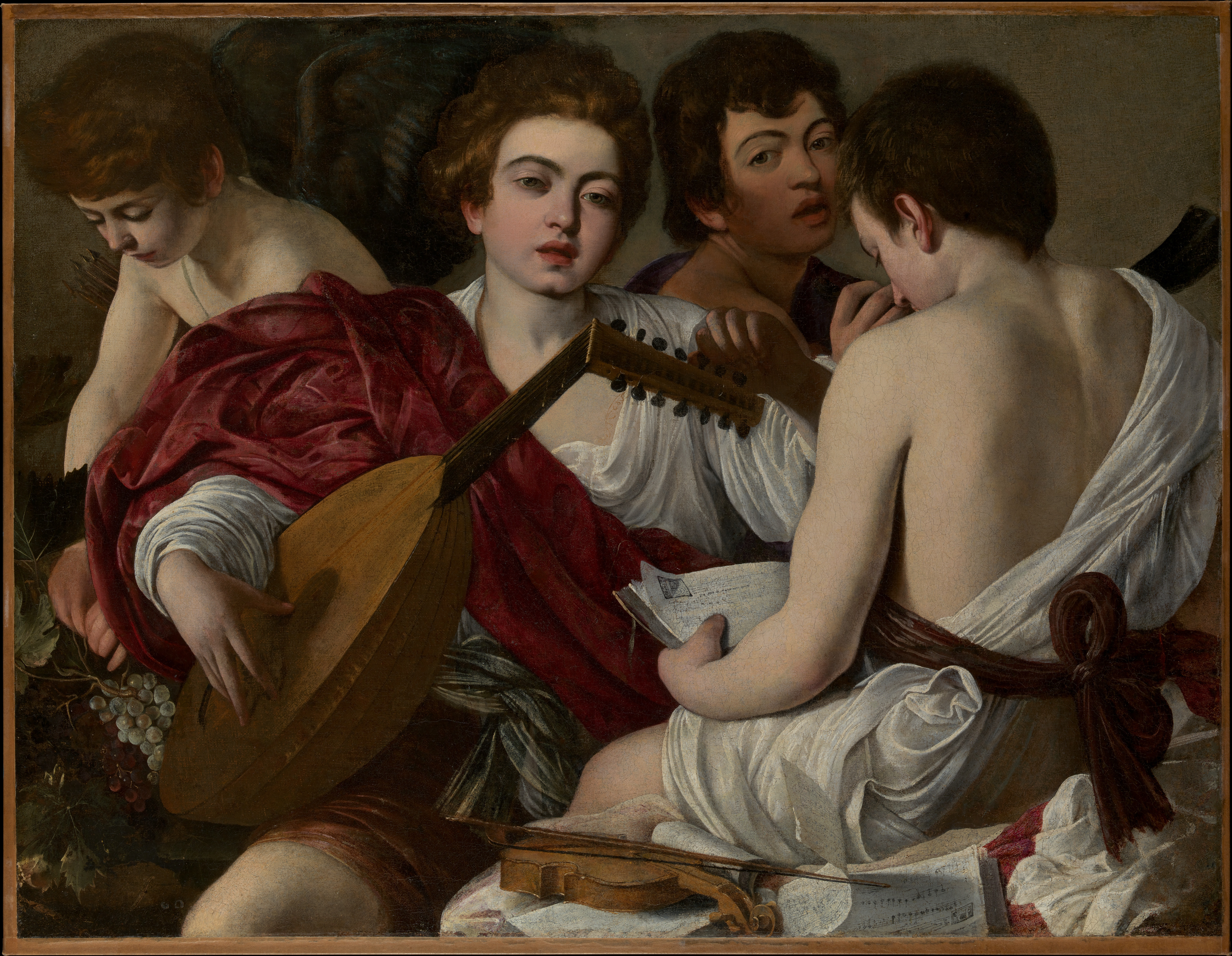
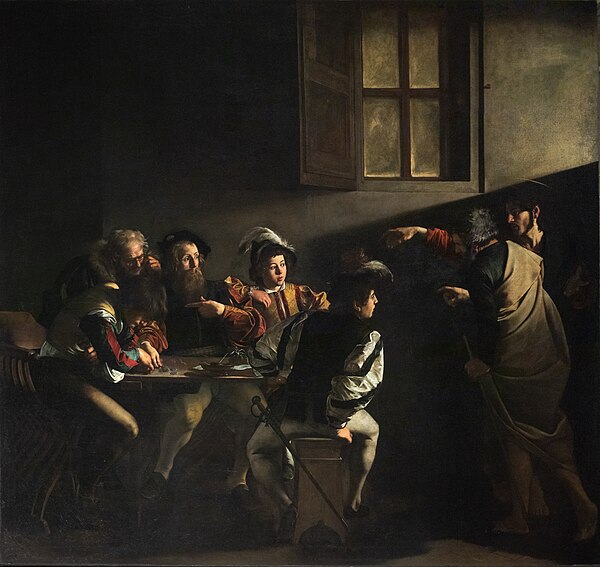
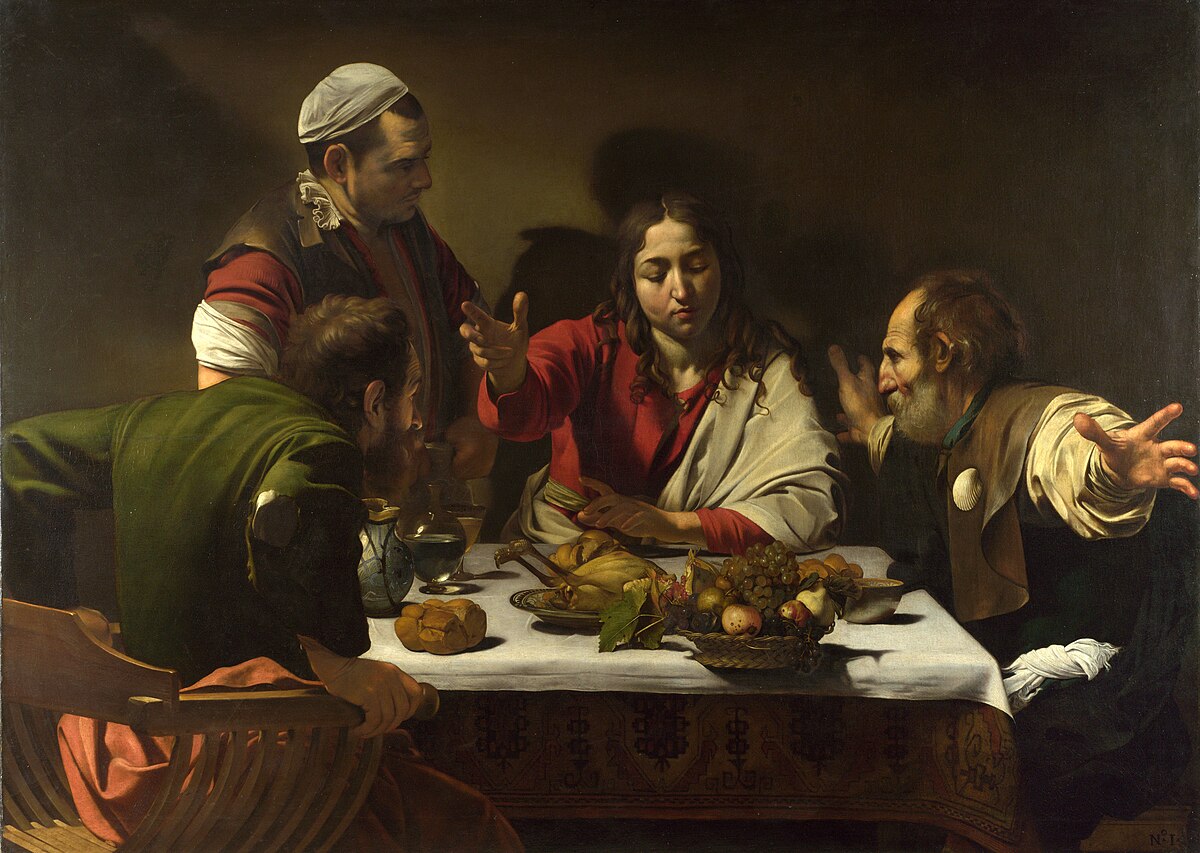
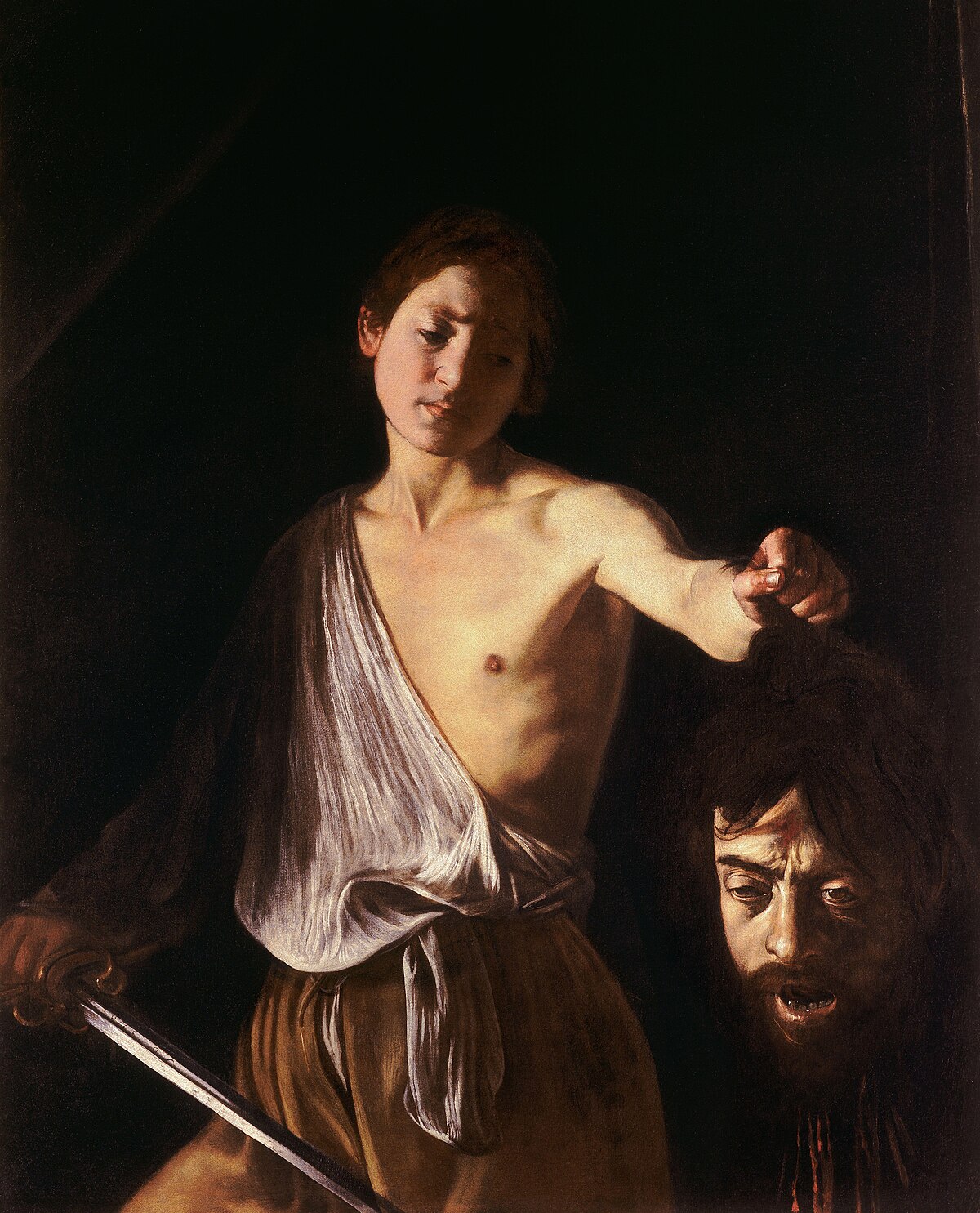
Caravaggio je stigao u Rim početkom 1590-ih bez ičega osim talenta i smelosti, a u roku od jedne decenije prevrnuo je konvencije evropskog slikarstva. Njegova revolucija bila je dvostruka. Prvo, bio je pionir tenebrizma — ekstremnog oblika kjaroskura u kome figure izranjaju iz duboke, mastiljave tame u snopove oštrog, gotovo teatralnog svetla. Efekat je bio elektrišući, dajući njegovim religioznim scenama visceralnu, filmsku dramu kakvu nijedan slikar pre njega nije postigao. Drugo, insistirao je na slikanju prema živom modelu, koristeći stvarne ljude — radnike, ulične derane, kurtizane — kao modele za svece i biblijske junake. Njegove Bogorodice su imale prljave noge, njegovi apostoli izborana lica i žuljevite ruke. Rezultat je bila sakralna umetnost zapanjujuće neposrednosti koja je šokirala neke naručioce, a očarala druge.
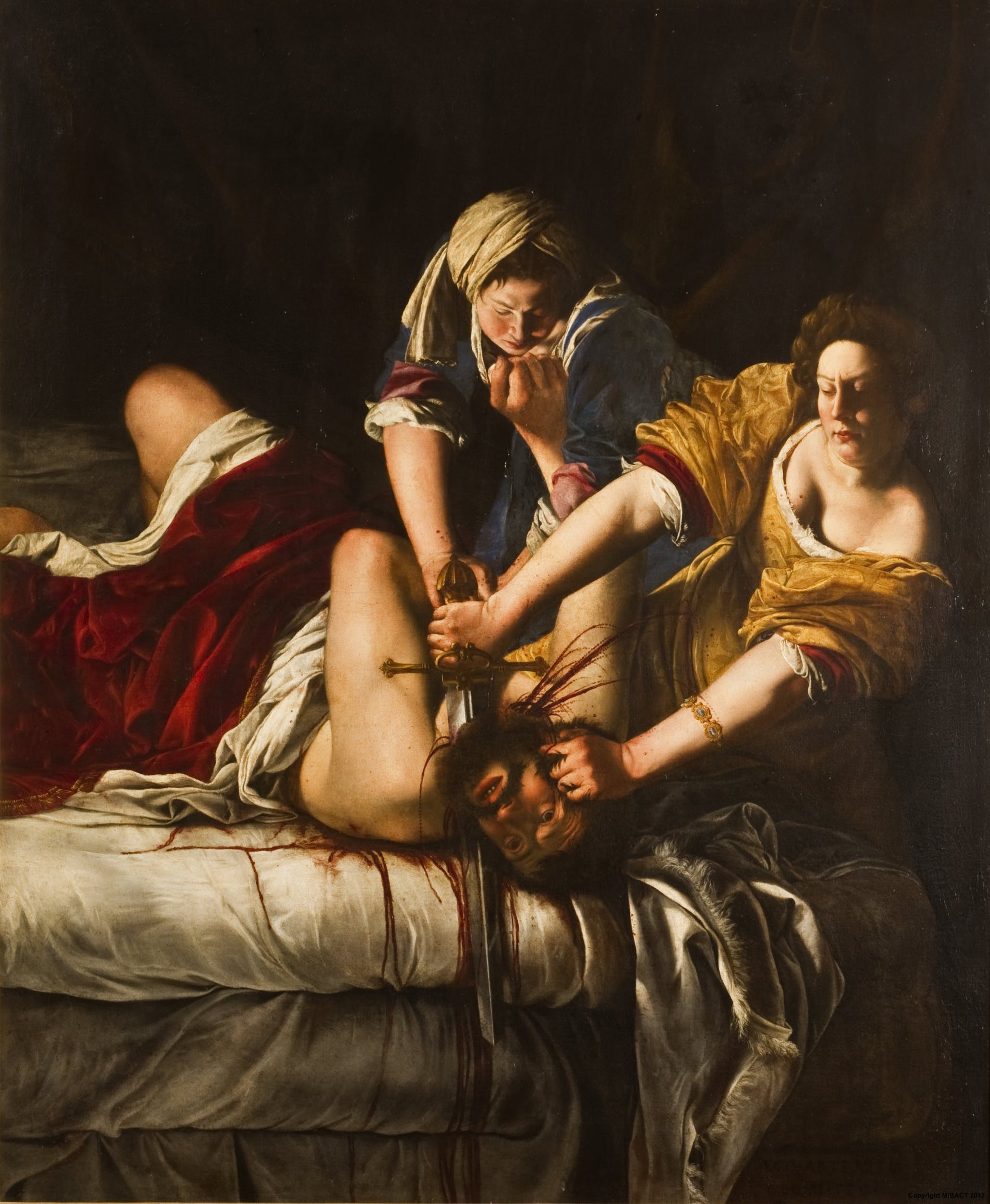
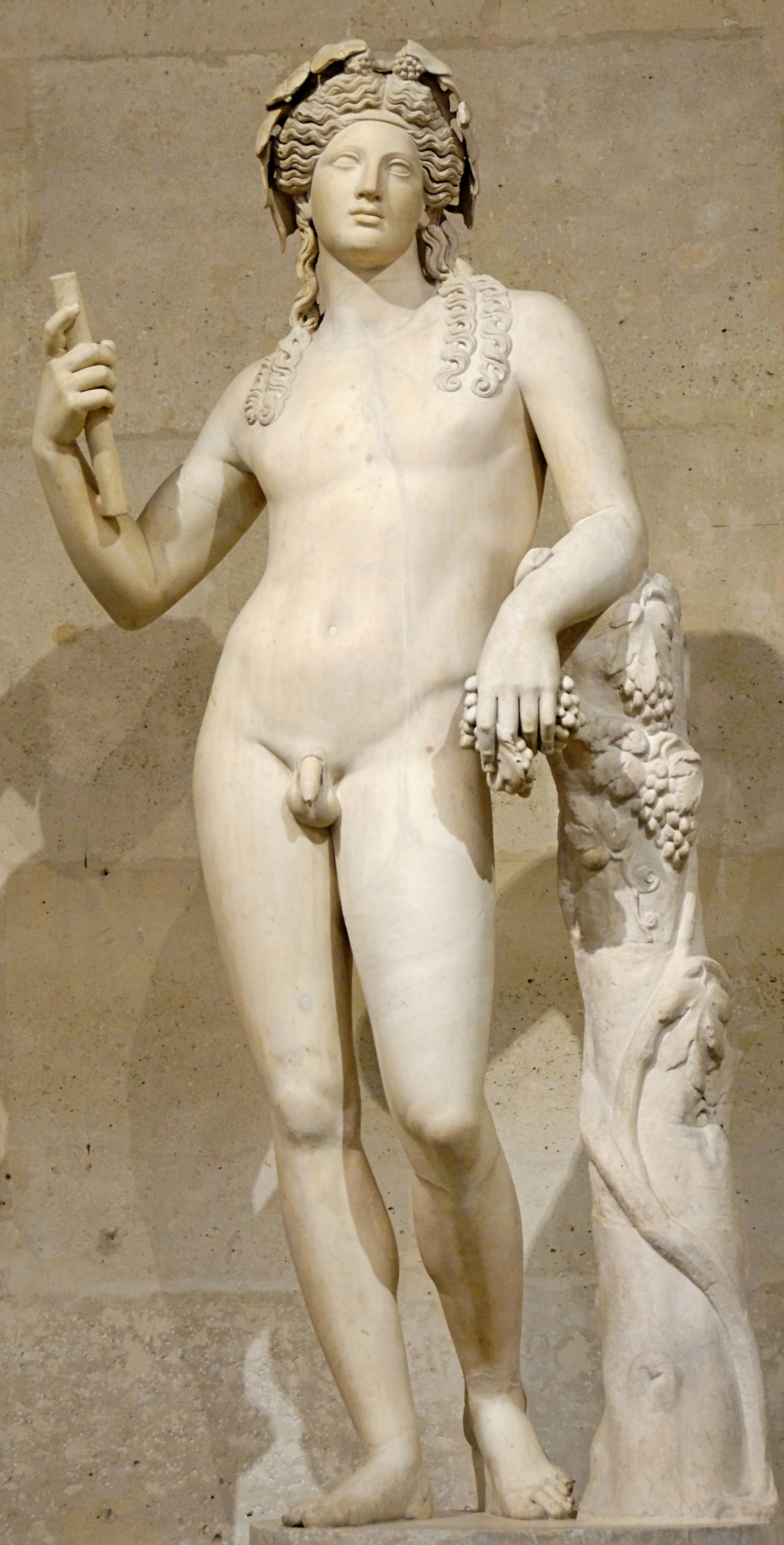
The Calling of Saint Matthew, postavljen u kapeli Contarelli u Rimu oko 1600, objavio je njegov genije svetu. Zrak svetlosti — prateći gest Hristove ispružene ruke — preseca tamnu krčmu da bi pao na zaprepašćenog poreznika, stapajući sveto i obično u jednom zapanjujućem trenutku. Judith Beheading Holofernes je pokazao njegov neustrašivi apetit za nasiljem, dok su Bacchus i Boy with a Basket of Fruit otkrili čulnu, gotovo provokativnu nežnost. Svako platno bilo je konfrontacija: sa lepotom, sa brutalnošću, sa sirovom činjenicom ljudskog tela.
Caravaggiov život bio je isto toliko buran koliko i njegova umetnost. Neprestano se tukao, bio je hapšen više puta, a 1606. ubio je čoveka u svađi — moguće zbog partije tenisa. Pobegao je iz Rima sa smrtnom presudom nad glavom i proveo poslednje godine kao begunac, slikajući remek-dela u Napulju, na Malti i Siciliji, dok je očajnički tražio papsko pomilovanje. Umro je pod misterioznim okolnostima na plaži u Porto Ercoleu 1610, u trideset osmoj godini. Ali njegov uticaj bio je ogroman: čitava generacija evropskih slikara — karavađisti — usvojila je njegovo dramatično osvetljenje i zemljani realizam, a njegov uticaj odjekuje kroz Rembrandta, Velazqueza i sve do moderne kinematografije.