Istorijski kontekst
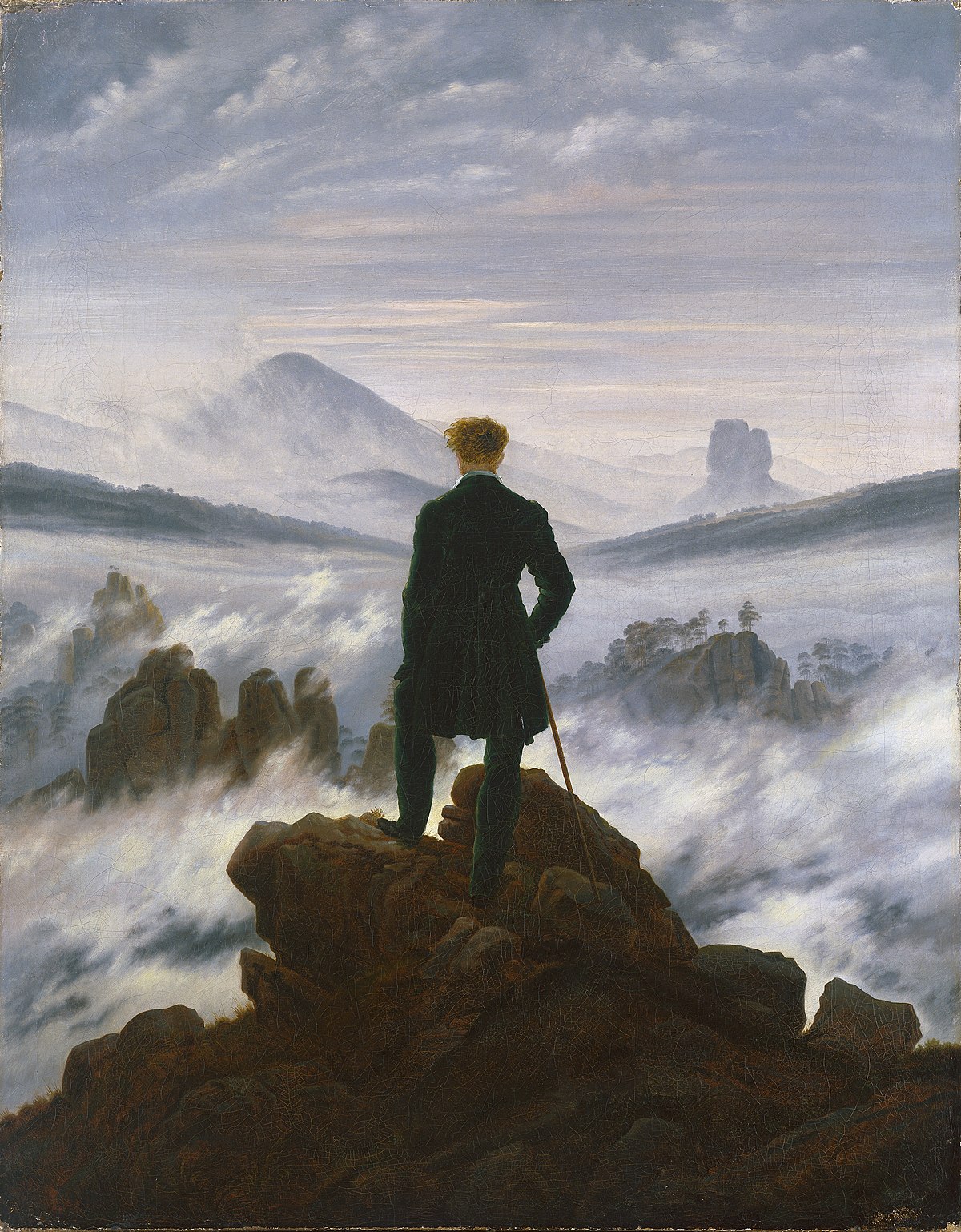
Putnik iznad mora magle (Der Wanderer uber dem Nebelmeer) Kaspara Davida Fridriha postala je možda najreprodukovana slika evropskog romantizma, delo toliko temeljno identifikovano sa ključnim idealima pokreta — individualizmom, uzvišenim, duhovnom moći neobuzdane prirode — da funkcioniše kao nezvanični amblem romantizma. Naslikana oko 1818. godine, tokom najproduktivnije decenije Fridrihove karijere, slika prikazuje usamljenu mušku figuru koja stoji na vrhu nazubljene stenovite izbočine, leđima okrenuta posmatraču, gledajući preko prostranog, uzburkanog mora magle iz koga tamni vrhi stena i daleki planinski grebeni izranjaju poput ostrva u eteričnom okeanu. Predeo se tipično identifikuje kao kompozit lokacija u Elbskim peščanim planinama (Elbsandsteingebirge) Saksonije i Bohemije, regionu koji je Fridrih intimno poznavao sa opsežnih skicerskih ekspedicija. Sama figura tentativno je identifikovana od strane nekih naučnika kao pukovnik Fridrih Gothard fon Brinken, veteran oslobodilačkih ratova protiv Napoleona, mada ova identifikacija ostaje osporavana i krajnje sekundarna u odnosu na univerzalnu rezonancu slike.
Formalna analiza
Kompozicioni postupak koji daje slici njenu izvanrednu psihološku moć je Ruckenfigur — figura viđena s leđa — koju je Fridrih koristio tokom čitave karijere kao svoju najkarakterističniju i filozofski najnabijeniju formalnu strategiju. Prikazujući putnika sa leđima okrenutim posmatraču, Fridrih istovremeno poziva na identifikaciju i nameće distancu. Posmatrač je privučen da zauzme poziciju figure, da podeli njenu tačku gledanja i gleda u istu sublimnu panoramu, ipak okrenuta leđa figure skrivaju njen izraz, njeno unutrašnje stanje, njeno krajnje značenje. Projektujemo sebe u njeno iskustvo dok ostajemo nepovratno izvan njega. Ovaj postupak transformiše posmatrača iz pasivnog promatrača u aktivnog učesnika, stvarajući ono što je istoričar umetnosti Jozef Leo Kerner nazvao „dijalektikom viđenja” — slika je istovremeno o predelu, o činu kontemplacije predela i o nemogućnosti potpunog saznanja iskustva druge svesti o toj kontemplaciji. Ruckenfigur se pojavljuje u desetinama Fridrihovih dela — Monah na obali mora, Žena na prozoru, Kredne stene na Rigenu — ali nigde nije primenjena sa većom ikoničnom snagom nego ovde.
Slika se direktno bavi filozofskim konceptom uzvišenog kako ga je teoretisao Edmund Berk i Imanuel Kant, dva mislioca čije su estetske filozofije najdublje oblikovale romantičarsku vizuelnu kulturu. Berkovo Filozofsko istraživanje o poreklu naših ideja o uzvišenom i lepom (1757) lociralo je uzvišeno u iskustvima straha, prostranosti, nejasnoće i moći — upravo kvalitetima koje otelotvoruje Fridrihova vrtoglava kompozicija. Posmatrač stoji, sa putnikom, na ivici ponora; magla skriva i otkriva u jednakoj meri; razmera predela umanjuje ljudsku figuru. Kant je prečistio Berkov empirizam u Kritici moći suđenja (1790), tvrdeći da uzvišeno nastaje kada imaginacija ne uspeva da shvati veličinu prirode, a razum stupa da potvrdi superiornost uma nad čisto fizičkim. Fridrihov putnik se može čitati kroz ovu kantovsku prizmu: figura ne kleci pred prirodom, već stoji uspravno, sa štapom u ruci, u stavu kontemplativnog ovladavanja. Slika tako drži u suspenziji fundamentalnu dvosmislenost uzvišenog — da li je putnik trijumfalan ili beznačajan, gospodar ili molilac, uzdignut ili izgubljen u neizmernosti pred njim?
Ova namerna dvosmislenost proteže se na duhovnu dimenziju slike, koja je neodvojiva od njene estetske dimenzije. Fridrih je bio duboko pod uticajem teologije Fridriha Šlajermahera, koji je religiju definisao kao „osećaj apsolutne zavisnosti” i locirao božansko ne u institucionalnoj doktrini, već u neposrednom iskustvu beskonačnog kod pojedinca. Za Fridriha, pejzažno slikarstvo bilo je fundamentalno religiozan čin: priroda je bila vidljiva manifestacija Boga, a kontemplacija prirode bila je oblik molitve. Magla u Putniku funkcioniše kao vizuelna metafora za veo između materijalnog i transcendentnog — zemaljski predeo napola skriven, napola otkriven, kao da posmatrač hvata naznake realnosti izvan obične percepcije. Stenoviti vrhovi koji probijaju maglu postaju, u ovom čitanju, nagovesti večnog koje probija temporalno. Sam Fridrih je napisao: „Umetnik ne treba da slika samo ono što vidi pred sobom, već i ono što vidi u sebi. Ako, međutim, ne vidi ništa u sebi, onda treba da se uzdrži i od slikanja onoga što vidi pred sobom.”
Kompozicija generiše snažan osećaj vrtoglavice i prostorne dezorjentacije koji je centralan za njen emocionalni efekat. Oko posmatrača ulazi na dnu platna, penje se tamnim stenama do nogu figure, a zatim se strmoglavo survava u prazninu magle iza nje. Ne postoji srednji plan u konvencionalnom pejzažnom smislu — prelaz od stena prednjeg plana do udaljenih planina posreduje samo neprobojana magla, stvarajući prostorni prekid koji je istovremeno uzbudljiv i dezorijentišuci. Paleta pojačava ovu strukturu: tamni, topli tonovi stena prednjeg plana i putnikovog redengota naglo ustupaju mesto hladnim, srebrnim sivim i prigušeno plavim magle i dalekih vrhova. Fridrihov potez četke, karakteristično precizan i gotovo nevidljiv u prednjem planu, opušta se u meke, atmosferske pasaže u magli, tehnički kontrast koji odražava tematsko kretanje slike od materijalne čvrstine do eterične rastočenosti. Figura stoji tačno na prelomu između ova dva carstva — ukorenjena u zemlju, gledajući u beskonačno.
Istorija recepcije slike otkriva koliko i o promenljivim kulturnim kontekstima koliko i o samom delu. Uglavnom zaboravljena nakon Fridrihove smrti 1840. godine, zajedno sa većinom njegovog opusa, ponovo je otkrivena u ranom dvadesetom veku, kada su nemački ekspresionisti, a kasnije nacionalsocijalistički režim, pokušavali da prisvoje Fridriha kao prethodnika — prvi zbog njegovog psihološkog intenziteta, drugi zbog slavljenja germanskog predela i usamljenog herojstva. Ova aproprijacija ostavila je složen politički trag na slici koji naučnici nastavljaju da navigiraju. Nakon 1945, delo je postepeno rehabilitovano kao remek-delo evropskog romantizma, sa nacionalističkim asocijacijama ublaženim naglaskom na njegovom univerzalnom filozofskom sadržaju. Do kasnog dvadesetog veka, postiglo je status globalne ikone, reprodukovano beskrajno na koricama knjiga, posterima i omotima albuma, često lišeno svog originalnog konteksta i svedeno na skraćenicu za „kontemplaciju” ili „avanturu.”
Značaj i nasleđe
Uticaj Putnika na kasniju vizuelnu kulturu bio je ogroman, protežući se daleko izvan slikarstva u fotografiju i filmsku umetnost. Monumentalne fotografije Ansela Adamsa američkog Zapada — usamljene figure umanjene granitnim zidovima Josemita i vrhovima Sijera Nevada — transponuju Fridrihov romantičarski sublimni u idiom pejzažne fotografije dvadesetog veka. U filmskoj umetnosti, filmovi Terensa Malika, naročito Novi svet (2005) i Drvo života (2011), koriste fridrihovske kompozicije figura koje kontempliraju prostrane prirodne prostore da evociraju stanja duhovnog čuđenja i egzistencijalnog preispitivanja. Ikonična silueta slike — usamljena figura na vrhu litice — postala je jedan od najrasprostranjenijih kompozicionih tropova u savremenoj vizuelnoj kulturi, pojavljujući se u svemu, od dizajna video igara do Instagramfotografije, svedočeći o trajnoj moći Fridrihove vizije.
U krajnjoj liniji, Putnik iznad mora magle traje jer daje vizuelni oblik iskustvu koje ostaje centralno za ljudsku egzistenciju: individualna svest suočena sa neshvatljivim prostranstvom sveta. Fridrih je slikao u istorijskom trenutku kada su racionalne izvesnosti prosvetiteljstva ustupale mesto romantičarskoj sumnji, kada je industrijalizacija počinjala da transformiše evropski predeo i kada je odnos pojedinca prema prirodi, društvu i Bogu bio radikalno pregovarao. Njegov putnik stoji na pragu modernosti same — gledajući napred u neizvesnu, maglom obavijenu budućnost, održavan samo hrabrošću sopstvenog usamljenog pogleda. Upravo ova egzistencijalna rezonanca, jednako koliko i njena formalna blistavost, učinila je Fridrihovu sliku jednom od najmoćnijih i najtrajnijih slika u istoriji zapadne umetnosti.