Istorijski kontekst
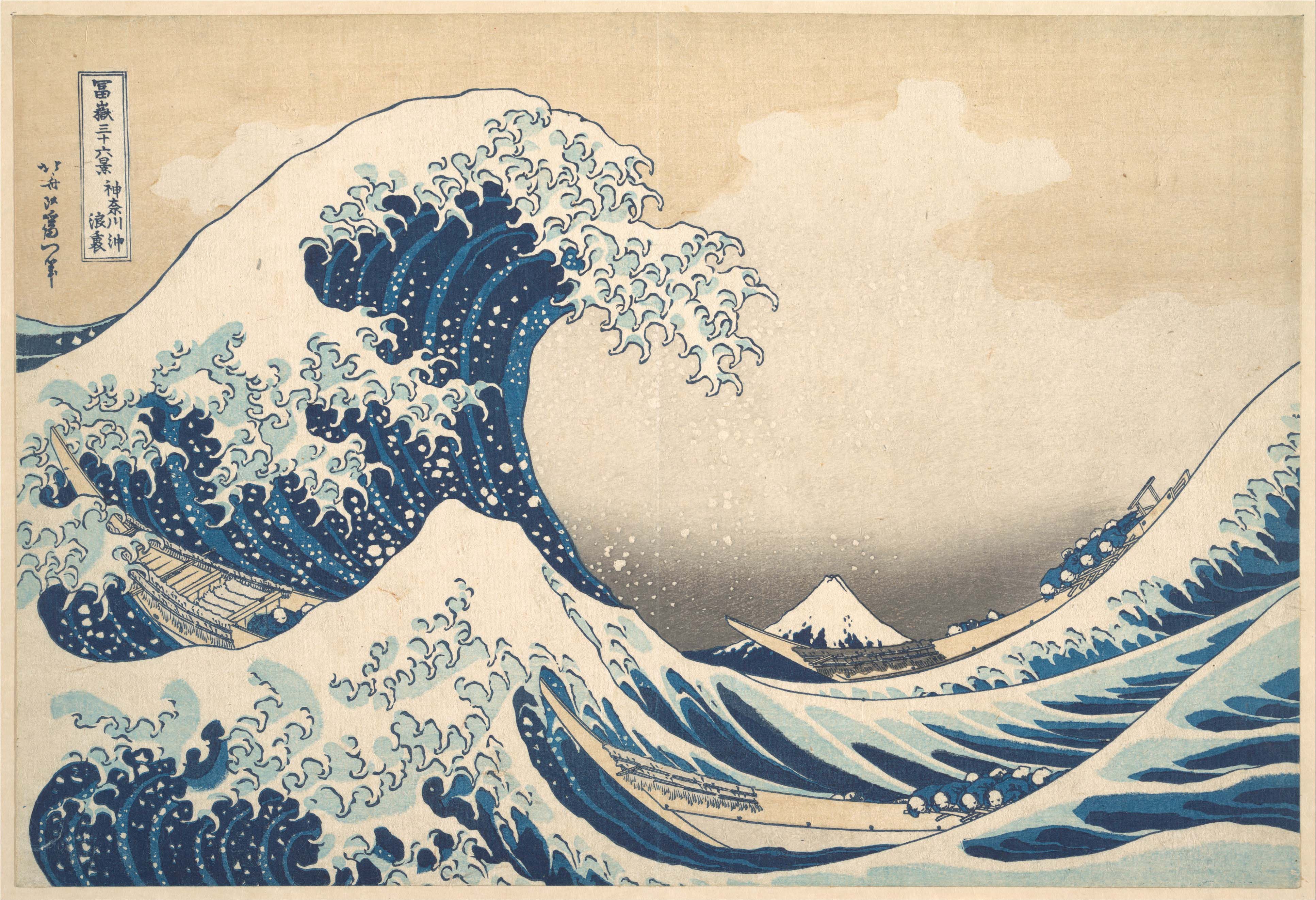
Kacušika Hokusaijev Veliki talas kod Kanagave (Kanagawa-oki nami ura) je prvi i najslavniji otisak u seriji Trideset šest pogleda na planinu Fudži (Fugaku sanjurokkei), objavljenoj od strane firme Nišimuraja Johači iz Eda, počevši od oko 1831. godine. Serija, koja je na kraju narasla na četrdeset šest otisaka, prikazivala je japansku svetu planinu iz kaleidoskopske raznolikosti uglova, godišnjih doba i vremenskih uslova — produženu meditaciju o odnosu između večnog i efemernoga, monumentalnog i svakodnevnog. Pa ipak, nijedan drugi pogled nije postigao nešto što bi se približilo ikoničnom statusu ovog prvog lista, na kojem se monstruozni talas, čiji se vrh lomi u prste pene nalik kandžama, uzdiže iznad tri vitka ošiokuri-bune (brza teretna čamca) koji prevoze ribu do tržnica Eda, dok planina Fudži — naizgled glavni predmet čitave serije — sedi mala, snegom pokrivena i savršeno mirna u dalekoj sredini kompozicije. Dinamički napon između zastrašujuće prolaznosti talasa i spokojne trajnosti planine čini konceptualno jezgro otiska i izvor njegove neiscrpne vizuelne fascinacije.
Formalna analiza
Veliki talas je nastao iz tradicije ukijo-e — umetnosti „plutajućeg sveta” — koja je cvetala u Japanu perioda Edo od sedamnaestog veka, prikazujući užitke urbane trgovačke klase: kabuki glumce, kurtizane, sumo rvače i pitoreskne pejzaže. Pa ipak, Hokusaijev otisak prevazilazi konvencije pejzaža ukijo-e u nekoliko ključnih aspekata. Najupadljivije, uključuje zapadne tehnike prostornog povlačenja — upotrebu niske linije horizonta i smanjujuće razmere za stvaranje dubine — koje je Hokusai apsorbovao iz uvezenih holandskih gravura i japanske tradicije uki-e (perspektivnih slika). Rezultat je hibridni slikovni prostor koji nije ni potpuno japanski ni potpuno zapadni, kombinujući ravan, dekorativni uzorak tradicionalnog japanskog dizajna sa iluzionističkom dubinom evropske perspektive. Ova međukulturalna sinteza bila je sasvim karakteristična za Hokusaija, koji je proveo svoju sedamdesetogodišnju karijeru neumorno apsorbujući i transformišući svaku umetničku tradiciju dostupnu njemu, od kineskog slikarstva tušem do holandske bakrorezne gravure.
Najslavniji formalni element otiska je duboka, zasićena plava koja dominira njegovom paletom — pigment identifikovan kao prusko plavo (bero-ai ili Berlin blue na japanskom), sintetički kolorant izumljen u Berlinu oko 1706. godine i prvi put uvezen u Japan u značajnim količinama krajem dvadesetih godina devetnaestog veka. Pre dostupnosti pruskog plavog, japanski štampari su se oslanjali na indigo i boju od cveta dnevnice, obe relativno nepostojane i ograničene u tonalnom rasponu. Prusko plavo je nudilo neviđeni intenzitet, postojanost i raznovrsnost — moglo se razrediti do bledoplavetnog ili naneti punom snagom za dubokotamno mornarsko plavo. Hokusai je eksploatisao ove osobine sa izuzetnom osetljivošću, koristeći gradacije pruskog plavog za modelovanje volumena talasa, razlikovanje neba od vode i stvaranje atmosferskog vela koji obavija planinu Fudži. Ograničena paleta — u suštini plava, bela i dodiri žute i sive — daje otisku hromatsko jedinstvo i vizuelni uticaj koji enormno doprinose njegovoj grafičkoj snazi.
Kompozicija je remek-delo dinamičke asimetrije. Veliki talas zauzima leve dve trećine slike, njegov lučni vrh seže gotovo do gornje ivice otiska, dok planina Fudži — geometrijski savršena, okrunjena snegom, nepomična — sedi u donjem centru, uokvirena negativnim prostorom između krivine talasa i manjeg talasa u srednjem planu. Kontrast ne bi mogao biti dramatičniji: talas je sva energija, pokret i neposredno nasilje; planina je sva mirnoća, trajnost i geometrijski red. Između njih, tri čamca sa posadama od otprilike trideset ribara drže se udolina između talasa, njihove forme gotovo izgubljene u uzburkanoj vodi. Ove ljudske figure, izvedene sa izuzetnom ekonomijom — nekoliko spretnih linija koje sugerišu tela prignutih, držeći se za rubove čamaca — pružaju ključni element razmere koji transformiše talas od dekorativnog uzorka u zastrašujuću prirodnu silu. Bez njih, otisak bi bio lep; sa njima, postaje subliman.
Produkcija ovakvog drvoreskog otiska bila je kolaborativan, višefazni proces koji je često nedovoljno cenjen u zapadnim diskusijama o japanskoj umetnosti. Hokusai je obezbedio dizajn (hanšita-e), crtajući ga tušem na tankom papiru. Ovaj dizajn je zatim zalepljen licem nadole na blok drveta trešnje od strane rezača (horiši), koji je uklonio neobojene oblasti da bi proizveo glavni blok (omohan), sa kojeg su štampane crne konture. Zatim su urezani zasebni blokovi boja za svaku nijansu — Veliki talas je zahtevao najmanje četiri ili pet blokova — sa registarskim oznakama (kento) koje osiguravaju precizno poravnanje. Štampar (suriši) je nanosio pigmente na bazi vode na blokove četkama i pritiskao navlažen hošo papir na obojenu površinu koristeći kružnu podlogu za trljanje zvanu baren, tehnika koja je omogućavala suptilne gradacije boje (tehnika bokaši vidljiva na nebu i osnovi talasa). Izdavač, Nišimuraja Johači, finansirao je produkciju i distribuirao otiske. Naučnici procenjuju da je između 5.000 i 8.000 otisaka povučeno sa originalnih blokova, koji su se na kraju istrošili i odbačeni — činjenica koja naglašava poreklo otiska kao komercijalnog proizvoda, masovno proizvedenog i prodavanog za otprilike cenu činije rezanaca.
Hokusai je stvorio Veliki talas sa otprilike sedamdeset godina, biografski detalj koji osvetljava zapanjujuću kreativnu vitalnost njegove kasne karijere. U pogovoru svoje ilustrovane knjige Sto pogleda na planinu Fudži (1834), Hokusai je napisao sa karakterističnom samoomalovažavajućom skromnošću: „Od šeste godine imao sam maniju za crtanjem… Do pedesete sam objavio beskonačnost dizajna, ali sve što sam proizveo pre sedamdesete ne vredi pomena. Sa sedamdeset tri počeo sam da razumem pravu strukturu prirode… Sa devedeset ću prodreti u misteriju stvari; sa sto godina sigurno ću dostići čudesnu fazu; a kada mi bude sto deset, svaka tačka i svaki potez biće kao živi.” Ova neumorna potraga za umetničkim savršenstvom, koja se proteže do duboke starosti (Hokusai je umro sa osamdeset osam godina, navodno žaleći što mu je trebalo samo još pet godina), stavlja ga uz Ticijana, Rembrana i Monea kao jednog od velikih majstora kasne karijere u istoriji umetnosti.
Recepcija i nasleđe
Uticaj otiska na zapadnu umetnost, okupljen pod širokim zastavom japonizma, bio je dubok i dalekosežan. Kada se Japan otvorio za međunarodnu trgovinu nakon ekspedicije komandora Perija 1853. godine, ukijo-e otisci preplavili su Evropu, gde su elektrizovali avangardu. Impresionisti — Mone, Dega, Kasat — divili su se njihovim ravnim površinama boja, smelim konturama, asimetričnim kompozicijama i uzdignutim tačkama gledanja. Pokret Art nuvo crpeo je iz njihovih vijugavih organskih formi. Klod Debisi je bio toliko očaran Velikim talasom da je postavio reprodukciju na omot prvog izdanja svog orkestrarskog dela More (1905), a kovitlava energija talasa je čujna u talasastim hromatskim harmonijama muzike. U dvadesetom i dvadeset prvom veku, slika je postala jedna od najšire reprodukovanih i parodiranih umetničkih dela na svetu — pojavljujući se na svemu, od dasaka za surfovanje do futrola za pametne telefone — svedočanstvo njene izuzetne grafičke jasnoće i sposobnosti da prevaziđe svoja kulturna izvorišta.
Veliki talas kod Kanagave na kraju traje jer daje savršenu vizuelnu formu univerzalnom ljudskom iskustvu: suočavanju između ljudske ranjivosti i prirodne sile. Sitni čamci u udolinama, monstruozni talas spreman da se sruši, daleka planina spokojno ravnodušna prema drami — ovi elementi čine alegoriju samog postojanja, efemerni ljudski život uhvaćen između sila uništenja i udaljene utehe večnog. To što je Hokusai postigao ovaj egzistencijalni odjek u skromnom formatu komercijalnog drvoreskog otiska, koristeći vokabular ravne boje i kaligrafske linije, u dobi od sedamdeset godina, u kulturi udaljenom okeana od evropske tradicije, samo produbljuje pravo ovog dela na mesto među vrhovnim dostignućima svetske umetnosti.