Istorijski kontekst
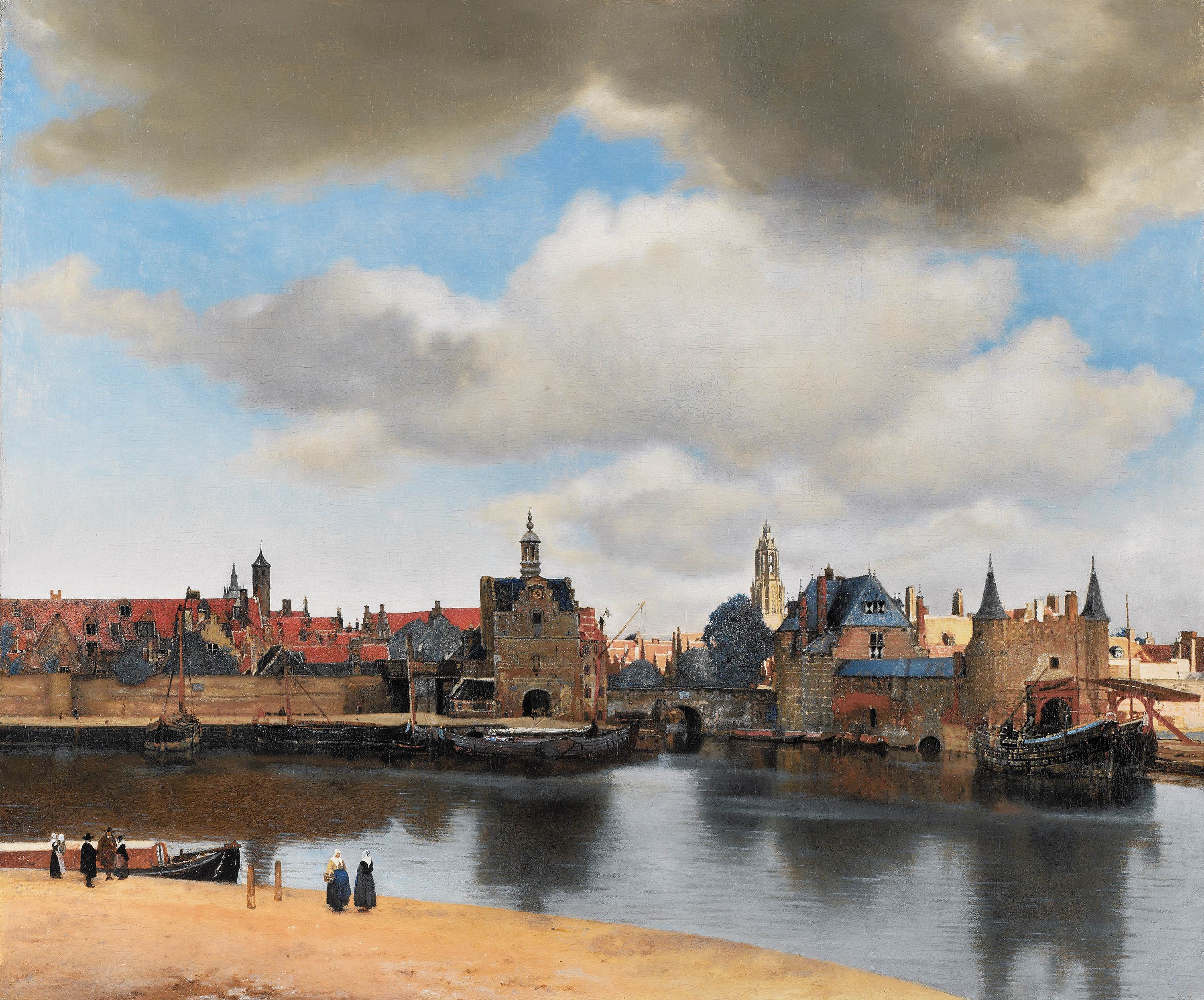
Pogled na Delft, naslikan oko 1660-1661. godine i danas u Maurichuisu u Hagu, stoji kao jedna od najizuzetnijih anomalija u karijeri Johanesa Vermera. Umetnik koji je praktično čitav svoj opus posvetio intimnim enterijerskim scenama — tihim sobama nastanjenim jednom ili dve figure angažovane u domaćim aktivnostima, čitanju pisama, muziciranju ili kontemplativnoj tišini — ovde je svoj pogled usmerio napolje da proizvede panoramski gradski pejzaž zapanjujuće atmosferske suptilnosti. To je Vermerov jedini gradski pejzaž i jedna od samo dve slike u njegovom sačuvanom opusu koje prikazuju scene na otvorenom, pri čemu je druga mala i nešto ranija Ulica u Delftu (Het Straatje) u Rajksmuzeumu. Pogled na Delft ne beleži samo izgled grada sa određene tačke gledišta; on transformiše topografsko posmatranje u luminoznu meditaciju o prolaznosti svetlosti, težini oblaka i načinu na koji poznat prostor može biti preobraženogodređenim kvalitetom atmosferskog osvetljenja u nešto što se približava svetom.
Slika prikazuje južnu ivicu Delfta viđenu preko kanala Šie, gledajući približno na sever sa tačke gledišta blizu Kolka, male luke na južnoj strani grada. Prednji plan zauzima mirna, tamna voda kanala, sa uskim pojasom peščane obale na kome stoji nekoliko malih figura u razgovoru. Iza vode, grad se prostire u horizontalnom pojasu arhitekture — Šidamska kapija i Roterdamska kapija flankiraju deo gradskog zida, krovove i crkvene tornjeve, sa karakterističnim profilom Nijve Kerk (Nove crkve) koji se uzdiže desno. Vermerovo prikazivanje topografije je suštinski precizno — glavni arhitektonski orijentiri su prepoznatljivi i ispravno pozicionirani jedni u odnosu na druge — ali je primenio značajnu umetničku slobodu u pojednostavljivanju, preuređenju i izostavljanju određenih struktura da bi postigao harmoničniju kompoziciju. Kule dvaju kapija, na primer, dobijaju istaknutost i simetrični odnos koji u stvarnosti nisu posedovale, a toranj Nijve Kerk je suptilno uvećan da usidri desnu stranu kompozicije.
Nebo, koje zauzima otprilike gornje dve trećine platna, najtehnički je ambiciozniji i atmosferski najuverljiviji pasaž slike. Vermer prikazuje nebo složene meteorološke specifičnosti: teški sivi oblaci gomilaju se u levom i gornjem delu, dok desno prodor u oblačnosti dozvoljava toploj sunčevoj svetlosti da prodre i osvetli toranj Nijve Kerk i deo krovova u blistavo zlato. Ovaj kontrast između zasenčenih i osunčanih delova grada stvara temporalnu jednako koliko i prostornu dramu — posmatrač oseća da se svetlost kreće, da mrlja sunčeve svetlosti putuje preko gradskog pejzaža i da će za nekoliko minuta scena izgledati potpuno drugačije. Ovaj kvalitet zaustavljene prolaznosti, osećaj da svedočimo specifičnom, neponovljivom trenutku atmosferskih uslova, razlikuje Pogled na Delft od topografske tradicije koju ilustruju umetnici poput Jana van der Hejdena, čiji gradski pejzaži beleže zgrade sa dokumentarnom preciznošću pod uopštenom, stabilnom iluminacijom. Vermer ne slika mesto, već trenutak — određenu konfiguraciju svetlosti i atmosfere koja se nikada neće ponoviti u tačno ovom obliku.
Formalna analiza
Najslavniji pasaž slike je deo osunčanog zida i krovova u centru-desno, gde topla zlatna svetlost pada na deo zidine prikazane debelim, zrnastim potezima okera, ćilibara i bledo žute. To je „mali komad žutog zida” (petit pan de mur jaune) koji je Marsel Prust ovekove čio u svom romanu U traganju za izgubljenim vremenom (1913-1927), gde fiktivni pisac Bergot, prisustvujući izložbi holandskog slikarstva, pogođen je ovim detaljem snagom koja izaziva njegovu smrt. „Tako sam trebao da pišem,” razmišlja Bergot. „Moje poslednje knjige su previše suve, trebao sam da ih preradim sa nekoliko slojeva boje, da svoj jezik učinim dragocenim sam po sebi, poput ovog malog komada žutog zida.” Prustov odlomak je postao neodvojiv od recepcije slike, a naučnici su debatovali tačno koji deo platna je opisivao — neki ga identifikuju sa osunčanim zidom, drugi sa krovovima peščano obojene zgrade, a treći sugerišu da je Prust možda radio iz nesavršenog sećanja na sliku koju je video samo jednom ili dvaput. Bez obzira na tačnu identifikaciju, Prust je shvatio nešto suštinsko o Vermerovom dostignuću: sposobnost boje, nanesene sa dovoljnom pažnjom i pažljivošću, da preobrazi obično u nešto što nas pokreće snagom otkrovenja.
Tehnika Pogleda na Delft bila je predmet intenzivnog naučnog i umetnoistorijskog istraživanja, naročito u vezi sa Vermerovom mogućom upotrebom optičkih pomagala i njegovim karakterističnim tretmanom sjajnih površina. Širom površine slike — na trupovima čamaca, na mokrom pesku obale, na površinama zgrada — Vermer nanosi male, izdignute tačke guste boje poznate kao pointile. Ovi luminozni mrljice, ponekad bledo žuti ili beli, ponekad obojeni, odgovaraju načinu na koji kamera obskura prikazuje svetle sjajne površine: kao blago difuzne, kružne tačke svetlosti, a ne kao oštroivične refleksije koje neoružano oko opaža. Pointile u Pogledu na Delft su među najistaknutijima u Vermerovom opusu, a njihova distribucija sugeriše da je možda posmatrao grad kroz kameru obskuru i ugrađivao njene karakteristične optičke efekte u svoju slikanu interpretaciju. Filip Stedman, Volter Litke i drugi naučnici uverljivo su tvrdili da je uticaj kamere obskure na Vermerov rad bio značajan, mada debata nastavlja oko toga da li ju je koristio kao direktno pomagalo za kopiranje ili kao opštiji izvor optičkih informacija koje je zatim prevodio u boju kroz sopstvene izvanredne moći opažanja.
Žanr gradskog pejzaža zauzimao je istaknutu poziciju unutar taksonomije slikarstva holandskog zlatnog veka, odražavajući ponos koji su građani mlade Holandske republike osećali prema svojim prosperitetnim, dobro uređenim gradovima. Umetnici poput Hendrika Vroma, Jana van Gojana i Jana van der Hejdena proizvodili su gradske pejzaže, prikaze luka i arhitektonske slike koje su slavile građanska dostignuća holandskog urbanog života — čiste ulice, impozantne crkve, cvetajuće luke. Vermerov Pogled na Delft učestvuje u ovoj tradiciji građanskog slavljenja, ali je prevazilazi dokumentarnim impulsom žanra kroz svoju atmosfersku poeziju i svoju gotovo kontemplativnu tišinu. Grad nije predstavljen kao vrevi centar trgovine i građanske aktivnosti, već kao tiha, luminozna pojava koja lebdi između vode i neba, njegov kamen i cigla rastvarajući se u gradacije svetlosti i senke. Malobrojne ljudske figure na obali su sićušne i podređene, njihova individualnost apsorbovana u širi ritam kompozicije. Predmet nije ljudska aktivnost, već sam grad kao vizuelni fenomen — konstrukcija svetlosti, boje i atmosfere koja postoji na preseku trajnog i prolaznog.
Značaj i nasleđe
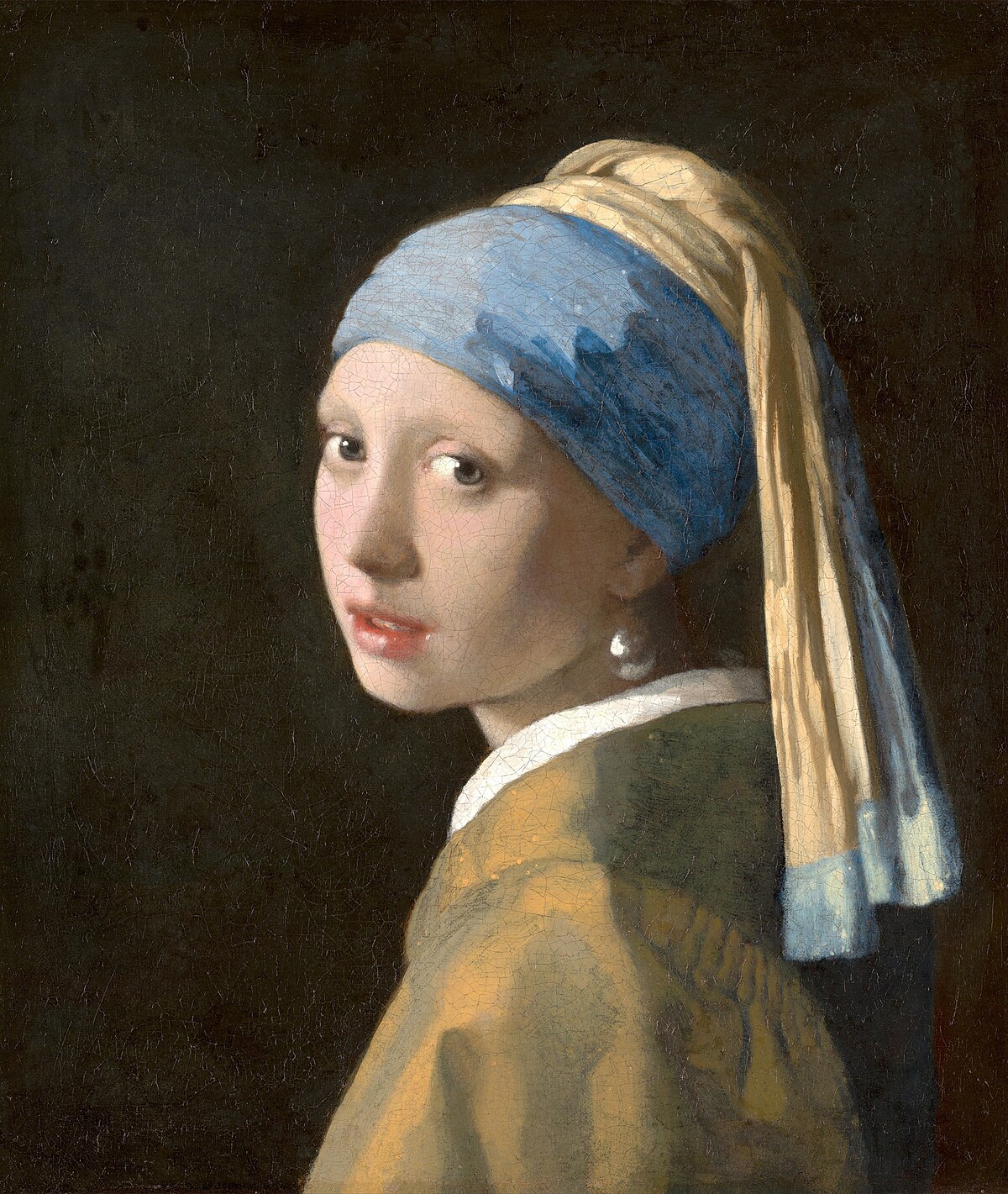
Provenijencija Pogleda na Delft može se pratiti do prodaje u Amsterdamu 16. maja 1696. — dvadeset jednu godinu nakon Vermerove smrti — gde je opisan u katalogu kao „Grad Delft u perspektivi, viđen sa juga” i prodat za dvesta guldena, najviša cena postignuta za bilo kog Vermera na toj aukciji. Prošao je kroz nekoliko holandskih kolekcija pre nego što ga je holandska država nabavila 1822. godine za Koninklijk Kabinet van Šilderijen (Kraljevsku galeriju slika), koja je postala Maurichuis. Njegovo priznavanje kao jednog od vrhovnih remek-dela evropskog slikarstva bilo je postepeno, ubrzavajući se krajem devetnaestog veka sa širim ponovnim otkrivanjem Vermerovog dela koje je pokrenuo francuski kritičar Teofil Tore-Birger u svojim prelomnim člancima iz 1866. Danas se smatra, uz Devojku sa bisernom minđušom u istom muzeju, jednom od dve ikone Vermerovog dostignuća i holandskog slikarstva zlatnog veka u celini.
Pogled na Delft nastavlja da vrši jedinstven uticaj na posmatrače i pisce. Njegova moć ne proističe iz dramatičnog narativa, alegorijske složenosti ili tehničke virtuoznosti — mada je svega toga poseduje u meri — već iz nečeg nedokučivijeg: osećaja da je Vermer uhvatio, u ulju na platnu, način na koji se svetlost oseća kada pada na poznat prostor u određeno doba dana pod određenim atmosferskim uslovima, i da ovaj uhvaćeni trenutak, zamrznut i sačuvan više od tri i po veka, zadržava sposobnost da nam omogući da vidimo svet sa obnovljenom pažnjom. To je slika koja nas uči da gledamo — zidove, vodu, oblake, način na koji sunčeva svetlost transformiše obične površine grada u nešto luminozno i čudno. To što ova lekcija dolazi od najtišeg i najsamozatajnijeg među velikim slikarima samo produbljuje njenu snagu.