Istorijski kontekst
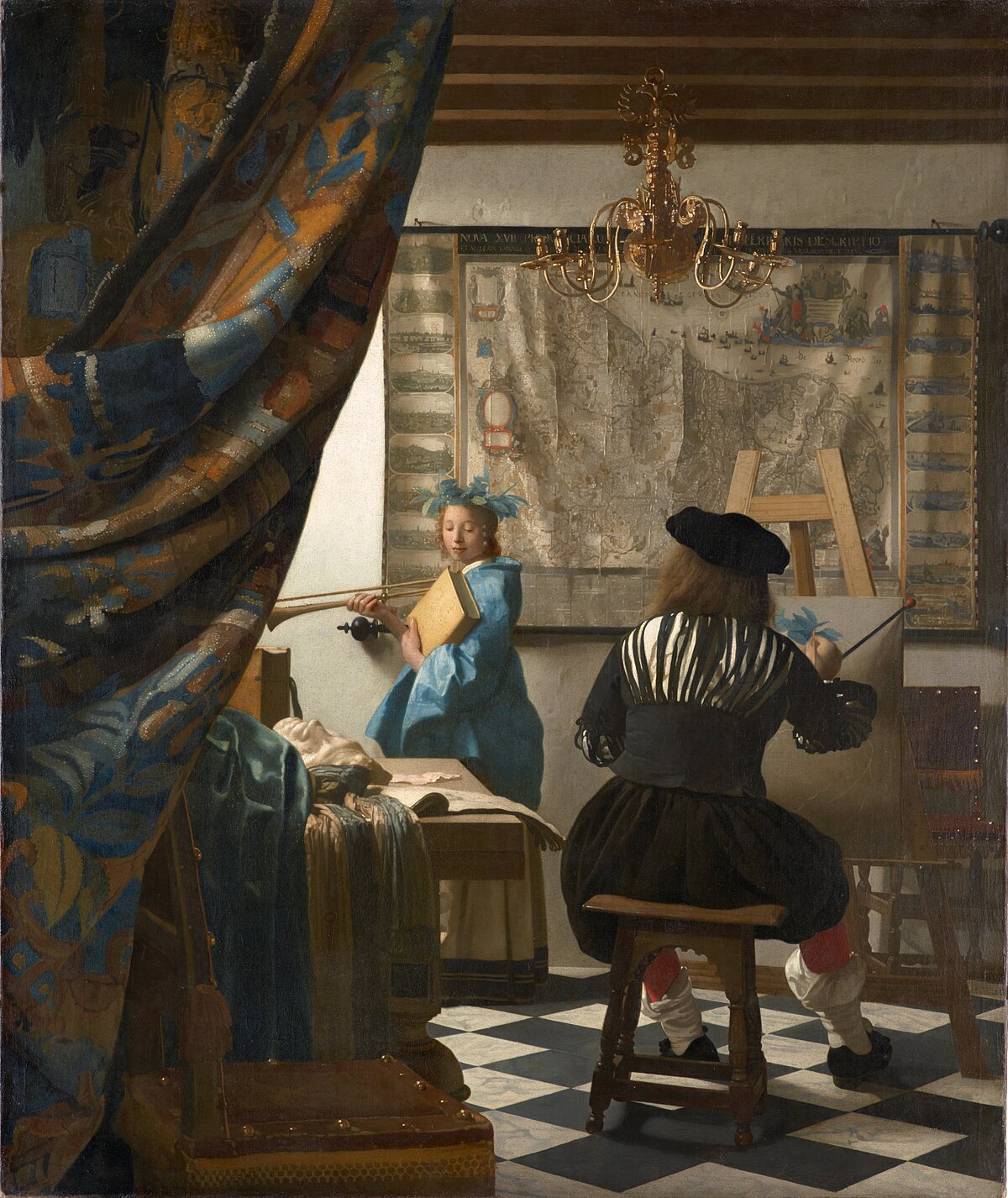
The Art of Painting, poznata i kao Alegorija slikarstva ili De Schilderkonst, najveće je i programski najambicioznije delo u malom sačuvanom opusu Johanesa Vermera od približno trideset pet slika. Nastala oko 1666-1668. godine, platno meri 120 sa 100 centimetara — neobično veliko za umetnika čiji je karakteristični format bio intimni, maloformatni enterijer. Slika prikazuje bogato opremljen atelje u kome slikar, viđen s leđa, sedi za štafelajem radeći na portretu mlade žene koja stoji ispred velike zidne mape. Scena je uokvirena teškom zavesom od tkanine povučenom sa leve strane, što pretvara čitavu kompoziciju u živi tablo otkriven posmatraču kao da je upravo podignuta pozorišna zavesa. Ovaj tromp l’ej koncept, kombinovan sa razrađenim ikonografskim programom slike, izjavljuje Vermerovu nameru da proizvede ne samo žanr scenu već manifest o prirodi, dostojanstvu i svrsi umetnosti slikarstva.
Mlada žena koja pozira slikaru identifikovana je po njenim atributima kao Klio, muza istorije, jedna od devet muza klasične mitologije. Ona nosi lovorov venac — tradicionalnu krunu slave i poetskog dostignuća — i drži trubu, instrument Slave, u desnoj ruci. Pod levom rukom drži veliki tom, identifikovan kao knjiga Tukidida, temeljni tekst istorijskog pisanja. Ovi atributi tačno odgovaraju opisu Klio u Čezare Ripinom delu Iconologia, standardnom priručniku alegorijske personifikacije prvi put objavljenom u Rimu 1593, koji su holandski umetnici široko koristili tokom sedamnaestog veka. Prikazujući slikara u činu slikanja muze istorije, Vermer iznosi tvrdnju izuzetne ambicije: slikarstvo nije puki mehanički zanat već slobodna umetnost saveznica istorije, sposobna da podari besmrtnost svojim temama i sačuva sećanje na narode i njihova dostignuća za potomstvo.
Formalna analiza
Velika zidna mapa koja dominira pozadinom kompozicije nije generički dekorativni element već specifičan i čitljiv kartografski dokument. Identifikovana je kao mapa Sedamnaest provincija Holandije, zasnovana na tipu koji je objavio Klas Jansz Fišer, sa mapom orijentisanom tako da je zapad na vrhu. Ključno, mapa prikazuje Holandiju kao jedinstvenu celinu — sedamnaest provincija zajedno, pre političke podele između severnih Ujedinjenih provincija i južne Španske Holandije koja je formalizovana Mirom u Minsteru 1648. Ova kartografska nostalgija za ujedinjenom Holandijom nosi značajan politički odjek u kontekstu šezdesetih godina sedamnaestog veka, kada se Holandska republika suočavala sa obnovljenim vojnim pretnjama od Francuske i Engleske i san o ponovnom ujedinjenju sa jugom još nije sasvim izbledeo. Mapu flankiraju dvadeset topografskih pogleda na istaknute holandske i flamanske gradove, a velika pukotina koja se proteže preko njene površine tumačena je kao simbolična reprezentacija političkog raskola između severa i juga. Vermer tako ugrađuje meditaciju o nacionalnom identitetu i istorijskom sećanju u ono što se prvobitno čini kao scena iz slikarskog ateljea.
Figura slikara, prikazana s leđa u prošivenom crnom dubletu i beretu upadljivo staromodnog kroja — kostim burgundskog dvora, koji evocira zlatno doba umetničkog pokroviteljstva — prirodno je izazvala pitanje da li je Vermer nameravao autoportret. Namerno skrivanje slikarevog lica onemogućava definitivnu identifikaciju, i čini se da je ta dvosmislenost poenta: figura ne predstavlja Vermera kao pojedinca već Slikara kao idealan tip, otelotvorenje umetnosti slikarstva u njenim najvišim aspiracijama. Staromodna nošnja pojačava ovo tumačenje, udaljujući figuru od savremenog i obdarujući je aurom bezvremenskog autoriteta. Prikazan je u činu slikanja lovorovog venca na svom platnu, počinjući sa atributom slave — detalj koji može sugerisati primat slave i časti u svrsi umetnosti.
Optički efekti slike bili su centralni za dugotrajnu naučnu debatu o Vermerovoj mogućoj upotrebi camera obscura, zamračene kutije ili sobe sa malim otvorom kroz koji se obrnuta slika spoljne scene projektuje na površinu. The Art of Painting pokazuje nekoliko optičkih fenomena koji su u skladu sa posmatranjem kroz camera obscura: prenaglašena razlika u razmeri između zavese u prednjem planu i figura u pozadini, blago meki fokus pojedinih delova, i karakteristične pointilé — male, svetle tačke sjaja koje se pojavljuju na reflektivnim površinama poput mesinganog lustera, mesinganih dugmadi na mapi i tkanine zavese. Ove pointilé odgovaraju krugovima konfuzije koji nastaju kada sočivo prikazuje van fokusa sjajeve, efekat nevidljiv golim okom ali karakterističan za optičku projekciju. Da li je Vermer koristio camera obscura kao direktno kompoziciono pomagalo ili je jednostavno proučavao njene efekte i ugrađivao ih u svoju slikarsku tehniku ostaje predmet debate, ali optička sofisticiranost ove slike je van svake sumnje.
Monumentalni mesingani luster koji visi sa plafona prikazan je sa izuzetnom preciznošću i služi i kao kompoziciono sidro i kao simbolički element. On nosi dvoglavog orla Habsburške dinastije, referencu na političku vlast koja je nekada ujedinjavala Holandiju pod jednim suverenom. Njegovo postavljanje u sam centar gornjeg dela kompozicije — direktno iznad glave slikara — povezuje imperijalnu slavu sa umetničkom ambicijom. Luster ne drži sveće, a atelje je umesto toga osvetljen mekim, difuznim dnevnim svetlom koje ulazi sa nevidljivog prozora sa leve strane, Vermerovim karakterističnim izvorom osvetljenja. Ova svetlost modeluje forme sa suptilnošću koja se kreće od oštrih nabora teške tkanine zavese do delikatnog sjaja Klionine plave svilene draperije i biserne luminoznosti njene kože. Vermerova kontrola tonalne gradacije — neprimetnih prelaza iz svetlosti u senku po površini — nenadmašna je među holandskim slikarima i dostiže možda svoje najviše usavršavanje u ovom delu.
Značaj i nasleđe
Vermer je očigledno smatrao The Art of Painting svojim remek-delom i odbijao je da ga proda tokom života, zadržavajući ga u svojoj ličnoj kolekciji uprkos hroničnim finansijskim teškoćama koje su pratile njegove pozne godine. Nakon njegove smrti u decembru 1675, njegova udovica Katarina Bolnes pokušala je da prenese sliku na svoju majku, Mariju Tins, kako bi je zaštitila od poverilaca. Izvršilac Vermerove zaostavštine, mikroskopičar Antoni van Levenhuk, osporio je ovaj prenos, i naknadna istorija vlasništva slike je složena i mestimično nejasna. Na kraju je prošla kroz razne kolekcije pre nego što ju je 1813. kupio češko-austrijski grof Rudolf Černin. Godine 1940, nakon nemačke aneksije Austrije, sliku je nabavio — faktički zaplenio — Adolf Hitler za planirani Firermuze u Lincu. Pronađena je od strane savezničkog programa Monuments, Fine Arts, and Archives nakon rata, a njeno vlasništvo je osporavano pre nego što je konačno dodeljena austrijskoj državi i smeštena u Kunsthistorisches Museum u Beču, gde ostaje.
The Art of Painting stoji kao Vermerovo najsamosvesnije i intelektualno najslojevitije delo, slika koja istovremeno demonstrira i teoretizuje umetnost koju predstavlja. Učestvuje u tradiciji ateljeskih alegorija koja se proteže od Van Ajkovog Arnolfini Portrait preko Velaskesovih Las Meninas, dela u kojima je čin slikanja sam predmet i u kojima se odnos između umetnika, modela, posmatrača i reprezentacije ispituje kroz sam medij koji koristi. Vermerov doprinos ovoj tradiciji je prepoznatljiv po svojoj kombinaciji alegorijske gustine i optičke spokojnosti — površina slike je toliko sjana, toliko savršeno kalibrirana u svom prikazivanju svetlosti i teksture, da se njena intelektualna složenost može apsorbovati postepeno, otkrivajući se u slojevima pažljivom posmatraču umesto da se nameće retoričkim gestovima. To je slika koja nagrađuje ustrajno gledanje isto toliko bogato koliko i ustrajno razmišljanje, a njeno prisustvo u Beču umesto u Holandiji — posledica rata i političkih previranja — dodaje još jedan sloj istorijskog značenja delu koje je već gusto prožeto promišljanjima o umetnosti, istoriji i sudbini naroda.