Istorijski kontekst
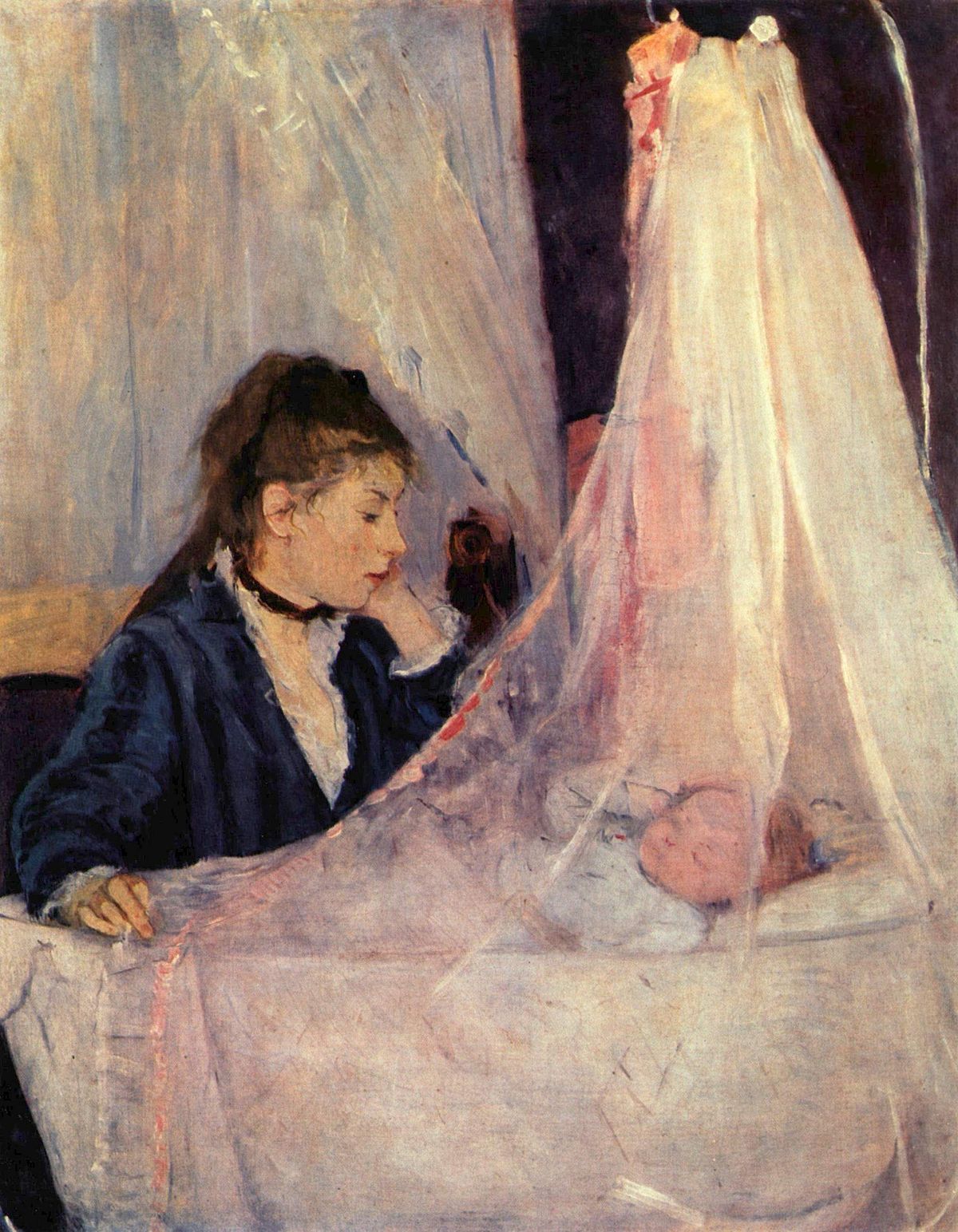
Kolevka, koju je Bert Moriso naslikala 1872. godine, zauzima posebno mesto u istoriji impresionizma kao jedno od dela izloženih na prvoj nezavisnoj grupnoj izložbi održanoj u aprilu 1874. u nekadašnjem ateljeu fotografa Nadara na Bulvaru Kapucina. Moriso je bila jedina žena među ključnim izlagačima na tom inauguralnom predstavljanju, i njeno učešće je samo po sebi bilo značajan čin u kulturnoj sredini koja je ozbiljno ograničavala profesionalne ambicije žena u vizuelnim umetnostima. Slika prikazuje Morisotinu stariju sestru Edmu Pontijon kako posmatra svoju ćerku Blanš koja spava, a koja leži u kolevci sa zavesama od prozirnog muslina. Tema je crpljena direktno iz Morisotinog porodičnog života: Edma je i sama bila talentovana slikarka, ali je napustila umetničku karijeru nakon udaje, žrtvu koju je Bert, koja je odlučila da nastavi da slika, posmatrala sa mešavinom divljenja i ambivalentnosti.
Domaći enterijer kao mesto slikarskog istraživanja nije bio nov 1872. — holandsko slikarstvo Zlatnog doba i francuske žanr scene iz osamnaestog veka pružali su obilne precedente — ali je Morisotina obrada teme bila izrazito moderna. Pristupila je intimnoj majčinskoj sceni ne kao sredstvu za moralnu pouku ili sentimentalni narativ, već kao prilici za ustrajnu vizuelnu pažnju prema igri svetlosti, teksture i psihološke nijanse. Slika je nastala u trenutku kada su se granice između javnog i privatnog života aktivno pregovarale u buržoaskom francuskom društvu, i Morisotina sposobnost da prostore na koje su žene njene klase bile uglavnom ograničene pretvori u predmete ozbiljne umetničke ambicije predstavlja tiho radikalan čin estetske i socijalne afirmacije.
Formalna analiza
Kompozicija Kolevke organizovana je oko trougaone strukture formirane od nagnutе majčine glave, njene ruke koja povlači zavesu i deteta koje spava ispod. Ova geometrija daje stabilnost onome što bi inače moglo biti krhak, efemeran predmet, usidrujući emocionalnu intimnost scene u čvrstu formalnu arhitekturu. Prozirni veo zavese kolevke je tehnički najbriljantnije mesto na slici: Moriso prikazuje muslin izuzetno delikatnim, poluprozirnim potezima četke koji dozvoljavaju da detetov oblik prosija kroz tkaninu, stvarajući vizuelnu metaforu za zaštitničku nežnost majčinog pogleda. Zavesa funkcioniše istovremeno kao slikarski element, prostorni razdvajač i emocionalna barijera — tanka koprena između posmatrača i deteta koja odzvanja majčinim sopstvenim zaštitničkim gestom.
Morisotina paleta je prigušena ali bogato nijansirana, dominirana crnim, belim i mekim sivim tonovima sa dodirima roze u detetovom tenu i cvetnom šarom posteljine kolevke. Majčina tamna haljina pruža snažan tonalni oslonac nasuprot kome prozračni beli tonovi zavese i posteljine vibriraju sa svetlucavim intenzitetom. Potez četke je fluidan i siguran, sa vidljivim potezima koji prenose i teksturu tkanina i atmosfersku mekoću domaćeg enterijera. Edmino lice prikazano je sa psihološkom dubinom koja prkosi skromnim dimenzijama platna: njen pogled nadole i blagi nagib glave sugerišu sanjarenje koje je istovremeno nežno i melanholično, hvatajući privatni trenutak udubljenosti koji posmatrač ima privilegiju da vidi ali nije pozvan da prekine.
Recepcija i nasleđe
Kolevka se široko smatra remek-delom Bert Moriso i jednom od definišućih slika ranog impresionizma. Njeno izlaganje na izložbi 1874. postavilo ju je na sam izvor impresionističkog pokreta kao javnog fenomena, a njen osetljiv prikaz domaćeg materinstva ponudio je snažan kontra-narativ pretežno muškim temama — urbanim bulvarima, hipodromima, kafeima — koje su favorizovali njeni muški kolege. Slika je demonstrirala da impresionistička posvećenost modernom životu i direktnom posmatranju može obuhvatiti unutrašnji svet ženskog iskustva sa istom ozbiljnošću i formalnom inovacijom primenjenom na bilo koji drugi predmet. Njeno otkupljivanje od strane francuske države 1930. i naknadno postavljanje u Musée d’Orsay potvrdilo je njen kanonski status u okviru impresionističke kolekcije.
Nasleđe slike proteže se u šire umetničko-istorijske diskusije o rodu, viziji i politici predmeta. Feminističke istoričarke umetnosti, naročito Grizelda Polok, ispitivale su kako su Moriso i njena savremenica Meri Kasat transformisale domaće prostore dostupne buržoaskim ženama u mesta istinskog slikarskog eksperimentisanja, izazivajući pretpostavku da značajna moderna umetnost može nastati samo iz angažovanja sa javnom sferom. Kolevka ostaje centralna u ovim debatama, demonstrirajući da intimna scena majke koja posmatra svoje dete može podržati istu složenost formalne invencije i psihološkog uvida kao bilo koja slika iz žanra velikog istorijskog slikarstva. Morisotino dostignuće u ovom delu postavilo je temelje za naredne generacije umetnica koje su insistirale na umetničkoj validnosti tema crpljenih iz ličnog i domaćeg iskustva.