Istorijski kontekst
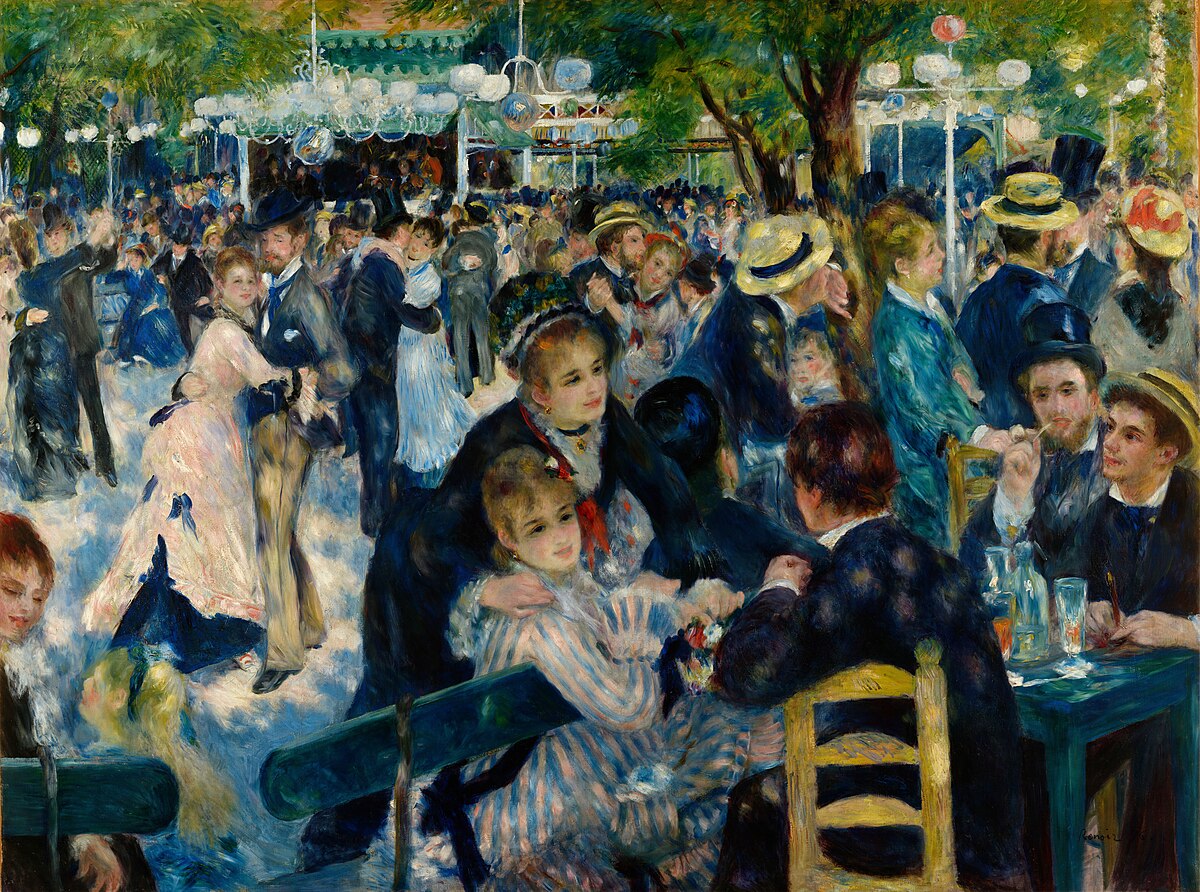
Do sredine 1870-ih, impresionistički krug je u potpunosti prihvatio radikalnu premisu da sam savremeni život konstituiše dostojan predmet za ambiciozno slikarstvo. Ples u Mulen de la Galet Pjera Ogista Renoar, izveden 1876. i izložen na trećoj impresionističkoj izložbi naredne godine, stoji kao jedna od najslavnijih realizacija tog uverenja. Mulen de la Galet bio je pravi radnički i boemski plesni salon smešten na brdu Monmartr, gde su se Parižani okupljali nedeljom popodne radi plesa, razgovora i jeftinih galeta serviranim uz vino. Renoar, koji je iznajmio atelje u blizini na Rue Korto, prenosio je svoje veliko platno na lice mesta i radio direktno prema posmatranju, angažujući prijatelje i modele da poziraju usred stvarne gomile. Slika tako zauzima fascinantan liminalni prostor između dokumentarnog posmatranja i pažljivo orkestrirane kompozicije, tenzija koja leži u srcu impresionističke prakse.
Društvena sredina prikazana na delu odražava duboke transformacije koje su preoblikovale Pariz pod Trećom Republikom. Baronova Osmanova renovacija grada raseljala je mnoge tradicionalne četvrti, a Monmartr je ostao jedno od retkih područja koja su zadržala seoski karakter na rubovima rastuće metropole. Raznovrsna gomila koju je Renoar okupio — umetnici, prodavačice, činovnici i lokalni stanovnici — otelotvoruje novu društvenu fluidnost moderne urbane kulture. Za razliku od zvaničnih salonskih slika koje su se bavile istorijom, mitologijom ili moralizatorskim žanr scenama, Renoarovo platno insistira na estetskom dostojanstvu običnog zadovoljstva, predstavljajući demokratsku viziju pariškog druženja okupanog šarenim svetlom koje se probija kroz krošnje bagrema iznad.
Formalna analiza
Kompozicija je strukturirana oko majstorske međuigre pokreta i stabilnosti. Grupa u prvom planu koja sedi za stolom učvršćuje oko posmatrača, dok vrtoglavi plesači u srednjem planu stvaraju dinamičan kontrapunkt koji odvlači pogled dublje u slikovni prostor. Renoar koristi suptilno dijagonalno povlačenje, vodeći oko od donjeg desnog ugla ka gornjoj levoj pozadini, gde se dodatni plesači i plinski fenjeri plesnog podijuma rastvaraju u izmaglicu boje. Pjegavo sunčevo svetlo, prefiltrirano kroz lišće iznad, proizvodi izvanredno složen obrazac toplih i hladnih tonova preko odeće i kože figura, transformišući celokupnu površinu u treperavi mozaik razložene boje.
Renoarov potez četke na ovoj slici spada među njegove najvirtuoznije. Nanosi pigment u slobodnim, pernatim potezima koji sugerišu a ne definišu formu, omogućavajući oku posmatrača da sintetizuje volumene iz mrlja suprotstavljenih nijansi. Paletom dominiraju plave, ljubičaste i tople ružičaste, isprekidane tamnim akcentima muških odela i šešira. Lica su renderovana sa dovoljno specifičnosti da prenesu individualni karakter bez žrtvovanja ukupnog atmosferskog jedinstva. Tretman svetlosti je posebno izvanredan: sunčeve pege na haljinama i tlu nisu samo svetlije površine već distinktivni hromatski događaji, pomerajući se od limonasto žute do bledo lavande zavisno od lokalne boje. Ova optička sofisticiranost, postignuta bez pribegavanja akademskom kijaroskuru, predstavlja impresionističku revoluciju u svom najuverljivijem obliku.
Recepcija i nasleđe
Ples u Mulen de la Galet odmah je prepoznat kao kapjalno dostignuće. Na izložbi 1877, kritičar Žorž Rivijer proglasio ga je „jednom od najvažnijih slika naše ere”, hvaleći njegovu istinitost i vitalnost. Kasnija istorija slike potvrdila je tu ocenu: stečena nakon što ju je Renoarov prijatelj Gistav Kajbot kupio, ušla je u francuske nacionalne kolekcije kroz Kajbotov slavni legat iz 1894, čin patronata koji je sam postao žarišna tačka u debatama o legitimnosti impresionizma kao umetnosti dostojne muzeja. Putovanje slike od kontroverzne avangardne izložbe do centralne pozicije u Muzeju Orsej odražava širi luk kulturnog trijumfa impresionizma.
Uticaj dela proteže se daleko izvan svog neposrednog istorijskog trenutka. Njegov tretman dokolice kao predmeta za monumentalno slikarstvo anticipira razvoj u umetnosti dvadesetog veka od Ešken škole do pop arta. Njegove kompozicione strategije — naizgled ležeran a ipak rigorozno orkestriran raspored figura, imerzivni osećaj bivanja unutar scene umesto posmatranja sa distanciranog gledišta — uticale su na generacije slikara zainteresovanih za beleženje teksture društvenog iskustva. Šire gledano, slika je postala ikona jedne posebne vizije Pariza i samog impresionističkog projekta: umetnosti kao proslave senzualnog zadovoljstva, modernog života i prolazne lepote potpuno proživljenog trenutka.