Istorijski kontekst
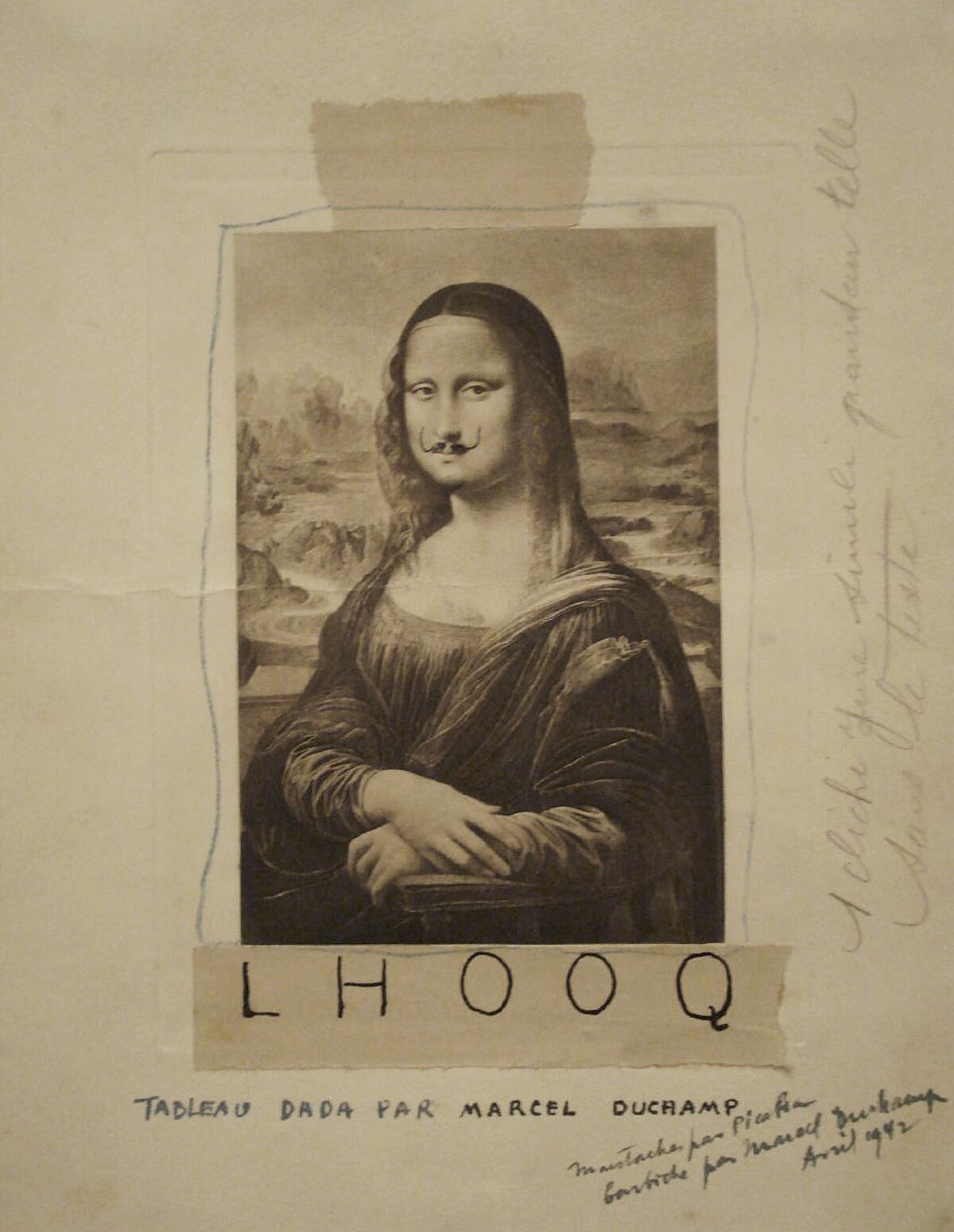
Nastalo u Parizu 1919. godine, ubrzo nakon Dišanovog povratka iz Njujorka, L.H.O.O.Q. pripada talasu ikonoklastičkih gestova koji su karakterisali međunarodni dadaistički pokret u neposrednoj posledici Prvog svetskog rata. Delo se sastoji od komercijalno dostupne razglednice-reprodukcije Mona Lize Leonarda da Vinčija na koju je Dišan olovkom nacrtao brkove i zašiljenu bradicu. Ispod slike ispisao je slova L.H.O.O.Q., koja, pročitana naglas na francuskom (elle a chaud au cul), proizvode vulgaran izraz koji se grubo može prevesti kao „ona ima vrelu zadnjicu”. Meta je bila pažljivo odabrana: Mona Liza je postala, naročito nakon njene senzacionalne krađe iz Luvra 1911. i povratka 1913, najpoznatija i najreproducovanija slika na svetu — vrhunski amblem renesansnog genija, institucionalnog prestiža i estetskog poštovanja. Vandalizujući jeftinu kopiju ove kulturne ikone, Dišan je napadao ne samu sliku već mitologiju obožavanja remek-dela koja ju je okruživala.
Gest je bio i duboko ličan. Dišan se dugo bavio pitanjima rodnog identiteta, alter ega i nestabilnosti sopstva — preokupacije koje bi kulminirala u njegovoj ženskoj personi Roz Selavi. Dodavanje muške facijalne dlakavosti Leonardovom čuveno androginom subjektu može se čitati kao rano istraživanje rodne fluidnosti, komplikujući identitet prikazane osobe umesto da ga jednostavno ismeva. Neki naučnici su takođe primetili umetničko-istorijsku rezonanciju intervencije: sam Leonardo je navodno koristio muškog modela (verovatno svog asistenta Salaja) za Mona Lizu, a Dišanovi docrtani dodaci mogu se videti kao bukvalizacija podteksta o kojem su istoričari umetnosti dugo raspravljali u pristojnijim terminima.
Formalna analiza
Formalna ekonomičnost L.H.O.O.Q. deo je njegove polemičke snage. Dišanova intervencija sastoji se od samo nekoliko poteza olovkom — tankih, povijenih brkova i male bradice — ali su ovi minimalni dodaci dovoljni da destabilizuju čitavu ikonografsku tradiciju Mona Lize. Brkovi i brada nacrtani su sa namernom nonšalantnošću, ni karikaturalno ni pažljivo izvedeni, zauzimajući dvosmisleni registar između vandalizma i portretisanja. Njihova grafitna tekstura kontrastira sa fotomehaničkim polutonskim tačkama razglednice, stvarajući vidljivu razliku između masovno proizvedene bazne slike i ručno nacrtanog dodatka. Ova materijalna razlika naglašava konceptualnu hijerarhiju koju Dišan preokreće: „original” u ovom delu je jeftina razglednica, dok je „dodatak” — navodna manja, parazitska oznaka — element koji transformiše objekat u umetnost.
Natpis „L.H.O.O.Q.” funkcioniše i kao naslov i kao integralna vizuelna komponenta, učvršćujući sliku za njenu verbalnu igru reči. Slova su ispisana Dišanovim urednim, nenametljivim rukopisom, dajući im pseudo-oficijalni kvalitet koji parodira konvencije potpisivanja i katalogiziranja. Mala dimenzija dela — manja od standardnog lista papira — sama po sebi je značajna: odbija monumentalnost konvencionalno povezanu sa važnom umetnošću i umesto toga operiše na razmerama efemernoga, jednokratnog i poštanskog. Dišan je kasnije proizveo varijantu pod nazivom L.H.O.O.Q. obrijano (1965), koja se sastojala od neizmenjene reprodukcije Mona Lize — implicirajući da original Leonarda, jednom viđen kroz prizmu vandalizovane verzije, nikada više ne može biti gledano nevino.
Recepcija i nasleđe
L.H.O.O.Q. je široko prepoznato kao izvorni čin umetnosti aproprijacije — prvo delo koje je uzelo postojeću sliku, minimalno je izmenilo i predstavilo rezultat kao novu umetničku izjavu. Ova strategija postala bi jedan od dominantnih modusa postmoderne umetničke prakse, informišući prakse umetnika tako raznolikih kao što su Robert Raušenberg (čiji Izbrisani crtež De Kuninga iz 1953. je invertovao Dišanovo aditivno vandalizovanje u subtraktivno), Endi Vorhol (čije sitotisnute Mona Lize su multiplicirale ikonu u pop robu) i Šeri Levin (čije refotografisane Voker Evans fotografije su proširile logiku aproprijacije do tačke gotovo identičnosti). Delo je takođe uspostavilo obrazac za kritičko angažovanje sa masmedijskom slikom koje bi postalo centralno za Generaciju slika kasnih 1970-ih i 1980-ih.
Izvan svoje umetničko-istorijske potomstvo, L.H.O.O.Q. je postavilo pitanja o originalnosti, autorstvu i kulturnoj vrednosti koja ostaju nerešena. Ako nekoliko poteza olovkom na razglednici može da konstituiše značajno umetničko delo, onda je lokus umetničkog značenja odlučno prešao sa zanata na koncept, sa materijalnog rada na intelektualno preoblikovanje. Ova tvrdnja, skandalozna 1919, postala je temeljni postulat savremene umetničke prakse i teorije. Delo je takođe anticipiralo savremeno stanje zasićenosti slikama, u kome kanonska umetnička dela cirkulišu kao beskonačno reproduktibilni digitalni fajlovi podložni beskrajnoj modifikaciji — stanje koje čini Dišanovu intervenciju na razglednici ne samo proročkom već gotovo simpatično skromnom. Višestruke verzije i replike L.H.O.O.Q. koje postoje u raznim kolekcijama dodatno komplikuju pitanja autentičnosti, obezbeđujući da delo nastavi da funkcioniše kao produktivni iritant unutar institucije umetnosti.