Istorijski kontekst
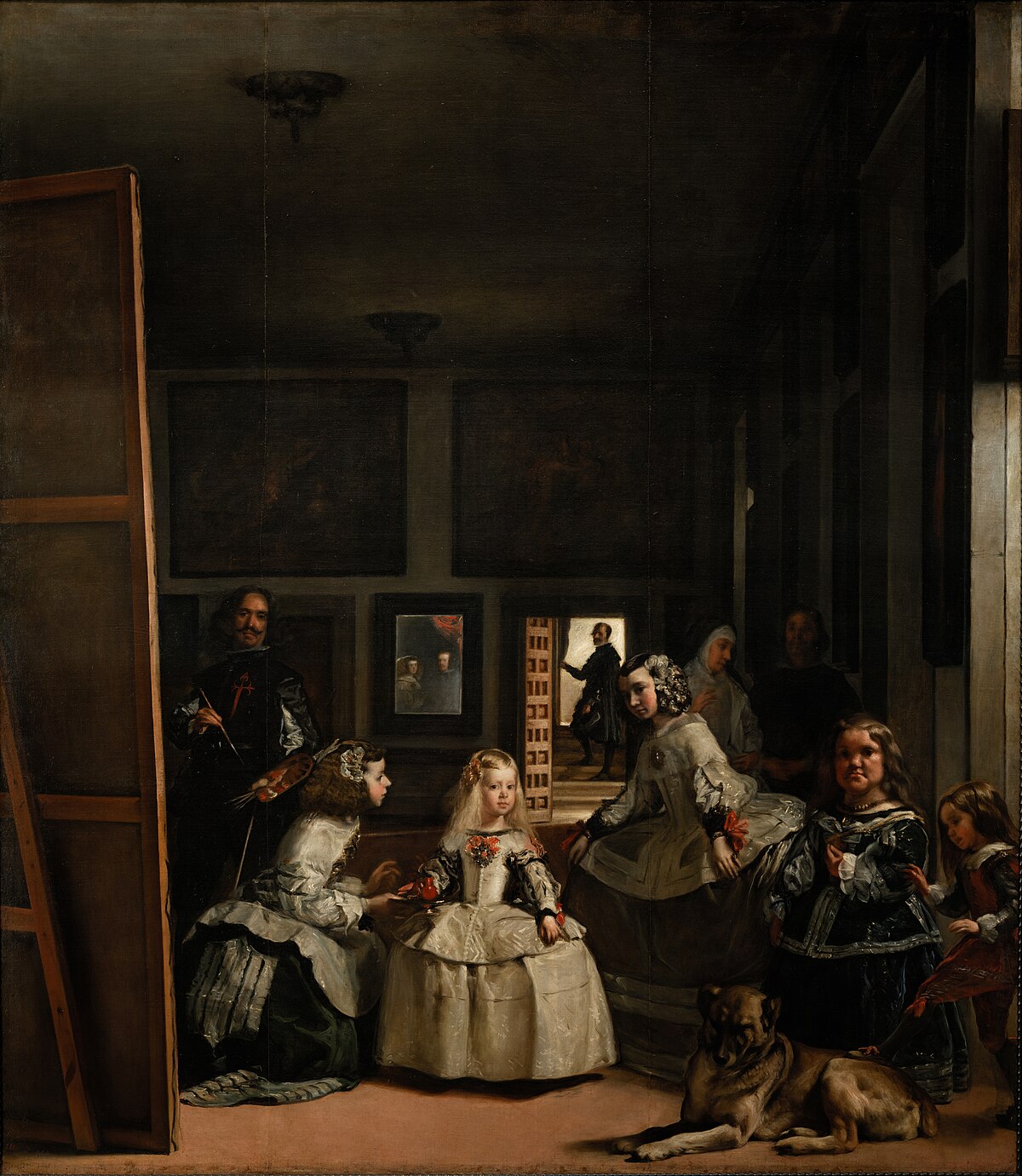
Las Meninas je, na svom najfundamentalnijem nivou, slika o činu slikanja — samorefleksivna meditacija o reprezentaciji, viđenju i odnosu između umetnika, subjekta i posmatrača koja nema prethodnika u zapadnoj umetnosti. Scena je smeštena u Cuarto del Principe u Kraljevskom alkazaru u Madridu, velikoj sobi sa visokim plafonom koju je Velaskes koristio kao atelje. Na levoj strani, sam umetnik stoji pred ogromnim platnom čija poleđina gleda posmatrača; ne vidimo šta slika. U centru, petogodišnja infanta Margarita Tereza, kćerka kralja Filipa IV i kraljice Marijane, okružena je dvema dvorskim damama (meninas iz naslova), Marijom Agustinom Sarmijento de Sotomaijor, koja ponudi infantu crvenu glinenu bučaru posudu s vodom na srebrnom poslužavniku, i Isabelom de Velasko, koja se klanja. Desno stoje dva patuljka — Mari Barbola i Nikolas Pertusato, koji ovom šaljivo bode velikog mastifa nogom — i nadstojnica Marsela de Uljoa, koja razgovara sa neidentifikovanim guardadamasom. U pozadini, aposentador Hose Nijeto Velaskes zastaje u svetlom osvetljenom prolazu vrata. A na zidu u pozadini, nejasno se u ogledalu reflektuju polufigure samog kralja i kraljice.
Prostorna i epistemološka zagonetka slike vrti se oko jednog pitanja: šta Velaskes slika na tom ogromnom platnu? Odraz u ogledalu u pozadini sugeriše da kralj i kraljica stoje u prostoru koji zauzima stvarni posmatrač — to jest, ispred slike. Ako Velaskes slika njihov portret, onda je čitava scena organizovana oko tačke gledišta koja se poklapa sa kraljevskim prisustvom, a infanta i njena pratnja su ušli u atelje i gledaju prema svojim roditeljima. Posmatrač, u ovom čitanju, stoji na mestu kralja i kraljice, postajući implicitni subjekat slike i objekat svakog pogleda unutar nje. Ali alternativna tumačenja obiluju: ogledalo možda ne reflektuje stvarne monarhe već njihovu sliku na platnu koje Velaskes slika; veliko platno možda prikazuje upravo scenu koju mi gledamo (same Las Meninas); ili je prostorni raspored namerno nerazrešiv, optička i filozofska zagonetka dizajnirana da zbuni svako fiksno tumačenje.
Čuvena analiza Las Meninas Mišela Fukoa u uvodnom poglavlju Reči i stvari (Les Mots et les Choses, 1966) transformisala je sliku iz umetničko-istorijskog remek-dela u filozofski probni kamen. Za Fukoa, slika dramatizuje krizu klasične reprezentacije — nemogućnost da se istovremeno zauzmu pozicije posmatračkog subjekta, predstavljenog objekta i umetnika koji predstavlja. Tri funkcije, koje je renesansna perspektiva samopouzdano ujedinila u jednoj tački nestajanja, ovde su raspodeljene po nesamerljivim pozicijama: posmatrač stoji tamo gde bi trebalo da budu kralj i kraljica; umetnik je unutar slike ali gleda napolje; platno-unutar-platna okrenuto je suprotno, skrivajući svoj sadržaj. Fuko ovo čita kao alegoriju epistemičke strukture klasičnog doba, u kojoj reprezentacija nikada ne može u potpunosti da obuhvati subjekat koji je organizuje. Analiza, kakva god da su joj ograničenja kao istorija umetnosti, trajno je uspostavila Las Meninas kao delo koje operiše na filozofskim, a ne samo estetskim registrima.
Formalna analiza
Velaskesov potez četkice u Las Meninas predstavlja apoteozu njegovog poznog stila — tehniku tako radikalne labavosti da anticipira optičko slikarstvo impresionista za dva veka. Infantina srebrno-bela haljina, najsjakniji pasaž u kompoziciji, prikazana je kroz široke, naizgled bezbrižne poteze olovnog belog, bledo plavog i srebrno-sivog koji se pretvaraju u svetlucajuću teksturu svilenog brokata samo na odstojanju. Gledano izbliza, površina se rastvara u apstraktno polje pojedinačnih poteza četkice koji ne liče ni na šta od tkanine. Ova optička tehnika — slikanje ne predmeta već svetlosti reflektovane sa predmeta onako kako stiže do oka — prepoznata je kao revolucionarna od savremenika. Italijanski slikar Luka Đordano, ugledavši Las Meninas u Alkazaru, navodno ih je nazvao „teologijom slikarstva”, napomena koja pogađa i intelektualnu ambiciju i gotovo metafizičku prefinjenost Velaskesove metode.
Uključivanje dva dvorska patuljka i mastifa nije ni uzgredno ni čisto dekorativno; ono odražava složenu socijalnu ekologiju habsburškog dvora, gde su osobe niskog rasta zauzimale prepoznatu i paradoksalnu poziciju. Oni su istovremeno bili saputnici, zabavljači i živi markeri razlike nasuprot koje je definisana kraljevska normativnost. Mari Barbola, nemačka patuljkinja upečatljivog, gotovo konfrontacionalnog prisustva, gleda direktno u posmatrača sa intenzitetom koji se podudara sa pogledom infantele; Nikolas Pertusato, razigraniji i živahniji, angažuje se sa pospanm psom. Velaskes ih slika sa istim dostojanstvom i pažnjom koje ukazuje kraljevskoj porodici — izbor koji je čitan i kao afirmacija njihove ljudskosti i kao suptilan komentar o performativnoj prirodi dvorske hijerarhije, u kojoj svaka figura, od kralja do patuljka, zauzima dodeljenu ulogu u pažljivo koreografisanom spektaklu.
Velaskesova odluka da se sam uključi u sliku — istaknuto, u punom formatu, sa četkicom i paletom u ruci — predstavlja jedan od najsmelijih činova umetničkog samopotvrđivanja u istoriji evropskog slikarstva. Na grudima nosi crveni krst Reda Santiaga, najprestižnijeg španskog viteštičkog reda, u koji je primljen 1659. — tri godine nakon završetka slike. Legenda kaže da je sam Filip IV naslikao krst na platnu nakon Velaskesovog prijema, mada je dodatak verovatnije napravjen od strane dvorskog slikara na kraljevsku instrukciju. Krst funkcioniše kao tvrdnja o plemenitom statusu slikara, argument da je umetnost slikarstva slobodna umetnost dostojna aristokratskog priznanja, a ne puki ručni zanat. Ovo je bilo živo i sporno pitanje u Španiji sedamnaestog veka, gde su slikari bili podložni alkabali, porezu na prodaju koji se naplaćivao za zanatske proizvode, i gde je društveni status vizuelnih umetnosti ostao gorko osporan.
Uticaj slike na kasniju umetnost bio je ogroman i izuzetno raznolik. Pablo Pikaso, u trajnom činu omaža i dekonstrukcije, proizveo je pedeset osam varijacija na temu Las Meninas između avgusta i decembra 1957, sistematski fragmentirajući Velaskesovu kompoziciju kroz objektiv kubizma i ponovo je sklapajući u sekvenci koja predstavlja jedan od najintenzivnijih dijaloga umetnika sa umetnikom u modernoj umetnosti. Pikasove varijacije istražuju prostorne dvosmislenosti slike, njenu igru pogleda i njenu meditaciju o ulozi slikara sa opsesivnom temeljitošću koja sama postaje komentar o neiscrpnosti Velaskesove inventivnosti. Izvan Pikasa, Las Meninas su referencirane, dekonstruisane i reimaginirane od strane umetnika od Fransiska Goje do Salvadora Dalija, od Ričarda Hamiltona do Jasumase Morimure, svaka generacija pronalazeći u njima nova pitanja o viđenju, moći i prirodi slikovne reprezentacije.
Značaj i nasleđe
Istoričari umetnosti dosledno su rangirali Las Meninas među dve ili tri najveće slike u zapadnoj tradiciji, a razlozi za ovaj konsenzus su poučni. Slika postiže integraciju formalne, intelektualne i emocionalne složenosti koja je praktično jedinstvena. Ona je istovremeno grupni portret, žanr scena, meditacija o optici i percepciji, rasprava o društvenom statusu umetnika, dinastička izjava o habsburškoj moći i filozofsko istraživanje uslova same reprezentacije. To što sve ovo postiže unutar kompozicije naizgled bez napora naturalnom — sobi u koju se čovek oseća da bi mogao zakoračiti — konačna je mera Velaskesovog genija. Slika ne objavljuje svoju složenost; otkriva je postepeno, nagrađujući ustrajnu pažnju sve dubljim slojevima značenja, čineći svaki susret iskustvom otkrića koje replicira, u minijuturi, beskonačno razvijajuću prirodu samog vizuelnog tumačenja.