Istorijski kontekst
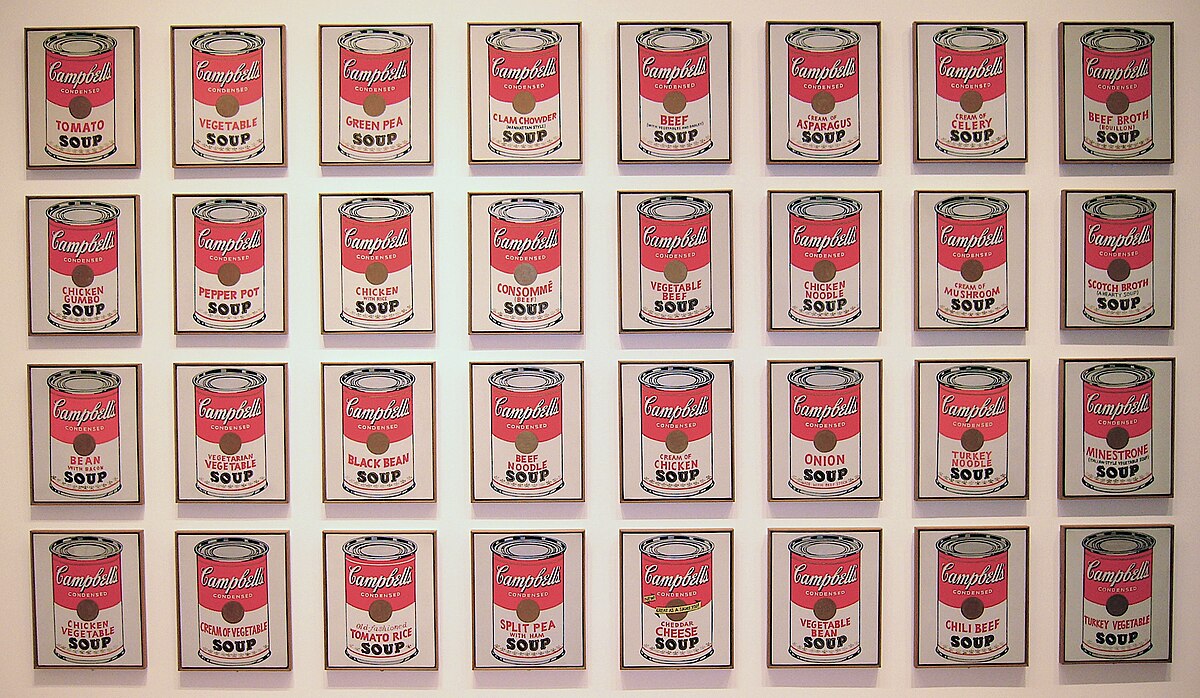
Kembel supa konzerve Endija Vorhola — set od trideset dva platna, od kojih svako prikazuje drugu vrstu Kembelove kondenzovane supe — predstavljaju jednu od najznačajnijih intervencija u istoriji posleratne umetnosti. Prvo izložena u galeriji Ferus u Los Anđelesu od 9. jula do 4. avgusta 1962. godine, na izložbi koju je organizovao direktor galerije Irving Blum, slike su prvobitno bile postavljene na uskim policama duž zidova galerije, oponašajući izlaganje robe na policama supermarketa — kuratorska odluka koja je sama po sebi bila radikalan iskaz o odnosu između umetnosti i trgovine. Izložba je izazvala trenutnu polemiku: susedna galerija Primus-Stuart složila je prave konzerve Kembelove supe u izlogu sa natpisom „Nabavite pravu stvar za 29 centi”, kristalizujući pitanje koje je delo postavilo sa razarajućom jednostavnošću — ako je slika konzerve supe nerazlučiva (po predmetu, tehnici i utisku) od komercijalne ilustracije, šta je čini umetnošću?
Formalna analiza
Tehnika koju je Vorhol primenio za konzerve supe zauzima namerno dvosmislenu zonu između ručno rađene slike i mehaničke reprodukcije. Platna su nastala polumehaničkim postupkom: Vorhol je projektovao fotografske slike konzervi supe na platno i iscrtao konture, a zatim ručno popunio boje sintetičkom polimernom bojom. Motiv ljiljana na donjem delu svake konzerve nanesen je ručno rezanim gumenim pečatom. Rezultat je površina koja oponaša bezličnu ujednačenost komercijalne štampe, ali pri pažljivom posmatranju otkriva suptilne nepravilnosti koje odaju ljudsku ruku. Ova napetost između mehaničkog i ručnog je centralna za značenje dela: Vorhol nije jednostavno reprodukovao komercijalne slike, već je izvodio složen čin umetničkog ventrilokizma, koristeći svoju ruku da simulira odsustvo ličnosti mašine. Kasniji prelazak na sito-štampu — koju je Vorhol usvojio ubrzo posle serije konzervi supe — gurnuo bi ovu logiku dalje, ali slike iz 1962. zauzimaju ključni prelazni trenutak kada je ruka još bila vidljiva, još uvek saučesnica u sopstvenom brisanju.
Izbor Kembelove supe kao predmeta bio je istovremeno duboko ličan i razarajuće bezličan. Vorhol je tvrdio da je jeo Kembelovu supu za ručak skoro svaki dan dvadeset godina, izjava koja može ali i ne mora biti doslovno tačna, ali koja pozicionira konzervu supe kao predmet intimne svakodnevne bliskosti — samu suprotnost egzotičnog, uzvišenog ili estetski izuzetnog predmeta koji se tradicionalno smatrao dostojnim umetnosti. Konzerva supe je radikalno demokratska: košta isto svuda, izgleda isto svuda, ima isti ukus svuda. To je masovno proizveden proizvod dizajniran da bude identičan u svakom primerku — polarna suprotnost jedinstvenog, neponovljivog umetničkog dela. Uzdižući ovaj predmet na status visoke umetnosti, Vorhol nije samo pravio dišamovski gest institucionalne kritike (mada je dug Dišanovim readymade predmetima neporeciv); on je takođe davao izjavu o vizuelnom okruženju posleratnog američkog života, u kome su slike komercijalnog brendiranja, reklamiranja i pakovanja postale dominantno vizuelno iskustvo — rasprostranjenije, emotivno snažnije i estetski doslednije od bilo koje muzejske kolekcije.
Serijski format dela — trideset dva platna, po jedno za svaku vrstu koju je Kembel u to vreme nudio (paradajz, pileća rezanca, krem od pečuraka, biber lonac i tako dalje) — jednako je radikalan kao i sam predmet. Predstavljajući trideset dve gotovo identične slike koje se razlikuju samo po imenu ukusa odštampanom na svakoj etiketi, Vorhol je doveo u pitanje romantičarski kult originalnosti i jedinstvenosti koji je dominirao zapadnom estetikom od osamnaestog veka i koji je apstraktni ekspresionizam uzdigao do gotovo religijskog principa. Dok je svaka Polokova kap bila neponovljiv izraz individualnog genija, svaka Vorholova konzerva bila je namerna tvrdnja o istosti — odbijanje ekspresivnog, spontanog i jedinstvenog u korist repetitivnog, mehaničkog i serijskog. Delo postavlja pitanje: ako vrednost umetnosti leži u njenoj jedinstvenosti, šta se dešava kada umetnik namerno proizvede trideset dve verzije iste slike? Da li svako platno poseduje individualnu vrednost, ili značenje leži u seriji kao celini — u samom činu ponavljanja?
Recepcija i nasleđe
Blumova odluka da zadrži set na okupu pokazala se kao jedan od najznačajnijih činova pronicljivosti u posleratnoj istoriji umetnosti. Pet od trideset dva platna prvobitno je prodato pojedinačno za po 100 dolara, ali Blum, prepoznajući da značenje dela zavisi od njegovog serijskog integriteta, otkupio ih je i nabavio kompletan set za 1.000 dolara — plaćenih Vorholu u deset mesečnih rata od po 100 dolara. Godine 1996, Blum je prodao kompletan set Muzeju moderne umetnosti za 15 miliona dolara, transakcija koja je retroaktivno potvrdila njegovu intuiciju da trideset dva platna čine jedno, nedeljivo umetničko delo. Pitanje da li su Kembel supa konzerve jedno delo ili trideset dva nikada nije definitivno razrešeno, i ta dvosmislenost je sama po sebi konstitutivna za značenje dela: ono postoji u nestabilnom prostoru između pojedinačnog i višestrukog, umetničkog dela i robe, jednog i mnogih.
Odnos između Kembel supa konzervi i Vorholove ranije karijere komercijalnog ilustratora ključan je za razumevanje kako estetskih strategija dela tako i njegove kritičke provokacije. Pre nego što se ponovo pronašao kao umetnnik likovne umetnosti, Vorhol je bio jedan od najuspešnijih komercijalnih ilustratora u Njujorku, proizvodeći elegantne, duhovite crteže za klijente uključujući cipele I. Miller, Tiffany & Co. i razne modne časopise. Njegov komercijalni rad karakterisala je prepoznatljiva tehnika razmazane linije koja je kombinovala mehaničku reproduktivnost sa ručnim šarmom — upravo onaj hibridni kvalitet koji bi iskoristio u konzervama supe. Otpor sveta visoke umetnosti prema Vorholu bio je neodvojiv od njegove komercijalne pozadine: u miljeu koji je cenio autentičnost, introspekciju i egzistencijalnu ozbiljnost (etos apstraktnog ekspresionizma), Vorholovo iskreno prihvatanje trgovine, površina i bezličnosti doživljeno je kao uvreda. Njegova čuvena izjava — „Želim da budem mašina” — bila je najprovokantnija moguća izjava u svetu umetnosti koji je glorifikovao umetnika kao jedinstveno ekspresivnog pojedinca.
Kritička ozlojeđenost koja je dočekala konzerve supe postepeno je ustupila mesto prepoznavanju njihovih radikalnih implikacija, a uticaj dela na kasniju umetnost bio je nesaglediv. Rušenjem razlike između visoke umetnosti i komercijalne slike, Vorhol je otvorio vrata strategijama prisvajanja generacije Pictures (Šeri Livin, Ričard Prins, Barbara Kruger), robnoj kritici Džefa Kunsa i brend-umetnosti Takašija Murakamija. Prihvatajući serijalnost i mehaničku reprodukciju, anticipirao je konceptualnu umetnost šezdesetih i sedamdesetih, sa njenim naglaskom na sisteme, procese i ideje umesto na jedinstvene predmete. Čineći umetnikovu personu — njegovu kalkulisanu prazninu, stratešku banalnost, odbijanje dubine — jednako delom umetničkog dela koliko i objekte koje je proizveo, Vorhol je anticipirao strategije identiteta-kao-umetničkog-dela savremene prakse. Poređenje sa Dišanovim readymade predmetima je poučno: dok je Dišan uklonio predmet iz prodavnice i postavio ga u galeriju, Vorhol je naslikao sliku predmeta, posredujući ga kroz čin umetničke produkcije istovremeno preispitujući šta taj čin može značiti u doba mehaničke reprodukcije.
Kembel supa konzerve ostaju, više od šest decenija nakon nastanka, delo koje generiše više pitanja nego odgovora — što je upravo njihovo dostignuće. Da li su proslava potrošačke kulture ili njena kritika? Da li su umetničko delo ili komercijalna ilustracija? Da li govore o svemu ili o ničemu? Vorholov genij ležao je u njegovom odbijanju da razreši ova pitanja, u njegovom insistiranju da zauzme prostor dvosmislenosti sa savršeno kalibriranom prazninom koja je pozivala — i nastavlja da poziva — beskrajno tumačenje a da nikada ne potvrdi nijedno jedino čitanje. Konzerve supe su, na kraju, tačno ono što izgledaju: trideset dve slike konzervi supe, napravljene od strane umetnika koji je razumeo, pre gotovo svih drugih, da je u kulturi zasićenoj komercijalnim slikama najradikalniji umetnički gest bio ne povlačenje u apstrakciju ili introspekciju, već držanje ogledala vizuelnoj površini svakodnevnog života i postavljanje pitanja, sa razarajućom jednostavnošću, da li iza nje postoji išta drugo.