Istorijski kontekst
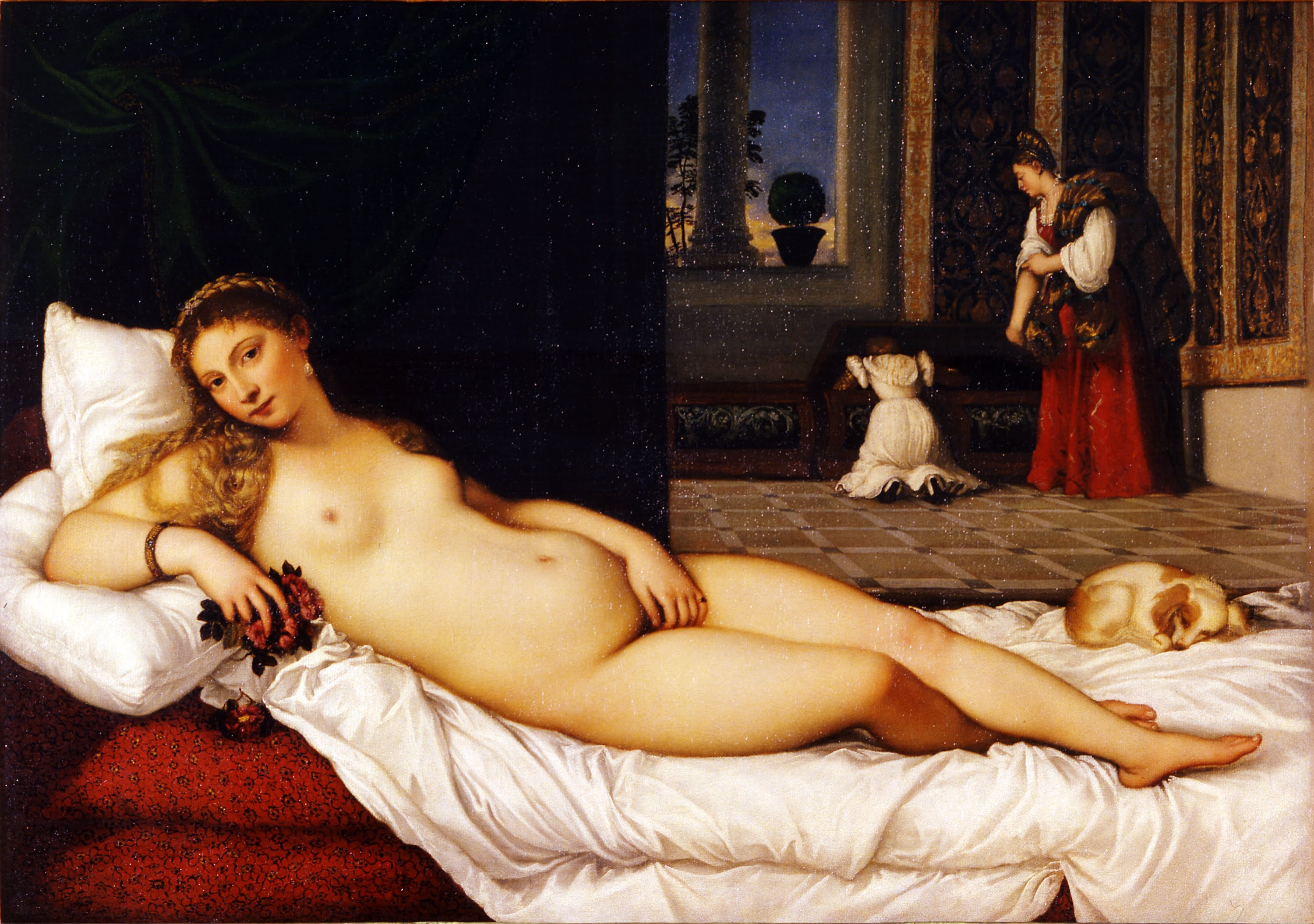
Venera iz Urbina, koju je Ticijan (Ticiano Večelio) naslikao 1538. godine, jedno je od najslavnijih, najkontroverznijih i najuticajnijih prikaza ženskog akta u istoriji zapadne umetnosti. Slika prikazuje mladu ženu koja leži na krevetu ili ležaju u bogato opremljenom domaćem enterijeru, telo joj je blago nagnuto ka posmatraču, leva ruka počiva na — ili iznad — pubisa, a desna ruka labavo drži mali buket ruža. Ona gleda direktno u posmatrača sa izrazom mirne samosvesti koji je različito opisivan kao pozivajući, konfrontacioni, znalački i smiren. Kod njenih nogu, mali španijel leži sklupčan u snu. U pozadini, odvojene od prostora prednjeg plana tamnom arhitektonskom podelom, dve sluge pretražuju veliki kasone (svadbeni kovčeg), daljanija klečeći pred drugim kovčegom dok bliža stoji delimično okrenuta leđima. Sliku je 1538. godine nabavio Gvidobaldo dela Rovere, naslednik vojvodstva Urbino, koji ju je u svojoj prepisci jednostavno nazivao „la donna nuda” — naga žena — oznaka koja odmah postavlja pitanja o identitetu figure i funkciji slike.
Formalna analiza
Odnos slike prema Đorđoneovoj Veneri koja spava (oko 1508-1510, Gemeldegaleri, Drezden) je polazna tačka svake umetnoistorijsko analize. Đorđoneova slika — za koju se smatra da ju je sam Ticijan dovršio nakon Đorđoneove prerane smrti od kuge 1510. godine, dodajući pozadinski predeo — uspostavila je ikonografski tip ležećeg ženskog akta u venecijanskom slikarstvu: žena koja leži na beloj draperiji, glava nagnuta na podignutu ruku, jedna ruka počiva na pubisu. Ali razlike između dva dela su jednako značajne koliko i sličnosti. Đorđoneova Venera spava, zatvorenih očiju, njeno telo postavljeno nasuprot idiličnom pastoralnom predelu; ona je nesvesna da je posmatrana, njena nagost nevina i snovidna, njen identitet boginje Venere osiguran mitološkim okruženjem predela. Ticijanova figura, nasuprot tome, emfatično je budna, njene oči otvorene i usmerene direktno na posmatrača, njeno okruženje nije mitološki predeo, već savremeni venecijanski domaći enterijer. Dok Đorđoneova Venera postoji u bezvremenom, prepadničkom prostoru nevinosti, Ticijanova figura nastanjuje specifičan, materijalan, istorijski utemeljen svet — i ona zna da je posmatrana.
Ovaj direktan pogled je najradikalnija i najanaliziranija odlika slike. U umetnoistrijskim terminima, ležeći akt koji gleda posmatrača ukida distancu između idealnog i stvarnog, između mitološke apstrakcije i življenog iskustva, između objektivizovanog tela prikazanog za kontemplaciju i autonomnog subjekta koji uzvraća pogled posmatrača. Pogled uspostavlja odnos uzajamne svesnosti između figure i posmatrača koji sliku napaja erotskom napetošću odsutnom iz Đorđoneove figure koja spava. Bilo da se ovaj pogled razume kao poziv, izazov ili jednostavno potvrda, zavisi od interpretativnog okvira koji se primenjuje, ali njegov efekat je da transformiše posmatrača iz distanciranog posmatrača idealnog lepote u aktivnog učesnika u razmeni koja je, neizbežno, o želji. Mark Tven, posetivši Ufiice 1880. godine, opisao je sliku kao „najprljaviju, najnižu, najopscentniju sliku koju svet poseduje,” reakcija koja, u samom svom eksceu, svedoči o moći pogleda da destabilizuje pretpostavljenu poziciju estetske distanciranosti posmatrača.
Debata o tome da li figura predstavlja boginju Veneru ili savremenu ženu — kurtizanu, nevestu ili konkretnu osobu — zaokupljala je naučnike generacijama i ostaje nerešena. Naslov „Venera iz Urbina” primenjen je tek sredinom sedamnaestog veka; Gvidobaldo dela Rovereovo pominjanje „la donna nuda” ne sugeriše nikakvu mitološku identifikaciju. Domaći enterijer, savremeni nameštaj, sluškinje angažovane u svakodnevnim zadacima, pas koji spava (simbol bračne vernosti u ikonografiji renesanse) — sve ukazuje na okruženje iz stvarnog sveta, a ne mitološko. Neki naučnici, primećujući da je Gvidobaldo nabavio sliku neposredno pre svog venčanja sa Đulijom Varano 1534. godine (mada slika nije završena do 1538), tvrdili su da je funkcionisala kao vrsta erotske svadbene slike, pri čemu aktna figura otelotvoruje vrline bračne ljubavi, lepote i plodnosti koje se očekuju od renesansne neveste. Ruže u njenoj desnoj ruci i biljka mirta vidljiva na prozorskoj dasci u pozadini — obe povezane sa Venerom i ljubavlju — podržavaju ovo čitanje, kao i kasone, tradicionalni svadbeni kovčeg, iz koga sluge vade odeću. Drugi su tvrdili da je figura kurtizana, njen direktan pogled i istaknut gest ruke označavajući je kao seksualno dostupnu, a ne skromno kreposnu.
Ticijanov kolorito — njegovo majstorstvo boje kao primarnog sredstva slikovne konstrukcije, nasuprot firentinskom naglasku na disenju (crtežu i liniji) — dostiže vrhunac prefinjenosti u Veneri iz Urbina. Figura je modelovana ne oštrim konturama ili snažnim kjaroskurom, već najsuptilnijim gradacijama toplih i hladnih tonova, boja nanesena u tankim, luminoznim glazurama preko crvenkasto-smeđe podloge koja daje topao podton čitavoj kompoziciji. Bleda, zlatna put tela postavljena je nasuprot dubokim, zasićenim crvenim i zelenim tonovima posteljine, zavese i pozadinskog zida, stvarajući hromatsku harmoniju koja je karakteristično venecijanska po svom bogatstvu i toplini. Obrada samog tela je izuzetno meka i taktilna — potezi četke gotovo nevidljivi, površina kao da svetli iznutra, prelazi između svetlosti i senke toliko postupni da stvaraju gotovo opipljiv osećaj živog mesa. Ludoviko Dolče, venecijanski umetnički teoretičar, hvalio je Ticijanovo slikanje puti kao superiorno od bilo kog drugog umetnika, živog ili mrtvog, primećujući da se čini da su njegove figure napravljene „ne od boje, već od mesa.”
Pozadina slike podeljena je na dve različite prostorne zone tamnim zidom ili paradom koji se vertikalno proteže kroz kompoziciju, stvarajući vizuelni i simbolički kontrapunkt figuri u prednjem planu. Leva polovina, iza ležećeg akta, zauzeta je tamnozelenom zavesom ili draperijom koja zatvara prostor, stvarajući intiman oklop oko kreveta. Desna polovina otvara se u dublju prostoriju gde dve sluškinje — jedna stojeća, druga klečeća — pretražuju kovčege sa odećom, njihova svakodnevna domaća aktivnost pruža kontrapunkt mlitavoj tišini aktne figure. Arhitektonski ambijent, sa mermernim podom, stubovima i prozorom koji se otvara na večernje nebo, identifikuje prostor kao prosperitetan venecijanski palaco. Ovo supostavljanje erotskog prednjeg plana i domaće pozadine tumačeno je kao nameran kontrast između privatnog, seksualizovanog prostora spavaće sobe i uređenog, društvenog sveta izvan nje — ili, alternativno, kao objedinjenje erotskog i domaćeg života unutar institucije braka.
Ikonografija i simbolika
Ruže i pas koji spava nose specifičnu simboličku težinu unutar ikonografskog programa slike. Ruže, posvećene Veneri u klasičnoj mitologiji, bile su takođe povezivane u renesansnoj kulturi sa ljubavlju, lepotom i prolazlnošću zemaljskih užitaka — lepotom koja vene, poput latica koje opadaju. Mali buket, labavo držan u desnoj ruci figure, može istovremeno funkcionisati kao mitološki atribut (identifikujući je kao Veneru), simbol ljubavi i lepote, i memento mori koji podseća posmatrača da je čulno uživanje prolazno. Španijel koji spava, sklupčan kod nogu figure, tradicionalni je amblem vernosti — fides — i često se pojavljuje u renesansnim bračnim portretima kao simbol ženine lojalnosti svom mužu. Njegovo prisustvo u ovom kontekstu podržava čitanje slike kao svadbene, mada se pas koji spava takođe može čitati ironično, kao vernost koja je nesvesna, nepažljiva ili lako savladiva.
Recepcija i nasleđe
Posthumni život Venere iz Urbina u zapadnoj umetnosti bio je ogroman, njena kompozicija i konfrontacioni pogled odjekujući kroz vekove kasnijeg slikarstva. Najčuveniji i najnameraniji odgovor je Olimpija Edvara Manea (1863, Musee d’Orsay, Pariz), koja transponuje Ticijanovu kompoziciju u moderni pariški ambijent: naga žena, nedvosmisleno identifikovana kao kurtizana po svojim dodacima (crna ogrlica, orhideja u kosi, narukvica), leži na krevetu uz prisustvo crne sluškinje koja nosi buket od klijenta, dok crna mačka — zamenjujući Ticijanovog vernog psa — ispupčuje leđa kod njenih nogu. Maneova slika skida mitološku dvosmislenost koja omogućava Ticijanovoj figuri da lebdi između boginje i žene, suočavajući posmatrača sa komercijalnom realnošću moderne seksualne razmene. Skandal koji je Olimpija izazvala na Salonu 1865. — kritičari su bili razjareni ne samom nagošću, već njenom otvorenom modernošću, njenim odbijanjem da se ogrne klasičnim ili mitološkim opravdanjem — retrospektivno je otkrio u kojoj meri je Ticijanova slika već dovela u pitanje granicu između idealnog akta i stvarnog tela. Od Gojine Nage maje preko Engrove Velike odaliske do Maneove Olimpije, loza konfrontacionog ležećeg akta vodi svoje poreklo od Ticijanovog smelih transformacije Đorđoneove boginje koja spava u ženu koja otvara oči i uzvraća pogled.