Istorijski kontekst
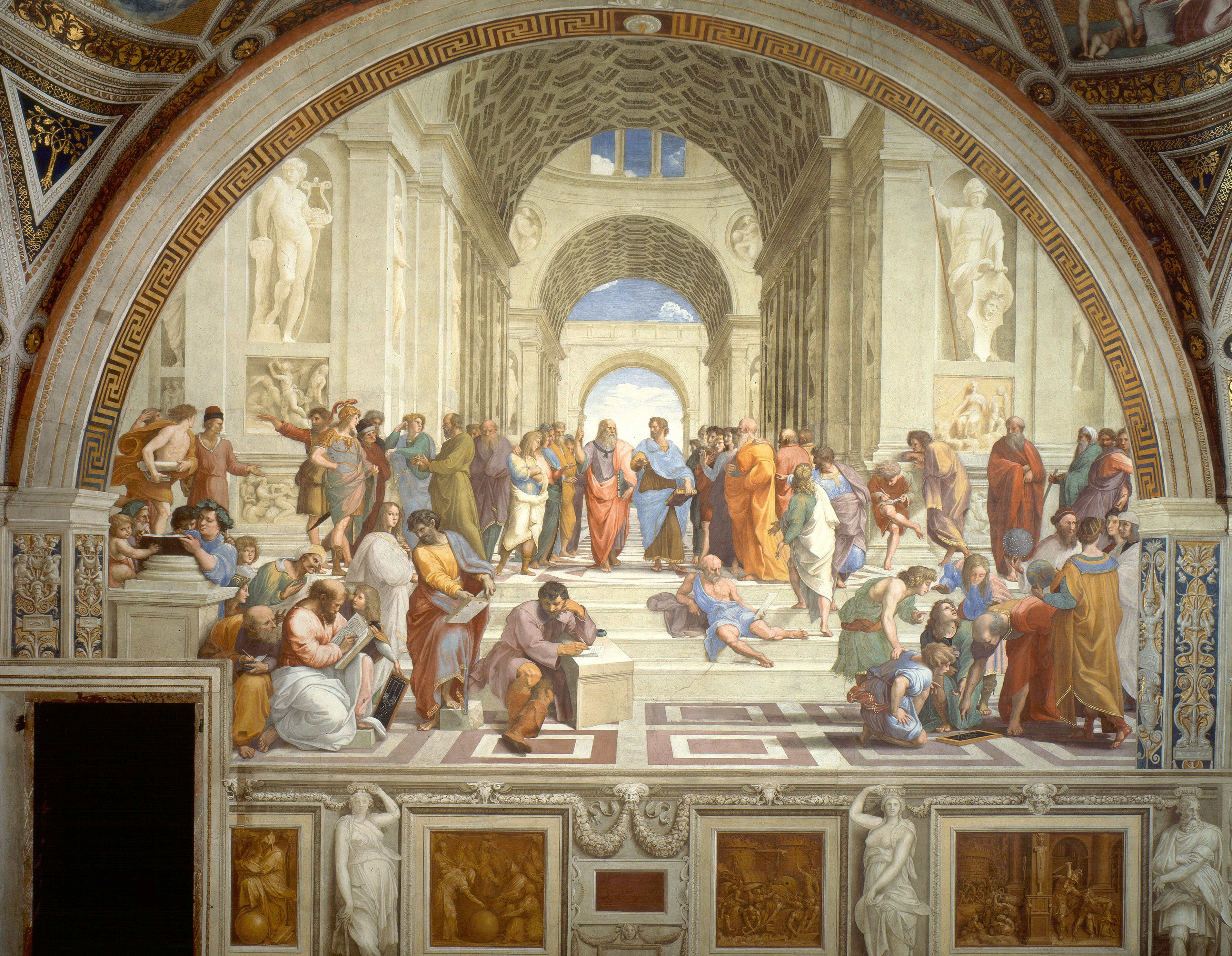
Atinska škola, koju je naslikao Rafael (Rafaelo Sancio da Urbino) između 1509. i 1511. godine, zauzima istočni zid Stanca dela Senjatura u Vatikanskoj apostolskoj palati i predstavlja najpotpuniji slikarski izraz renesansnog humanizma — monumentalnu viziju filozofske tradicije u kojoj se najumniji mislioci antike okupljaju u dijalogu pod arhitektonskim okruženjem idealne klasične grandioznosti. Freska je bila deo sveobuhvatnog dekorativnog programa koji je naručio papa Julije II za svoju privatnu biblioteku, u kojoj su četiri zida i plafon sobe bili posvećeni četirima granama ljudskog znanja prema srednjovekovnoj i renesansnoj klasifikaciji: teologiji (Disputa del Sacramento na naspramnom zidu), filozofiji (Atinska škola), poeziji (Parnas) i pravu (zid Vrlina). Rafael, tek dvadeset šest godina star kada je počeo rad u Stanci, bio je relativno neprovereni umetnik iz provincijskog Urbina, ali se instinkt Julija II — ili preporuka Rafaelovog zemljaka Bramantea — pokazao nadahnutim: mladi slikar je proizveo delo koje sintetiše dostignuća njegova dva velika savremenika, Leonarda i Mikelanđela, u stil vrhovne jasnoće, harmonije i intelektualne ambicije.
Formalna analiza
Arhitektonsko okruženje jedna je od najizuzetnijih karakteristika freske — prostrana dvorana sa cilindričnim svodom koja se u savršenoj jednofokusnoj perspektivi povlači ka udaljenom otvaranju koje uokviruje luminozno nebo. Arhitektura je inspirisana projektima Donata Bramantea, koji je upravo u tom trenutku razvijao planove za novu baziliku Svetog Petra, i zasvedeni prostori, kasetni plafoni i masivni stubovi prikazani na fresci plauzibilno su protumačeni kao Rafaelova vizualizacija Bramanteove zamišljene unutrašnjosti. Statue Apolona (koji drži liru, predstavljajući umetnosti) i Atene (sa njenim štitom, predstavljajući mudrost i ratovanje) zauzimaju niše sa obe strane centralnog prostora, uspostavljajući paganski filozofski kontekst. Perspektivna konstrukcija je rigorozna i geometrijski precizna: tačka nestajanja pada tačno između dva centralna lika Platona i Aristotela, a ortogonalne linije pločnika, arhitektonskih profilacija i lučnih okvira koji se povlače sve konvergiraju ka ovoj jednoj tački, stvarajući prostornu dubinu koja je istovremeno matematički dokaziva i iskustveno ubedljiva. Arhitektura ne funkcioniše samo kao pozadina, već kao argument — ona predlaže da je filozofija, poput arhitekture, delatnost racionalnog reda, ljudska konstrukcija koja teži stanju univerzalne istine.
Identifikacija pojedinačnih filozofa prikazanih na fresci bila je predmet naučnog istraživanja od Vazarijevog prvog opisa. Dva centralna lika univerzalno su prepoznata kao Platon i Aristotel, njihove kontrastne gestikulacije sažimajuća fundamentalnu podelu u zapadnoj filozofiji: Platon, starija figura sa raspuštenom belom bradom (čije se crte tradicionalno identifikuju kao portret Leonarda da Vinčija), pokazuje naviše desnom rukom ka carstvu Ideja — transcendentnim, nematerijalnim Idejama za koje je smatrao da su istinska realnost iza pojava fizičkog sveta. U levoj ruci drži Timaj, svoj kosmološki dijalog. Aristotel, mlađi i trezvenije odeven, pruža desnu ruku dlanom okrenutim nadole ka zemlji u gesti empirijskog angažovanja, levom rukom držeći Nikomahovu etiku. Ovo uparivanje — idealista i empiriste, metafizičara i prirodnog filozofa — uspostavlja dijalektički okvir unutar koga su organizovane ostale figure, svaka predstavljajući različitu filozofsku tradiciju ili disciplinu.
Među mnogim figurama identifikovanim sa različitim stepenom sigurnosti, nekoliko se izdvaja po svojoj kompozicionoj istaknutosti i značaju kao prikriveni portreti Rafaelovih savremenika. U levom prednjem planu, Pitagora intenzivno piše u veliku knjigu, okružen učenicima, od kojih jedan drži tablicu koja prikazuje harmonijske odnose za koje je pitagorejska filozofija smatrala da upravljaju i muzikom i kosmosom. Prekoputa, u desnom prednjem planu, Euklid (ili Arhimed) se naginje nad pločicom, demonstrirajući geometrijsku teoremu grupi pažljivih učenika; njegove crte su Bramanteove, Rafaelov tribut svom arhitektonskom mentoru. Zamišljena, usamljena figura koja sedi na stepenicama u centru prednjeg plana, brade oslonjene na pesnicu u klasičnoj pozi melanholije, gotovo sigurno je Heraklit — a njegove crte su nepogrešivo one Mikelanđela, koji je u tom istom trenutku oslikavao plafon Sikstinske kapele u susednoj prostoriji. Ova figura je kasni dodatak kompoziciji (naslikana na zasebnom komadu intonaka nanetom preko već završene pozadine), a njeno uključivanje čitano je kao Rafaelov omaž rivalu čiji je monumentalni figuralni stil duboko uticao na njegov sopstveni razvoj. Sam Rafael pojavljuje se na krajnjem desnom rubu kompozicije, gledajući direktno ka posmatraču — skroman samoumetak u društvo najvećih umova antike.
Kompoziciona struktura freske postiže dinamičku ravnotežu između raznolikosti i jedinstva koja predstavlja jedno od Rafaelovih vrhovnih formalnih dostignuća. Preko pedeset figura raspoređeno je duž arhitektonskog prostora u rasporedu koji izbegava i krutost simetričnog poretka i konfuziju nasumičnog grupisanja. Figure se grupišu u konverzacione grupe — raspravljajući, demonstrirajući, čitajući, slušajući — svaka grupa formira samosadržajnu kompozicionu jedinicu koja je istovremeno integrisana u širi dizajn kroz preklapajuće poze, deljene linije pogleda i ujedinjujući ritam arhitekture. Dva centralna lika, uzdignuta na stepenicama i uokvirena lučnim okvirima koji se povlače, uspostavljaju vertikalnu osu stabilnosti, dok bočne grupe stvaraju horizontalni kontrapunkt pokreta i raznolikosti. Paleta — topli okeri, duboke plave, živopisne crvene i nežne zelene — orkestrirana je da vodi oko i razlikuje glavne figure, pri čemu plava i crvena Platonovih i Aristotelovih odora uspostavljaju hromatski temeljni ton.
Rafaelovo tehničko dostignuće u Atinskoj školi odražava njegovu izvanrednu sposobnost sinteze. Od Leonarda je upilo principe sfumato modelovanja, atmosferske perspektive i psihološke karakterizacije — izrazi lica figura suptilno su diferencirani, svaki prenoseći različit intelektualni temperament. Od Mikelanđela, čiji je plafon Sikstinske kapele Rafael navodno video u nastajanju (Bramante mu je možda dao pristup kapeli), naučio je moć monumentalne, mišićave figuracije — lik Heraklita/Mikelanđela, sa svojim masivnim, snažno modelovanim telom i zamišljenim intenzitetom, predstavlja Rafaelovo najdirektnije upuštanje u mikelanđelovsku formu. Pa ipak, Rafaelova sinteza prevazilazi puku imitaciju: on integriše ove uticaje u stil lucidne, uravnotežene harmonije koji je u potpunosti njegov, karakterisan gracijom (grazia) i lakoćom (sprezzatura) koje su mu savremenici prepoznali kao distinktivni kvalitet. Sama tehnika freske izvedena je sa vrhunskom veštinom — spojnice između đornata (pojedinačnih dnevnih sekcija maltera) gotovo su nevidljive, a slikarska površina zadržava svežinu i luminoznost koja svedoči o Rafaelovoj sigurnosti ruke.
Ikonografija i simbolika
Atinska škola mora se razumeti u odnosu prema ostalim freskama u Stanca dela Senjatura, koje zajedno čine sveobuhvatnu izjavu o prirodi i izvorima ljudskog znanja. Disputa (tačnije, Rasprava o Presvetom Sakramentu) na naspramnom zidu prikazuje istine dostupne kroz božansko otkrovenje — Crkveni oci i teolozi raspoređeni u kompoziciji koja odražava Atinsku školu ali zamenjuje otvoreno nebo razuma zlatnim sjajem Svetog trojstva. Parnas, na zidu sa prozorom, slavi istine prenošene kroz poetsku inspiraciju, dok zid Vrlina obrađuje moralno i građansko pravo. Četiri kompozicije povezane su plafonskim medaljonima koji predstavljaju Filozofiju, Teologiju, Poeziju i Pravdu, te suptilnim vizuelnim korespondencijama — arhitektonska perspektiva Atinske škole uklapa se sa prostornom recesijom Disputi, uspostavljajući dijalog između razuma i vere koji odražava renesansno ubeđenje, najpotpunije artikulisano od strane neoplatonista, da su klasična filozofija i hrišćanska teologija komplementarni putevi ka jednoj istini. Atinska škola, u ovom kontekstu, nije slavljenje paganskog razuma na račun hrišćanske vere, već jedna polovina harmoničnog dualiteta — ljudski intelekt koji teži istinama koje nalaze svoje konačno ispunjenje u božanskom otkrovenju.
Recepcija i nasleđe
Uticaj Atinske škole na kasniju tradiciju zapadnog monumentalnog slikarstva je nemerliv. Ona je uspostavila paradigmu filozofske ili alegorijske grupne kompozicije koju bi koristili akademski slikari sve do devetnaestog veka, a njena jednofokusna perspektiva, arhitektonski iluzionizam i orkestracija figura u prostoru postali su standard prema kome su mereni svi kasniji ciklusi fresaka. U širem smislu, ponudila je sliku intelektualne zajednice — filozofije kao kolektivnog, dijaloškgo poduhvata vođenog u atmosferi uzajamnog poštovanja i zajedničke aspiracije — koja je služila kao inspiracija i ideal daleko izvan granica istorije umetnosti. Vizija freske o najvećim umovima antike okupljenim u harmoničnom dijalogu ispod svodova savršene arhitekture ostaje jedna od najmoćnijih vizualizacija humanističke vere koja je animirala italijansku renesansu: uverenja da ljudski um, vođen razumom i uzdignut lepotom, može sagledati najdublje istine postojanja.