Istorijski kontekst
Spomenik za V. Tatljina (1964) Dena Flavina jedno je iz serije dela posvećenih ruskom konstruktivisti Vladimiru Tatljinu, čiji je nerealizovani Spomenik Trećoj internacionali (1919-1920) predviđao spiralni toranj od gvožđa i stakla namenjen sedištu Komunističke internacionale. Flavin je započeo seriju 1964. godine i nastavio da proizvodi varijacije do 1982, stvarajući preko pedeset verzija u različitim veličinama i konfiguracijama hladno belih fluorescentnih cevi. Delo iz 1964. među najranijim je i najikoničnijim iteracijama, uspostavljajući osnovni formalni vokabular — simetričan, stepenast raspored vertikalnih fluorescentnih cevi koji evocira uzlazni profil tornja ili spomenika — koji bi bio razrađivan u kasnijim verzijama. Flavinov izbor Tatljina kao posvetenika bio je namerno slojevit ironijom: tamo gde je Tatljin zamišljao monumentalnu strukturu revolucionarne ambicije i utopijske aspiracije, Flavin je ponudio skromnu montažu komercijalno dostupnih armatura iz prodavnica gvožđarija, demokratizujući materijale umetnosti dok je istovremeno iskreno odavao počast konstruktivističkom nasleđu integracije umetnosti i industrijske proizvodnje.
Delo je nastalo u ključnom trenutku razvoja minimalizma. Godine 1963. Flavin je doživeo ono što je opisao kao otkrovenje dok je radio na seriji konstrukcija koje su uključivale električno svetlo, shvativši da fluorescentna cev — standardni, komercijalno proizveden, univerzalno dostupan predmet — može služiti kao jedini medij za čitav opus. Ova odluka je ujedinila Flavina sa širim minimalističkim projektom korišćenja prefabrikovanih industrijskih materijala, ali ga je i izdvojila: za razliku od Džadovih fabrikovanih metalnih kutija ili Andreovih raspoređenih cigala, Flavinove fluorescentne cevi emituju svetlost, transformišući ne samo zid na kome su montirane već čitav arhitektonski prostor oko sebe. Fondacija Dia, osnovana 1974. od strane Filipe de Menil i Hajnera Fridriha, postala je primarni patron i staratelj Flavinovog dela, a posvećene galerije u Dia:Beacon pružaju uslove za trajno, kontemplativno gledanje koje je umetnik smatrao suštinskim.
Formalna analiza
Formalna struktura Spomenika za V. Tatljina vođena je bilateralnom simetrijom i vertikalnom progresijom. Delo se sastoji od hladno belih fluorescentnih cevi različitih standardnih dužina raspoređenih simetrično oko centralne vertikalne ose, stvarajući stepenast siluetu koja se uzdiže od kraćih cevi na stranama do dužih cevi u centru. Dobijeni profil sugerira apstraktan toranj, obelisk ili zigurat — monumentalnu formu izvedenu u najskromnijim industrijskim materijalima. Cevi su montirane direktno na zid korišćenjem standardnih komercijalnih armatura, bez pokušaja da se sakrije utilitarni hardver. Ovo otvoreno izlaganje sredstava konstrukcije integralan je deo Flavinove estetike: delo se predstavlja tačno kao ono što jeste, odbijajući svaku iluzionističku transformaciju svojih materijala.
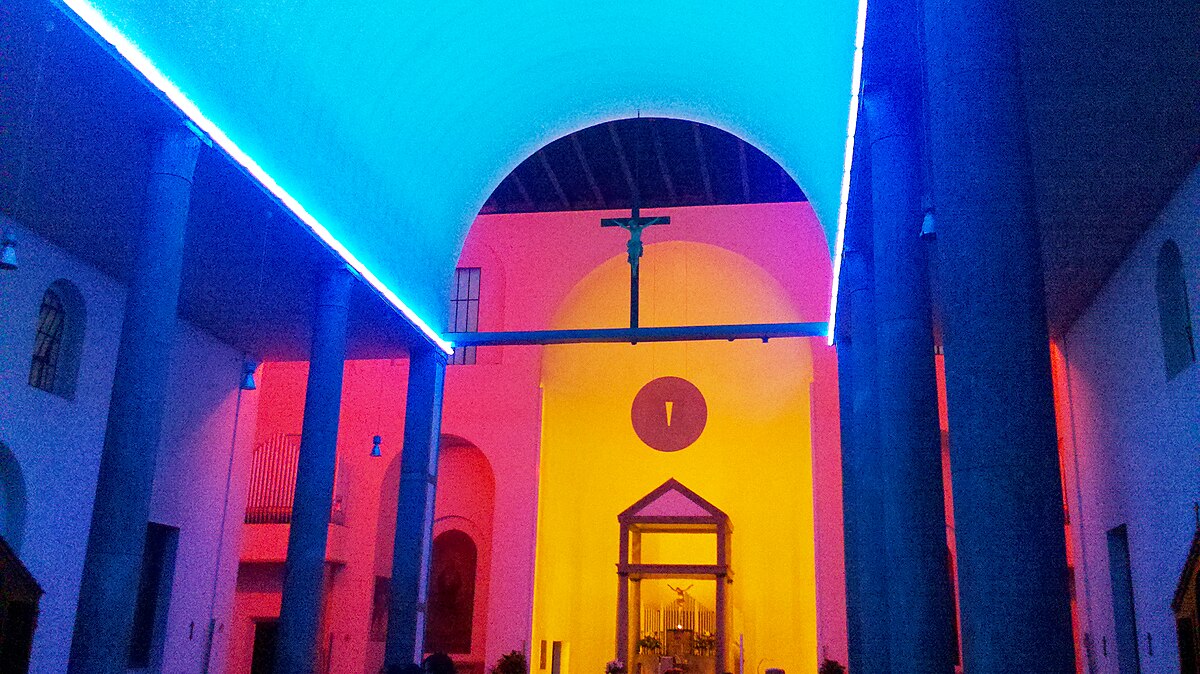
Pa ipak, fizička jednostavnost predmeta komplikovana je ponašanjem svetlosti koju emituje. Fluorescentne cevi bacaju difuzni, hladno beli sjaj koji se prostire daleko izvan granica fizičkog predmeta, prelivajući se preko zida, poda i plafona i obavijajući posmatrača u ambijentalno svetlosno okruženje. Arhitektonski prostor postaje aktivna komponenta dela, njegove dimenzije i površine otkrivene, izmenjene i na neki način dematerijalizovane svetlošću. Ovaj dvostruki identitet — skulptura kao konkretan fizički predmet (cevi, armature, električno ožičenje) i nematerijalni fenomen (svetlost, luminoznost, prostorna transformacija) — centralni je paradoks Flavinove prakse. Delo zauzima granični prostor između skulpture i okruženja, između opipljivog i neopipljivog, izazivajući konvencionalne kategorije tihom ali radikalnom snagom. Hladno belo svetlo, lišeno boje, naglašava ovu dvosmislenost: ono je istovremeno kliničko i kontemplativno, industrijsko i eterično.
Značaj i nasleđe
Spomenik za V. Tatljina je ključno delo u istoriji skulpture dvadesetog veka i fundacionalno delo pokreta svetlosne umetnosti. Flavinova odluka da radi isključivo sa komercijalno dostupnim fluorescentnim cevima — odluka koju je održavao tokom čitave karijere — predstavljala je jedan od najradikalnijih materijalnih izbora u posleratnoj umetnosti, gurajući Dišanovski redimejd na novu teritoriju korišćenjem predmeta koji nije samo izložen već aktiviran, emitujući energiju koja fizički transformiše svoje okruženje. Delo je anticipiralo i uticalo na imerzivna svetlosna okruženja Džejmsa Tarela i Olafura Elijasona, neonska tekstualna dela Brusa Naumana i Dženi Holcer, te šire savremeno interesovanje za iskustvenu, fenomenološku umetnost koja angažuje posmatračevo telo, a ne samo njegov pogled.
Posveta Tatljinu je sama po sebi značajan umetničko-istorijski gest, uspostavljajući rodoslovnu liniju između ruskog konstruktivizma i američkog minimalizma koja je podvukla zajedničke posvećenosti industrijskim materijalima, anti-subjektivizmu i integraciji umetnosti sa uslovima moderne proizvodnje. Pa ipak, Flavinov „spomenik” je takođe anti-spomenik: tamo gde je Tatljin predložio strukturu ogromnog obima i utopijske ambicije, Flavin je ponudio raspored jednokratnih cevi iz prodavnice gvožđarija sa ograničenim životnim vekom — fluorescentne sijalice na kraju pregore i moraju biti zamenjene, uvodeći element temporalnosti i kontingencije koji je stran tradicionalnoj monumentalnoj skulpturi. Ova napetost između monumentalnog i efemera, aspirativnog i svakodnevnog, daje delu njegovu trajnu konceptualnu bogatost i obezbeđuje njegovu kontinuiranu relevantnost u savremenom diskursu o prirodi skulpture, poetici industrijskih materijala i odnosu između umetnosti i prostora koje ona nastanjuje.