Istorijski kontekst
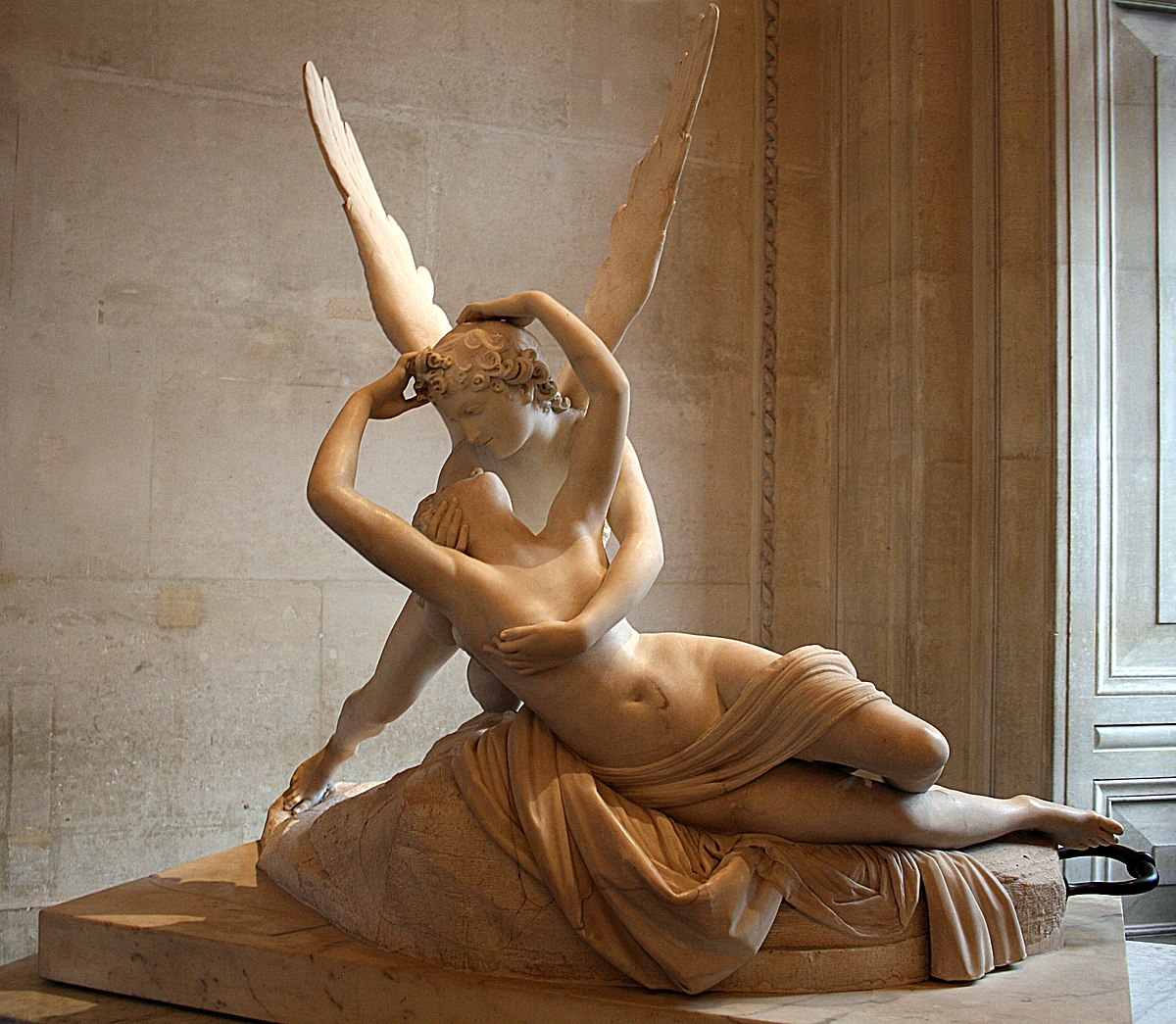
Antonio Kanova započeo je rad na Psihi oživljenoj Kupidonovim poljupcem 1787. godine, tokom perioda intenzivne kreativne aktivnosti u svom rimskom ateljeu koji će ga uspostaviti kao preeminentnog vajara u Evropi. Motiv je preuzet iz priče o Kupidonu i Psihi kako je ispričana u Apulejevim Metamorfozama (takođe poznatim kao Zlatni magarac), latinskom romanu iz drugog veka u kome smrtna Psiha, pošto je pala u smrtoliki san nakon otvaranja kutije paklene lepote poslate od Prozerpine, biva oživljena poljupcem svog božanskog ljubavnika Kupidona. Kanova je izabrao da prikaže tačan trenutak buđenja — trenutak pre poljupca, kada Kupidonov dah i blizina već vraćaju Psihu svesti — obdarujući narativ suspendovanom napetošću koja razlikuje delo od dramatičnog dinamizma barokne skulpture i statične vedrine veće deo neoklasicističke umetnosti.
Skulptura je prvobitno naručena od pukovnika Džona Kembela, škotskog plemića i kolekcionara umetnosti, tokom njegove posete Rimu na Grand Tour putovanju. Međutim, pre nego što je Kembel mogao preuzeti delo, kupljeno je od strane Žoašena Mira, Napoleonovog zeta i budućeg kralja Napulja, koji ga je postavio u svoju pariku rezidenciju. Nakon pada napoleonskog režima i konfiskacije Miratove imovine, skulptura je ušla u francuske nacionalne kolekcije i postavljeena u Luvr 1824. godine, gde je ostala do danas. Kanova je izradio drugu verziju kompozicije između 1796. i 1800, sada u Ermitažu u Sankt Peterburgu, koja se razlikuje u nekoliko detalja ali prati isti suštinski dizajn. Nastanak dela poklopio se sa vrhuncem neoklasicističkog entuzijazma u evropskoj umetnosti i književnosti, podstaknutog arheološkim otkrićima u Herkulaneumu i Pompeji, teorijskim spisima Johana Joahima Vinkelmana i rasprostranjenom kulturnom aspiracijom ka obnovi uočene plemenitosti i formalne savršenosti antičke grčke i rimske umetnosti.
Formalna analiza
Kompozicija Psihe oživljene Kupidonovim poljupcem organizovana je oko X-oblika ukrštanja tela dve figure, stvarajući dinamičnu asimetriju koja generiše pokret i vizuelni interes sa svakog ugla. Kupidon, raširenih velikih pernatih krila koja obezbeđuju dramatičan vertikalni i dijagonalni kontrapunkt, spušta se da ugali mlohavu figuru Psihe, čije telo se lučno uzdiže sa stenovite baze dok počinje da se budi. Njene ruke posežu nagore i unazad da obuhvate Kupidonovu glavu, a dva lica su dovedena u neposrednu blizinu — usne se približavaju ali se još ne dodiruju — stvarajući trenutak izuzetne erotske i emotivne napetosti. Kompozicija je zamišljena da nagradi obilaženje: spreda, prepletanje dva tela stvara osećaj nežne intimnosti; sa strane, zamašna dijagonala Psihnog torza i raširena Kupidonova krila proizvode osećaj uzletanja; sa leđa, mišićno modelovanje Kupidonovih leđa i padajuća draperija preko baze otkrivaju Kanovino anatomsko majstorstvo.
Kanovino tehničko vladanje klesanjem mermera prikazano je na najvirtuozniji način u ovom delu. Površinska obrada razlikuje glatki, topli inkarnat dve figure — uglačan do prozračnog sjaja koji je Kanova postizao završnim trljanjem plovućcem i premazom voska — od grubljih tekstura stenovite baze, leptirastih krila Psihe (simbolizujući dušu) i Kupidonovih pernatih krila. Draperija koja pokriva bazu pada u duboko podsečenim naborima koji demonstriraju vajarovu sposobnost da natera mermer da se ponaša poput tkanine. Delikatnost pojedinačnih detalja — Psihini prsti koji se provlače kroz Kupidonove uvojke, tanke ivice perja, meki urez mesa tamo gde Kupidonova ruka pritiska Psihin bok — gura materijal do granica njegovog strukturalnog kapaciteta. Pa ipak, uprkos svoj ovoj virtuoznosti, ukupni utisak je utisak lišenog napora gracije, a ne tehničke demonstracije, u skladu sa Kanovinim neoklasicističkim aspiracijama ka idealu sprezzature — umetnosti koja prikriva umetnost.
Recepcija i nasleđe
Psiha oživljena Kupidonovim poljupcem je jedno od definišućih remek-dela neoklasicističke skulpture i jedno od najomiljenijih dela u kolekciji Luvra. Njen značaj leži u Kanovinom ostvarenju sinteze između idealizovanog formalnog jezika klasične antike i romantičarske senzibilnosti pažljive prema emociji, narativnom suspenziju i čulnoj fizičkoj lepoti. Dok je Vinkelamnov teorijski program pozivao na „plemenitu jednostavnost i tihu veličanstvenost” — i dok su mnogi neoklasicistički vajari proizvodili dela hladnog, statičnog savršenstva — Kanova je svoje klasične forme prožeo toplinom, nežnošću i psihološkom oštroumnošću koja je neoklasicizmu dala njegovo emotivno jezgro. Izbor trenutka pre poljupca umesto samog poljupca demonstrira narativnu sofisticiranost koja angažuje maštu posmatrača, pozivajući ga da mentalno dovrši radnju i tako učestvuje u emotivnoj drami dela.
Kanovin uticaj na kasniju skulpturu bio je ogroman. Bio je najslavniji umetnik u Evropi za svog života, tražen od papa, careva i kraljeva, a njegov rimski atelje bio je obavezna stanica na Grand Tour putovanju. Njegova sinteza klasičnog idealizma sa emotivnom ekspresivnošću uspostavila je paradigmu za vajarsku praksu koja je opstajala duboko u devetnaesti vek, utičući na umetnike raznovrsne poput Bertela Torvaldena, Džona Gibsona i Hajrama Pauersa. Izvan skulpture, graciozna kompozicija dela i erotski naboj rezonirali su kroz kasniju vizuelnu kulturu, od prerafaelitskog slikarstva do savremene fotografije i filma. Skulptura ostaje jedno od najfotografisanijih i najreprodukovnijih dela u Luvru, njena slika suspendovane želje i bliskog sjedinjenja funkcioniše kao trajni simbol romantične ljubavi u zapadnoj umetnosti. Njene formalne inovacije — posebno kompozicija sa više tačaka gledišta i diferencirana površinska obrada — nastavljaju da se proučavaju kao paradigmatski primeri vajarskog razmišljanja na svom najsofisticiranijiem nivou.