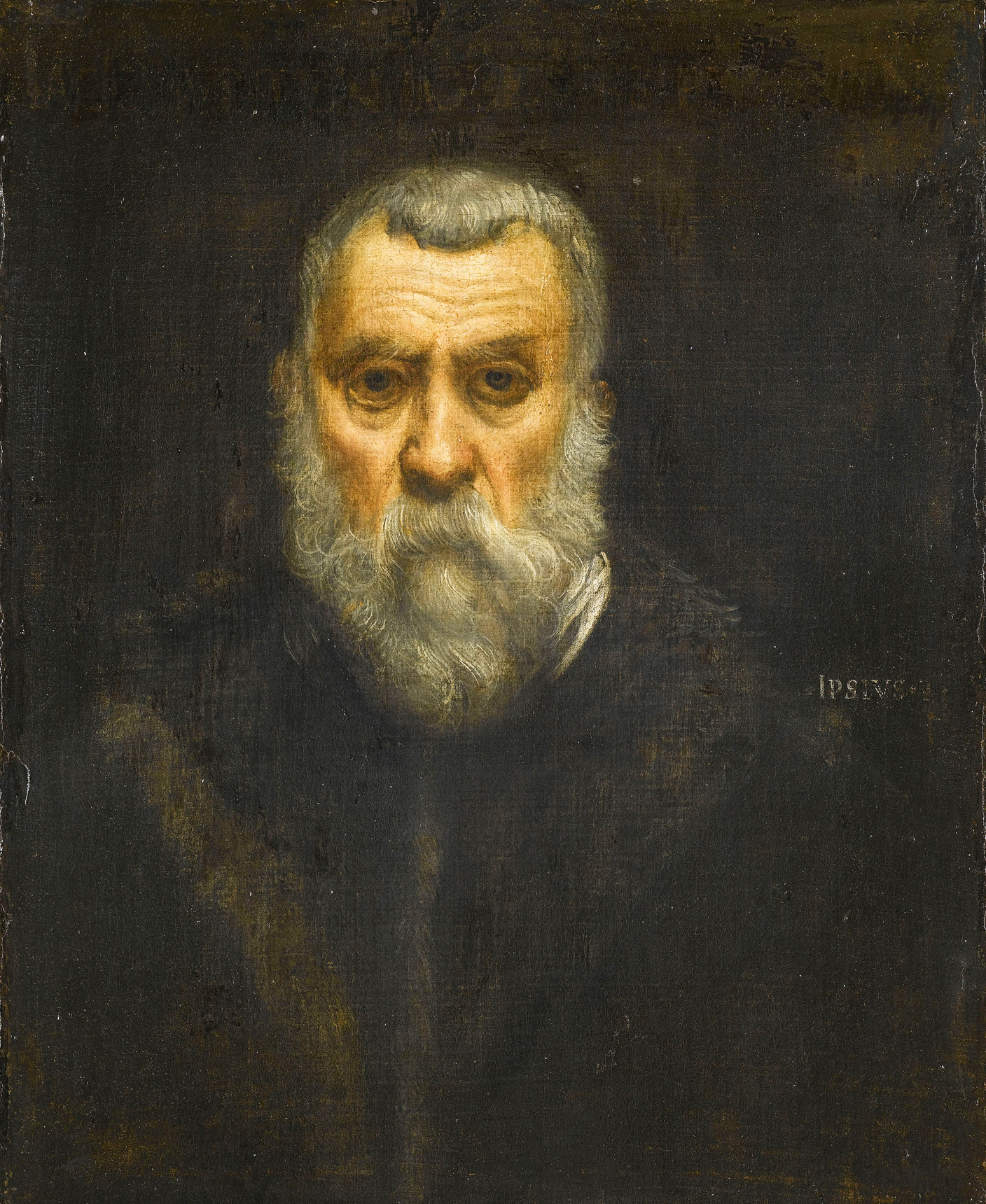
Jakopo Komin, nazvan Tintoretto („mali bojagiša”) po očevom zanatu, rođen je u Veneciji 1518. i čitav radni vek proveo tamo, stvarajući ogromno delo koje je tradicije nasleđene od Ticijana i Mikelanđela transformisalo u nešto urgentnije, teatralnije i emocionalno nabijnije. Prema legendi, na zidu svog ateljea ispisao je: „Crtež Mikelanđelov i boja Ticijanova” — program koji je sprovodio sa grozničavom energijom i ogromnom produkcijom.
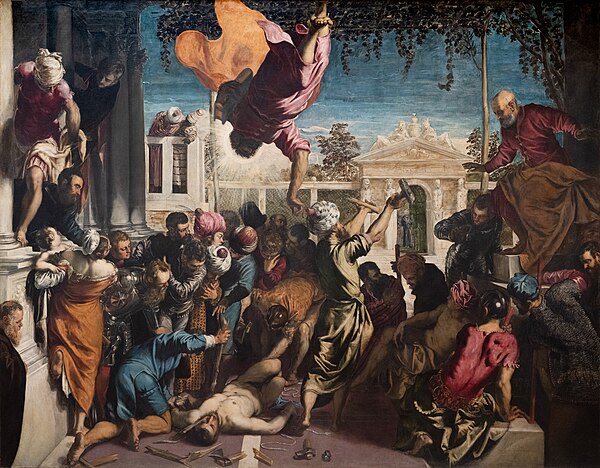
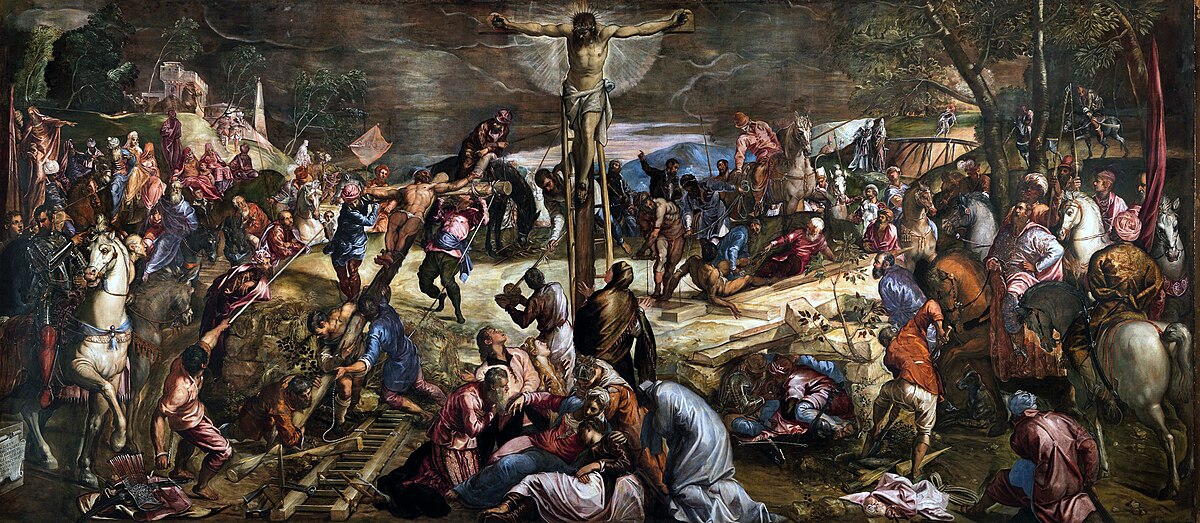
Njegovo prelomno delo, The Miracle of the Slave (1548), najavilo je novu vrstu slikarstva: figure koje se survavaju sa neba u ekstremnom skraćenju, tela koja se uvijaju u dramatičnoj akciji, svetlost koja eksplodira iz neočekivanih izvora. Monumentalni ciklus slika koji je stvorio za Skuolu Grande di San Roko između 1564. i 1588. — preko pedeset platana koja pokrivaju zidove i plafone — jedan je od najambicioznijih dekorativnih programa koje je ikada preduzeo jedan umetnik. Njegovo Crucifixion tamo, široko preko dvanaest metara, orkestrira desetine figura u vrtložnoj kompoziciji izuzetne dramatične snage.
Tintoretova nemirna inventivnost, njegova spremnost da žrtvuje završenost zarad ekspresivne snage, i njegovi radikalni eksperimenti sa svetlošću i perspektivom učinili su ga kontroverznom figurom u njegovo vreme — kritičari su ga optuživali za nemarnost — ali njegov uticaj na barokno slikarstvo, od Rubensa do El Greka, bio je dubok.