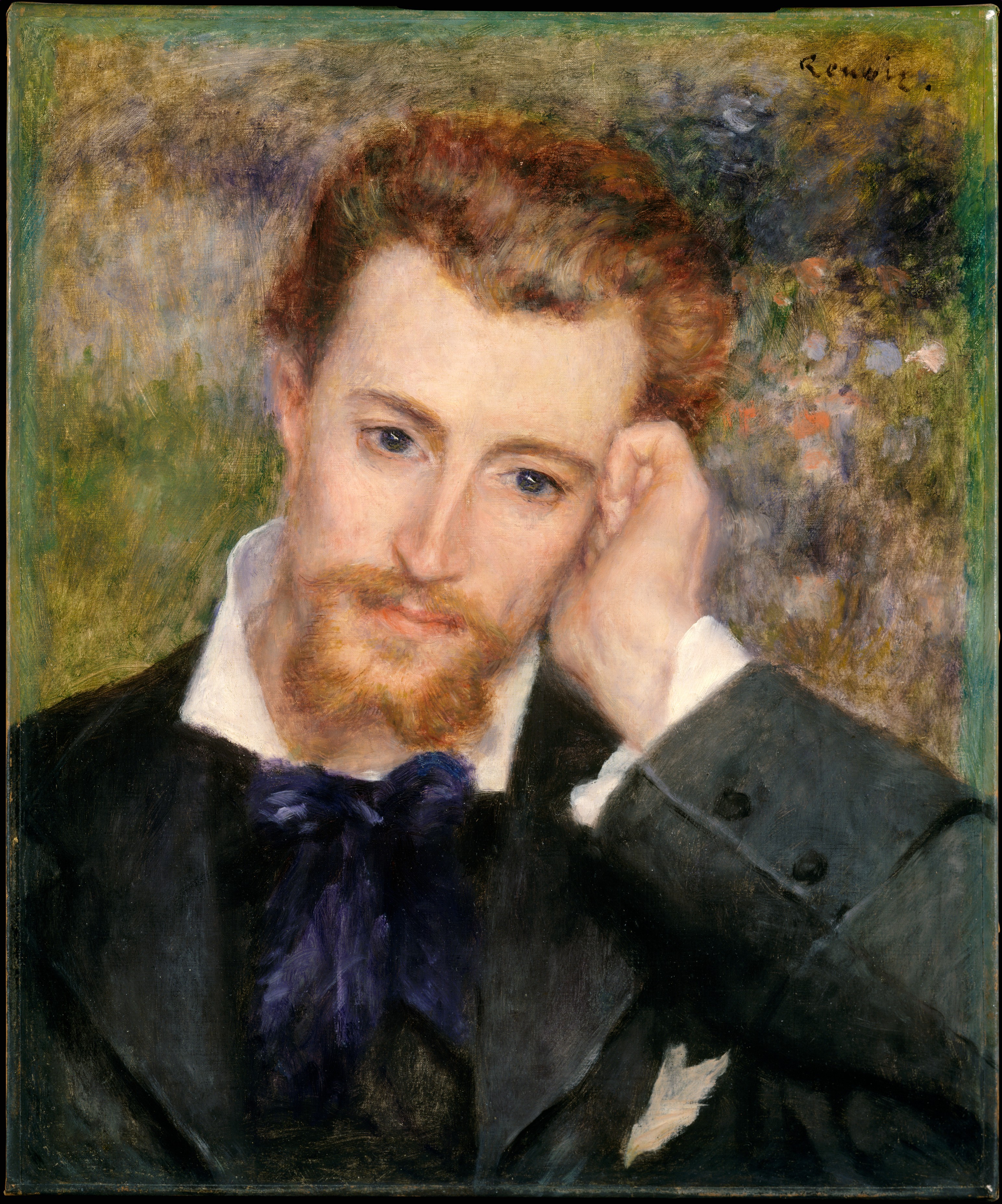

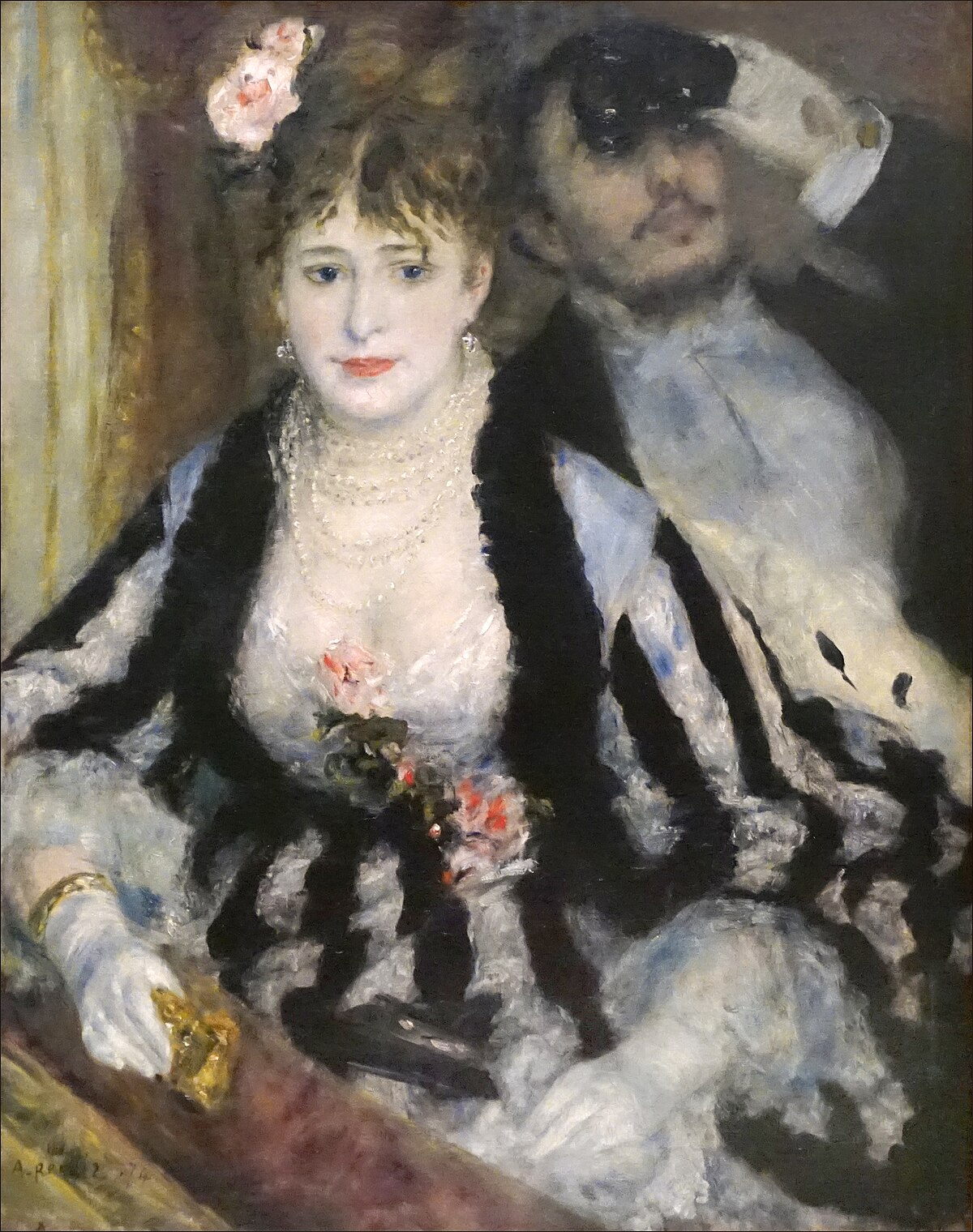
Pjer-Ogist Renoar rođen je 1841. u Limožu, srcu francuske porcelanske industrije, a njegova porodica se preselila u Pariz kada je imao četiri godine. Kao tinejdžer je radio kao slikar porcelana u fabrici, ukrašavajući tanjire i vaze delikatnim cvetnim uzorcima — šegrtovanje koje je izoštrilo njegov osećaj za boju i dalo mu doživotno poštovanje za dekorativnu lepotu i zanatstvo. Godine 1862. ušao je u atelje Šarla Glejra, gde se sprijateljio sa Klodom Moneom, Alfredom Sislijem i Frederikom Bazilom, formirajući jezgro onoga što će postati impresionistički pokret. Tokom šezdesetih godina devetnaestog veka, Renoar je oscilirao između uticaja Kurbeovog zemljanog realizma i Delakroove živahne palete, ali je do ranih sedamdesetih, slikajući zajedno sa Moneom u La Grenouilleri, otkrio razlomljene poteze četkom i prizmatičke boje koji će definisati impresionizam.
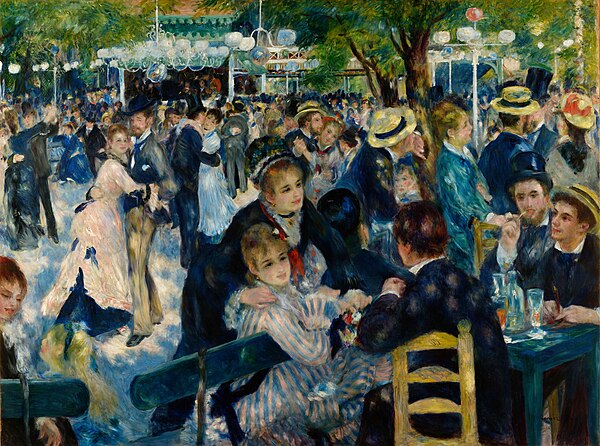
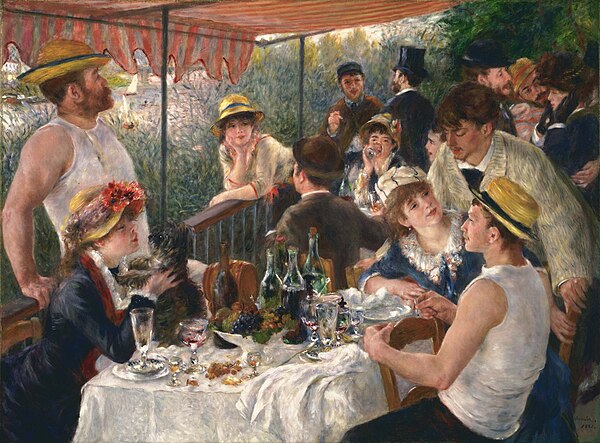
Sedamdesete godine bile su Renoarova zlatna decenija. „Dance at Le Moulin de la Galette” (1876) uhvatio je plesnu dvoranu na otvorenom u Monmartru obasjanom suncem sa blistavim preplitanjem svetlosti i senke koje je činilo da samo platno diše toplinom i pokretom. „Luncheon of the Boating Party” (1881) prikazao je krug njegovih prijatelja — uključujući njegovu buduću suprugu Alin Šarigo — u sceni razuzdanog druženja duž Sene, sa mrtvom prirodom flaša i voća prikazanom sa istom ljubavlju kao i živahna lica. Renoarov genije ležao je u sposobnosti da prenese prolazna zadovoljstva modernog života — plesove, piknik, decu kako se igraju, žene koje se kupaju — sa senzualnošću koja nikada nije bila vulgarna ali uvek toplo telesna. Njegova četka je milovala kožu biserno ružičastim i ljubičastim nijansama, hvatala igru sunčeve svetlosti kroz lišće i činila da običan svet izgleda kao mesto beskrajnog zadovoljstva.
Pa ipak, u ranim osamdesetim godinama, Renoar je prošao kroz kreativnu krizu. Putovanje u Italiju 1881. suočilo ga je sa Rafaelovim freskama i pompejanskim zidnim slikama, te se uverio da je impresionističko rastapanje forme otišlo predaleko. Njegov kasniji „suvi” ili „Engrov” period (otprilike 1883–1887) odlikovao se oštrijim konturama, hladnijim bojama i monumentalnijim figurama, što je najbolje ilustrovano u „The Large Bathers” (1884–1887). Ova digresija je bila loše primljena, ali je na kraju ustupila mesto veličanstvenom kasnom stilu koji je spojio impresionističku boju sa klasičnom čvrstinom. Do devedesetih godina Renoar je patio od teškog reumatoidnog artritisa koji je progresivno sakatio njegove ruke; do 1910. više nije mogao da hoda i imao je četke privezane zavojima za iskrivljene prste da bi mogao da nastavi da slika. Začuđujuće, dela iz poslednje decenije — monumentalni aktovi koji blistaju crvenim i jantarnim tonovima — spadaju među njegova najekspanzivnija i najoslobođenija, a njihovi topli tonovi kože kao da slave sam život uprkos njegovoj fizičkoj patnji. Umro je 3. decembra 1919. u Kanj-sir-Meru, navodno izjavivši nakon što je naslikao mrtvu prirodu sa anemonima: „Mislim da počinjem nešto da razumem o tome.”