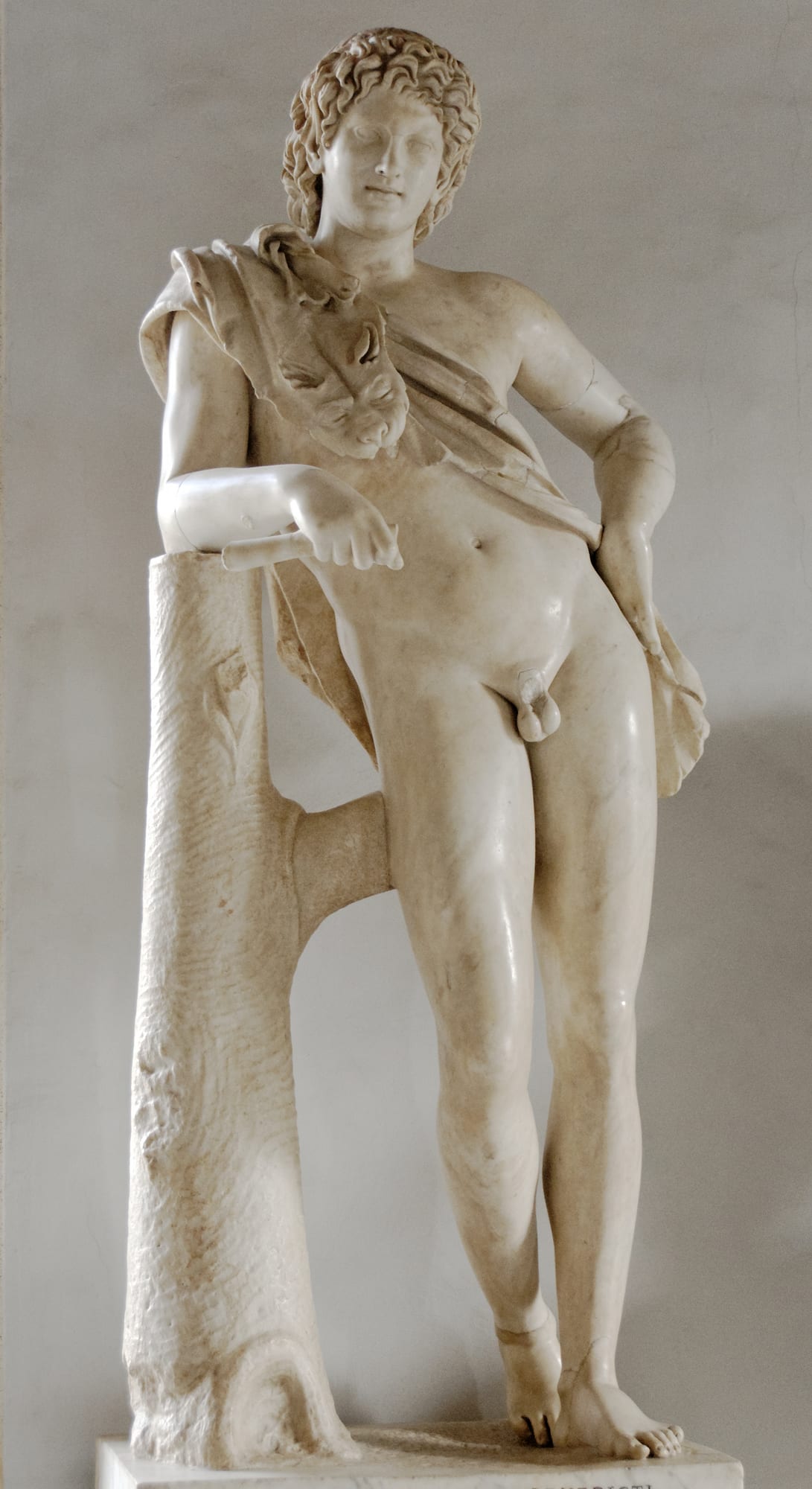
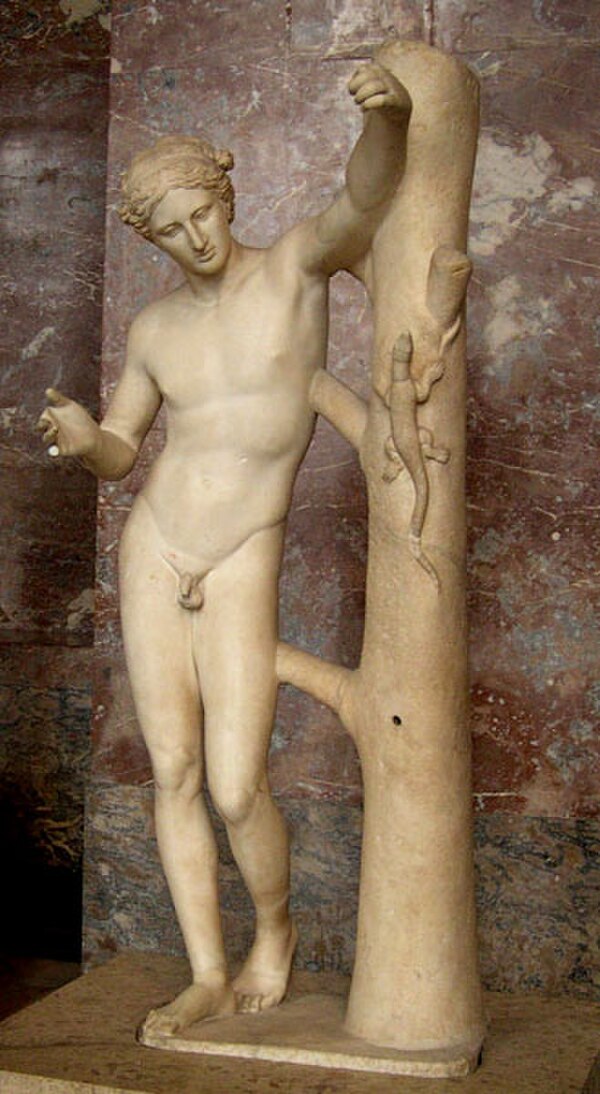
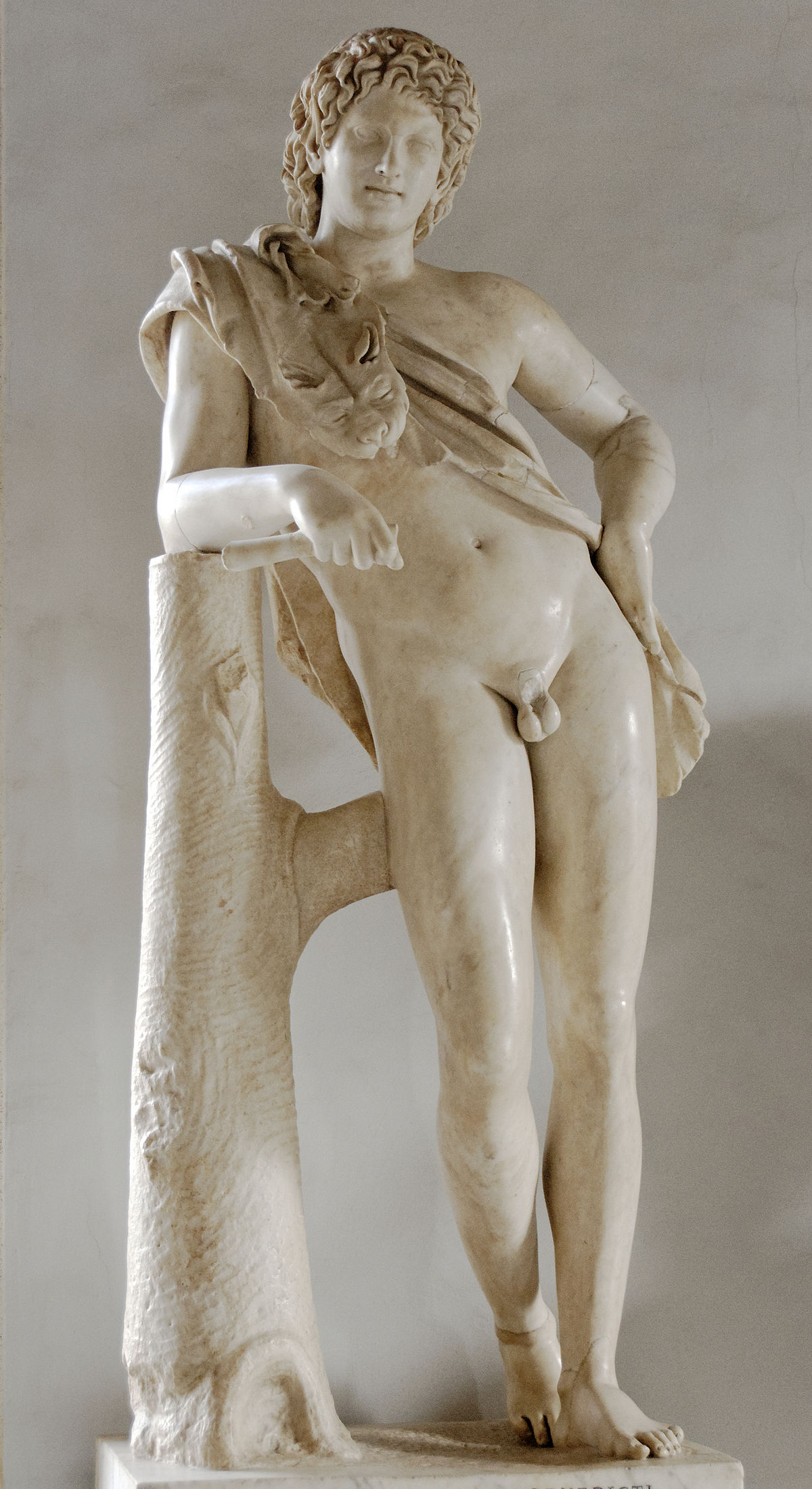
Praksitel, sin vajara Kefisodota, bio je vodeći atinski vajar četvrtog veka pre nove ere i jedan od najuticajnijih umetnika cele antike. Radeći prvenstveno u mermeru umesto u bronzi, razvio je stil obeležen sinusoidnim krivinama, delikatnim modelovanjem površine i intimnim, gotovo sanjalačkim kvalitetom koji se oštro razlikovao od herojske veličanstvenosti Fidije i njegovih savremenika iz petog veka. Njegove figure deluju kao da su uhvaćene u trenucima tihog sanjarenja, sa težinom prebačenom na jedan kuk u mlitavoj S-krivini koja je postala njegov zaštitni znak.
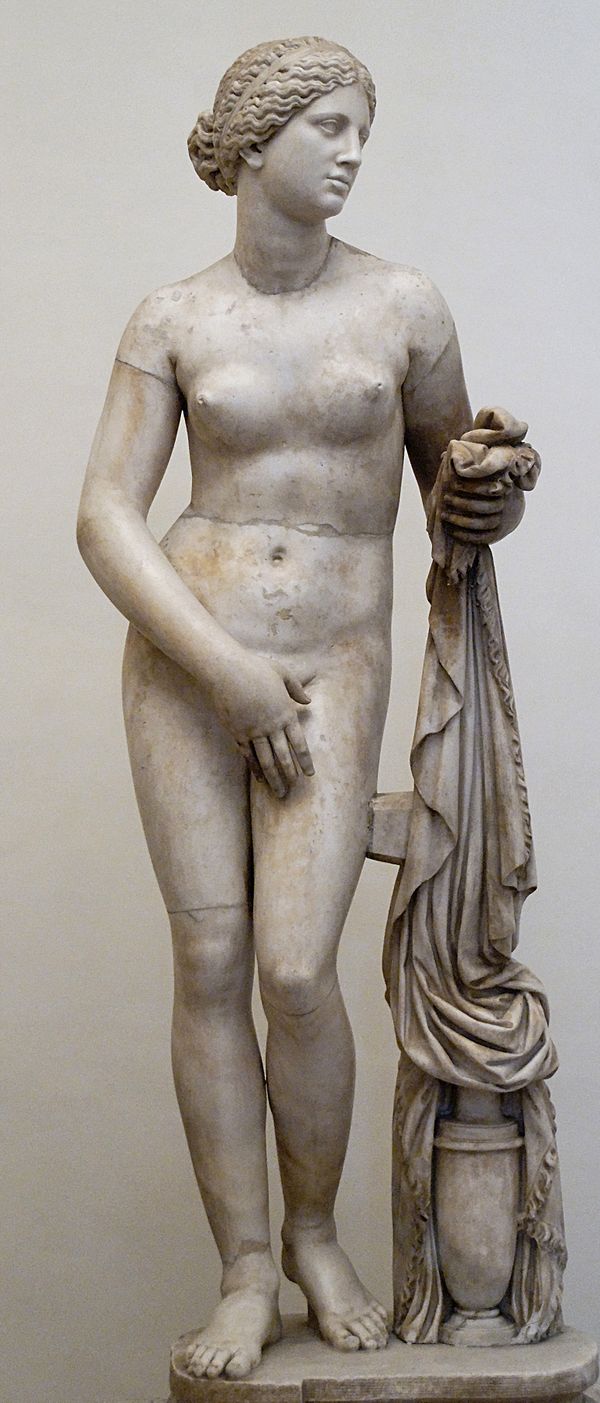
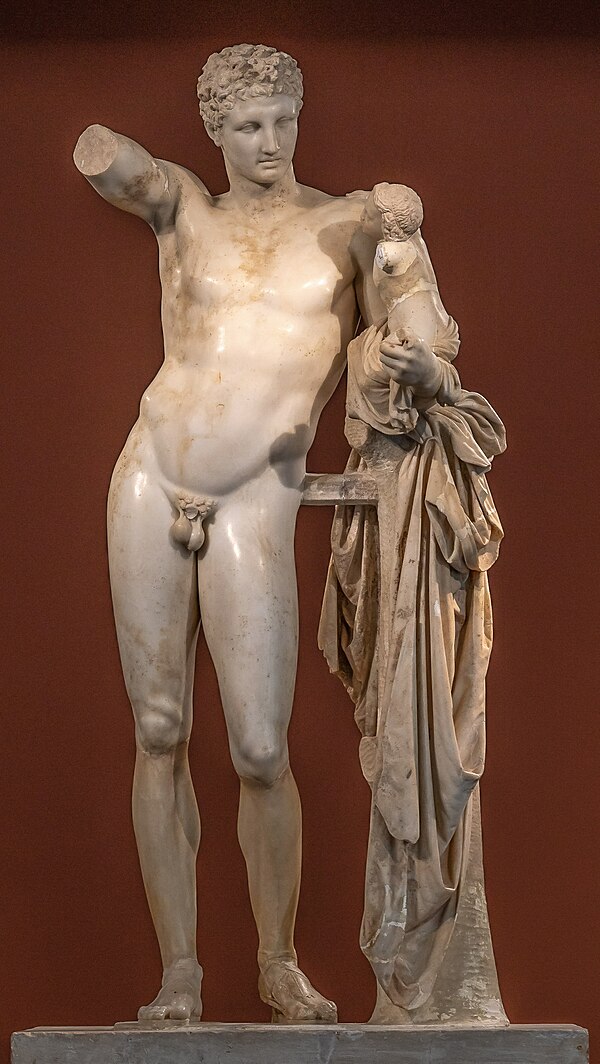
Njegovo najrevolucionarnije delo bila je Aphrodite of Knidos, prvi monumentalni ženski akt u grčkoj skulpturi i jedna od najslavljenijih statua antike. Kupljena od strane grada Knidosa nakon što ju je Kos odbio kao previše smelu, statua je privlačila hodočasnike iz čitavog Mediterana i uspostavila ženski akt kao centralni predmet zapadne umetnosti. Hermes and the Infant Dionysus, pronađen u Olimpiji 1877. godine, možda je original iz njegove ruke — jedno od retkih sačuvanih dela imenovanog grčkog majstora.
Praksitel je transformisao skulpturu iz medija građanskog iskaza u medij ličnih emocija i fizičke lepote. Njegov uticaj je prožeo helenističku i rimsku umetnost i snažno se vratio u renesansi, kada su umetnici poput Donatelea i Rafaela pokušavali da povrate njegovu kombinaciju gracije, naturalizma i emocionalne topline.