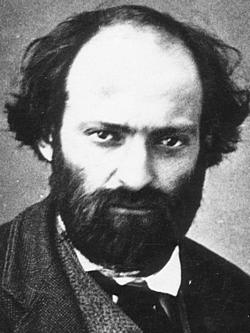
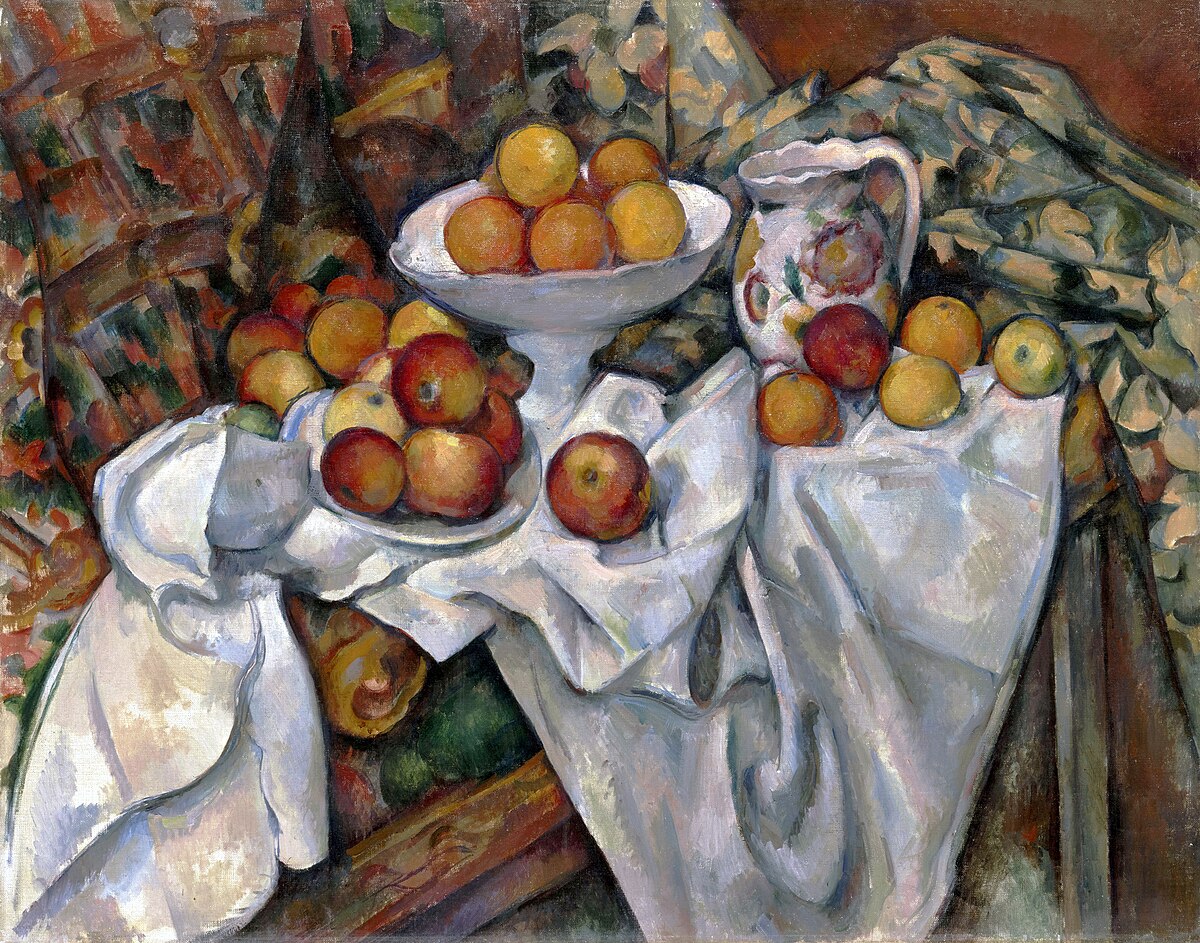
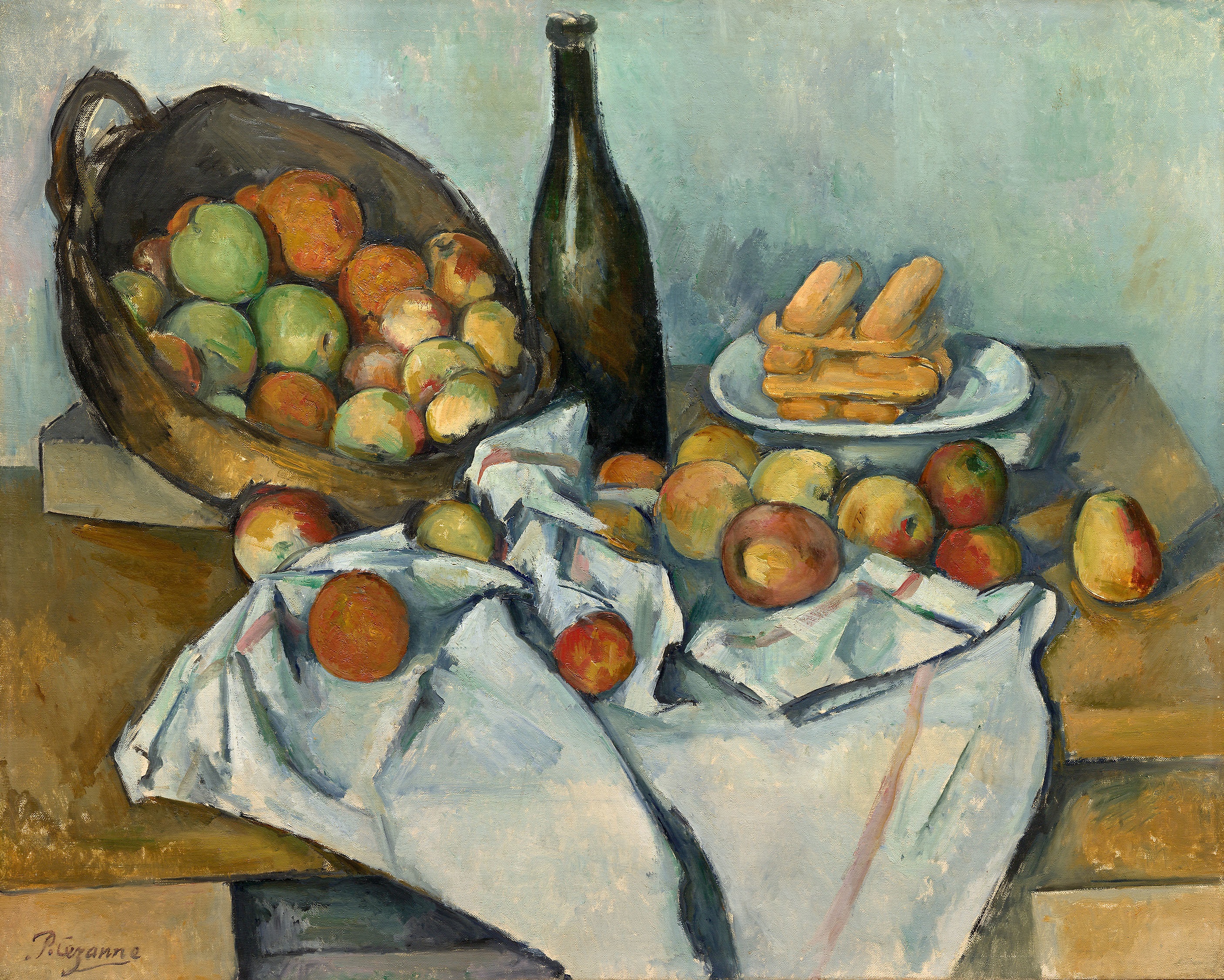
Pol Sezan rođen je 1839. godine u Eks-an-Provansu, kao sin bogatog bankara, i postao je najuticajniji slikar kasnog devetnaestog veka — umetnik koji je, rečima i Matisa i Pikasa, bio „otac svih nas.” Njegovi rani radovi bili su tamni, gusto naslikani i ponekad burno ekspresivni, ali kontakt sa impresionistima, posebno Pisarom, naučio ga je da posvetli paletu i radi na otvorenom. Od ove polazne tačke, Sezan je proveo preostale tri decenije svog života u potrazi za ciljem koji nijedan drugi slikar nije artikulisao: da „ponovo uradi Pusena iz prirode” — da pronađe umetnost koja je istovremeno verna vizuelnom osjećaju i strukturalno čvrsta.
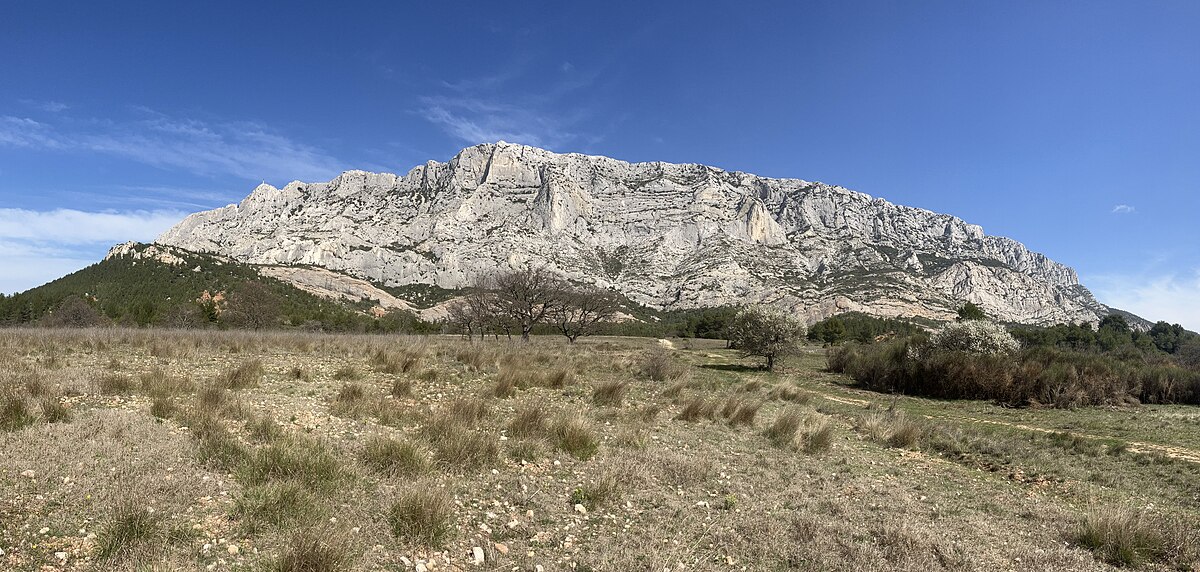
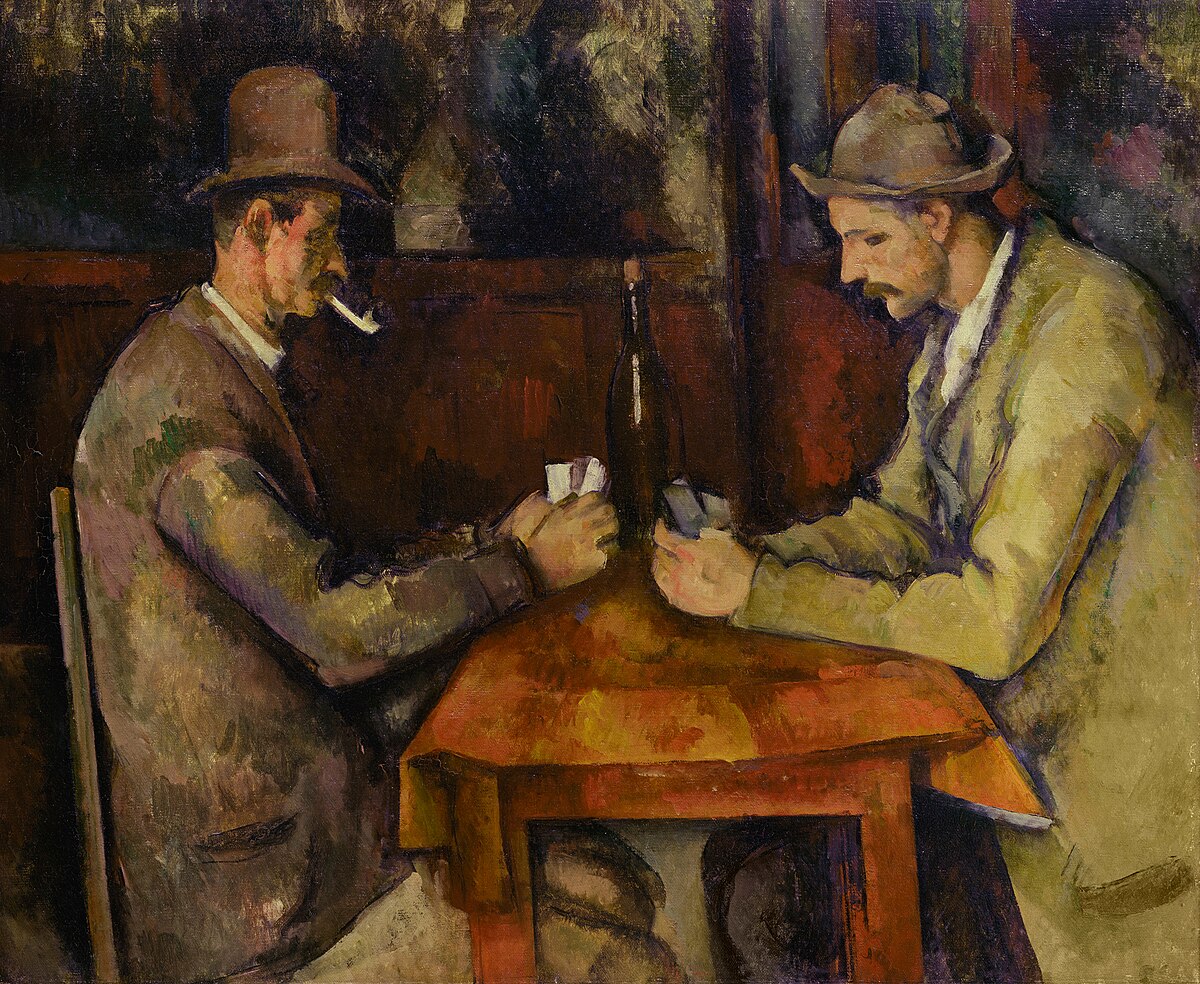
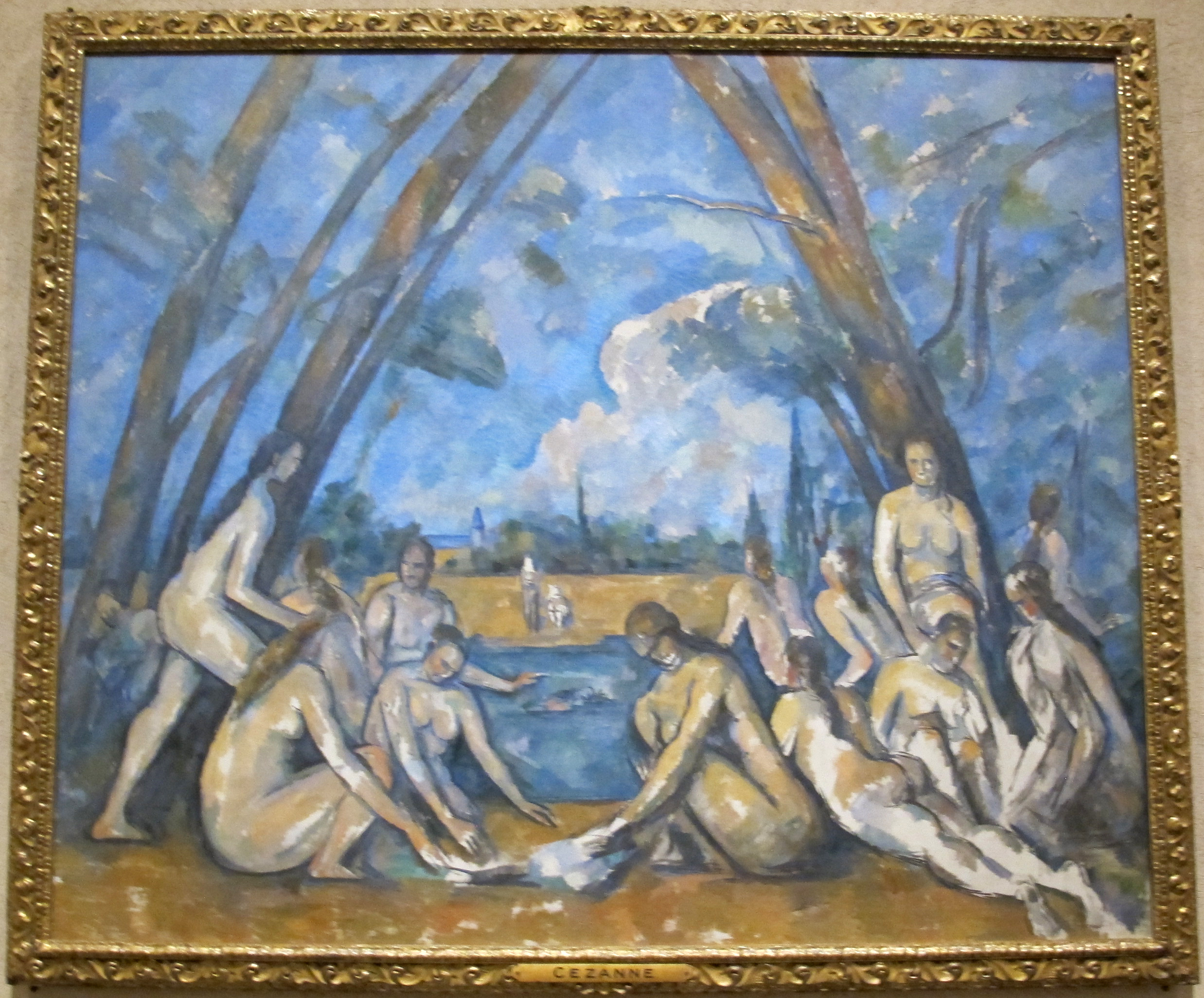
Njegov metod bio je mukotrpan i revolucionaran. Radeći polako pred motivom — zdela jabuka, planina, grupa kupača — Sezan je gradio forme kroz pažljivo modulisane mrlje boje, svaki potez četkice građevinski blok u konstruisanoj arhitekturi ravni i volumena. Mont Sainte-Victoire, koji je naslikao preko šezdeset puta, postaje u njegovim rukama ne topografski zapis već treperava, fasetirana struktura koja lebdi između predstave i apstrakcije. The Card Players (oko 1890-1895) svodi žanr-slikarstvo na monumentalnu suštinu.
Sezan je retko izlagao i bio je malo poznat van uskog kruga poštovalaca sve do retrospektivne izložbe na Jesenjem salonu 1907. godine, godinu dana posle njegove smrti. Uticaj je bio eksplozivan: Brak i Pikaso pokrenuli su kubizam direktno iz njegovog primera, i praktično svaki značajni slikar dvadesetog veka priznao je njegov uticaj.