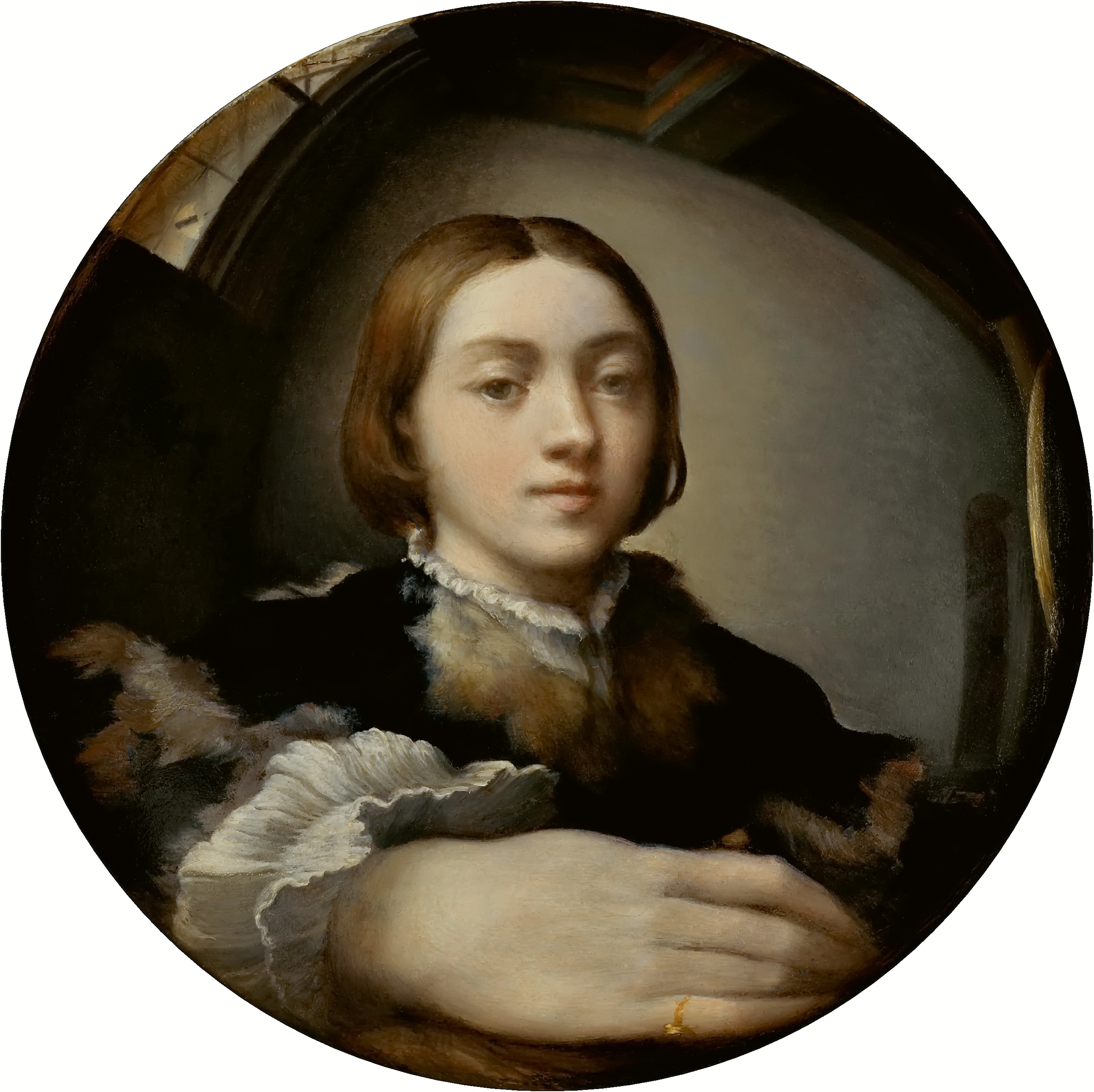
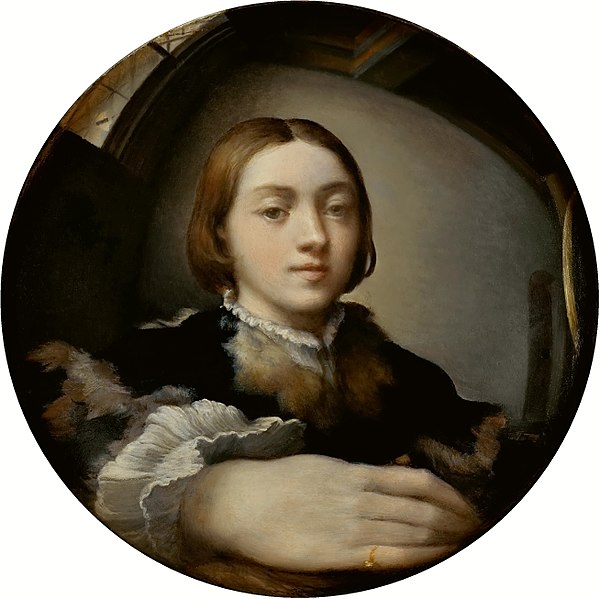
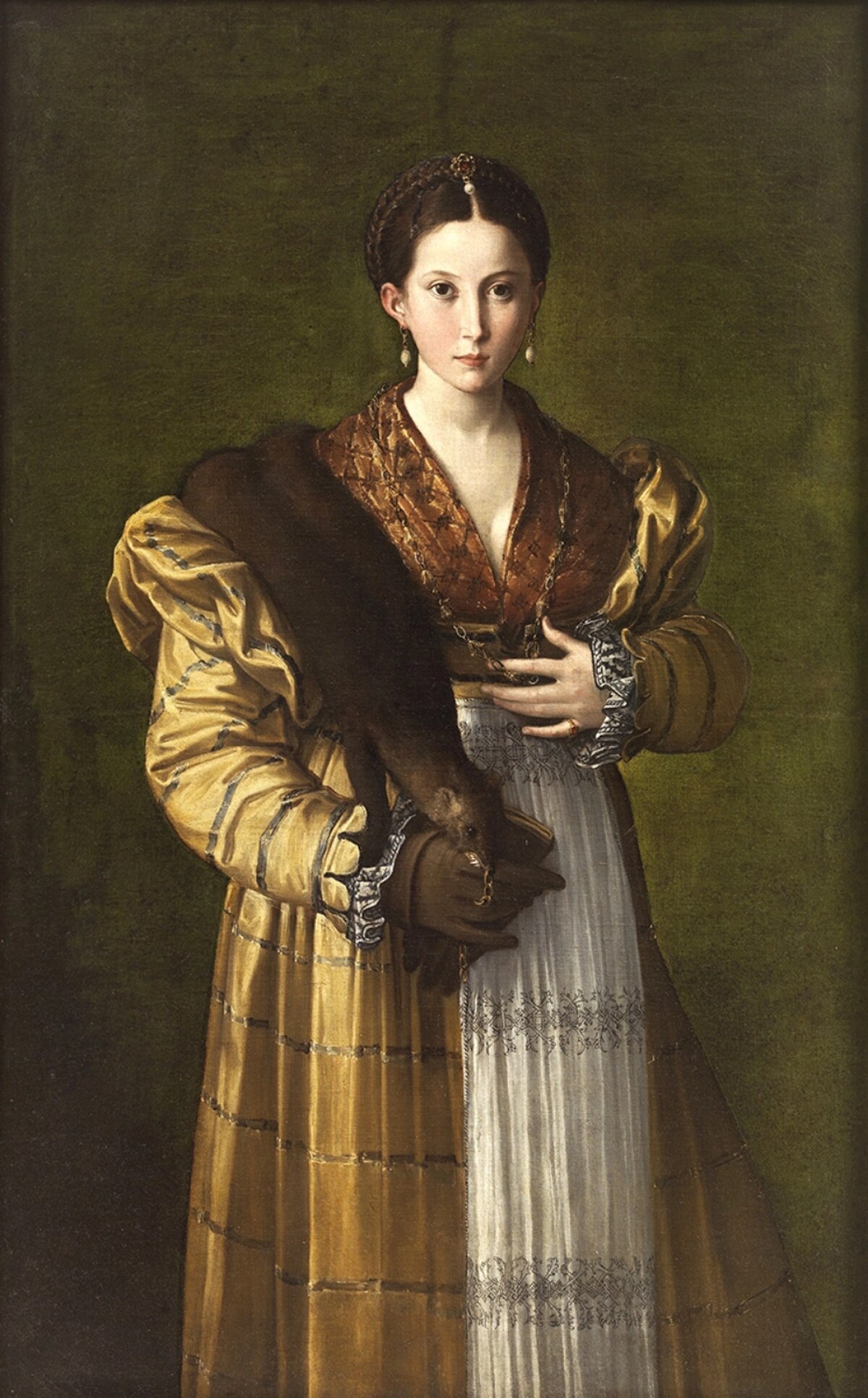
Đirolamo Frančesko Marija Macola, zvani Parmiđanino po svom rodnom gradu Parmi, bio je jedan od najdarovitijih i najoriginalnijih slikara italijanskog manirističkog pokreta. Čudo od deteta koji je slikao oltarske slike sa šesnaest godina, otputovao je u Rim 1524. godine noseći svoj smelih Self-Portrait in a Convex Mirror — virtuozno delo naslikano na zakrivljenoj drvenoj ploči kako bi se replicirala iskrivljenja berberovog ogledala — koje je toliko impresioniralo papu Klementa VII da je mladi umetnik odmah upoređen sa Rafaelom.
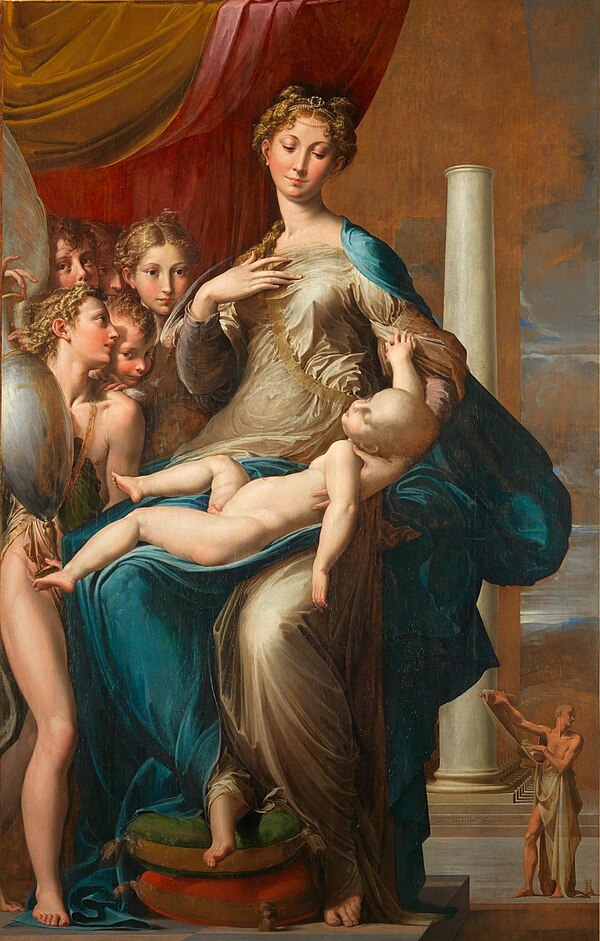
Njegovo najpoznatije delo, Madonna with the Long Neck (1534-1540), otelotvoruje manirističku estetiku u njenom najekstremnijem obliku: Bogorodičino telo je nemoguće izduženo, njeni prsti se sužavaju do neverovatnih dužina, dok Hristos-dete leži rašireno preko njenog krila u uznemirujućoj pozi. Red sićušnih stubova i sićušna figura u pozadini stvaraju vrtoglavi osećaj prostorne dislokacije. Slika je ostala nedovršena nakon Parmiđaninove prerane smrti sa trideset sedam godina — tradicija kaže da je postao opsednut alhemijom, zanemarujući umetnost u potrazi za kamenom mudrosti.
Uprkos kratkoj karijeri, Parmiđaninova profinjena elegancija i inventivne distorzije uticale su na slikare širom Evrope, od Primatičoa u Fontenblou do mladog El Greka, a njegov autoportret je postao kamen temeljac za umetnike i pisce koji istražuju temu umetničkog identiteta i percepcije.