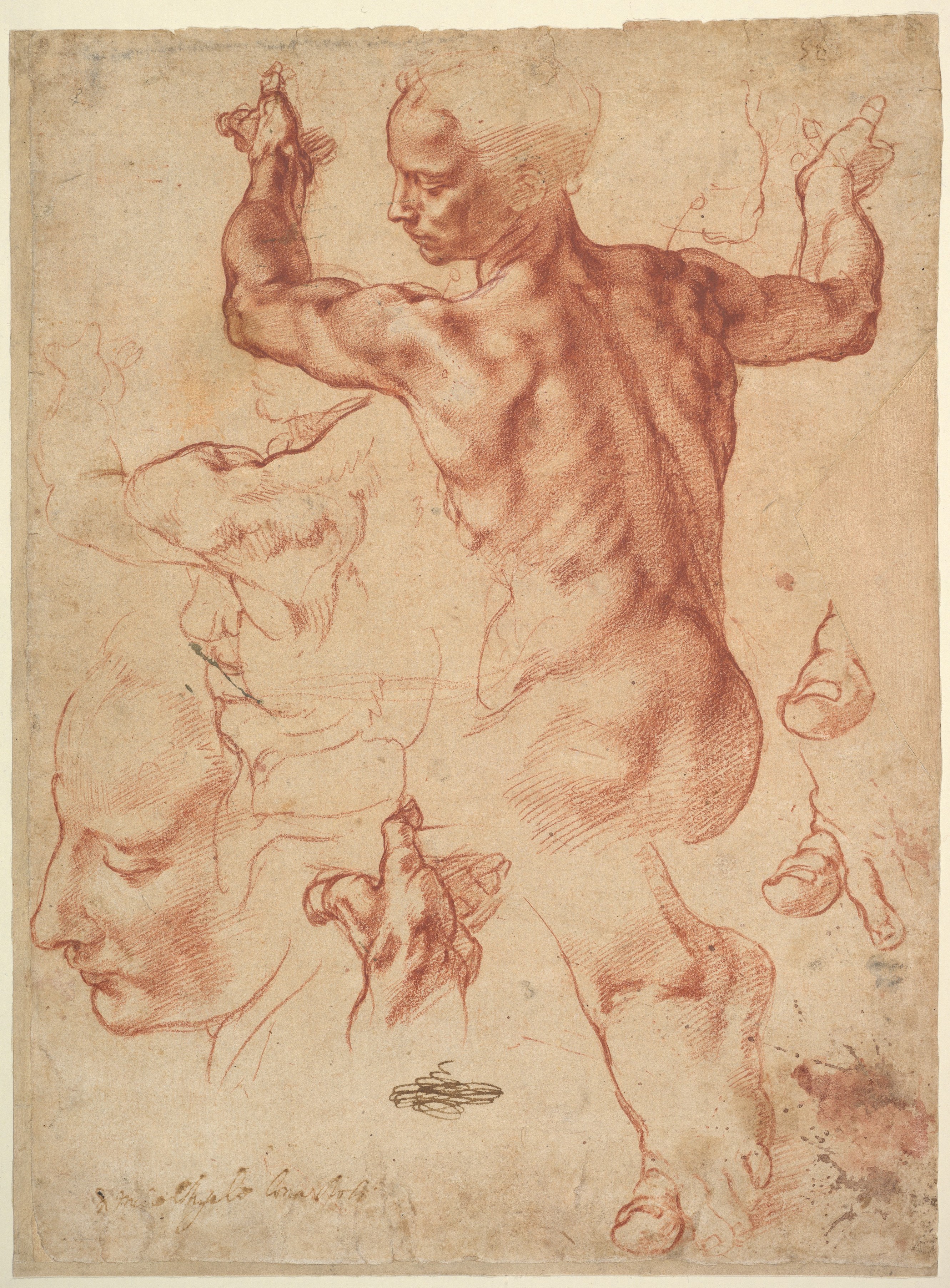
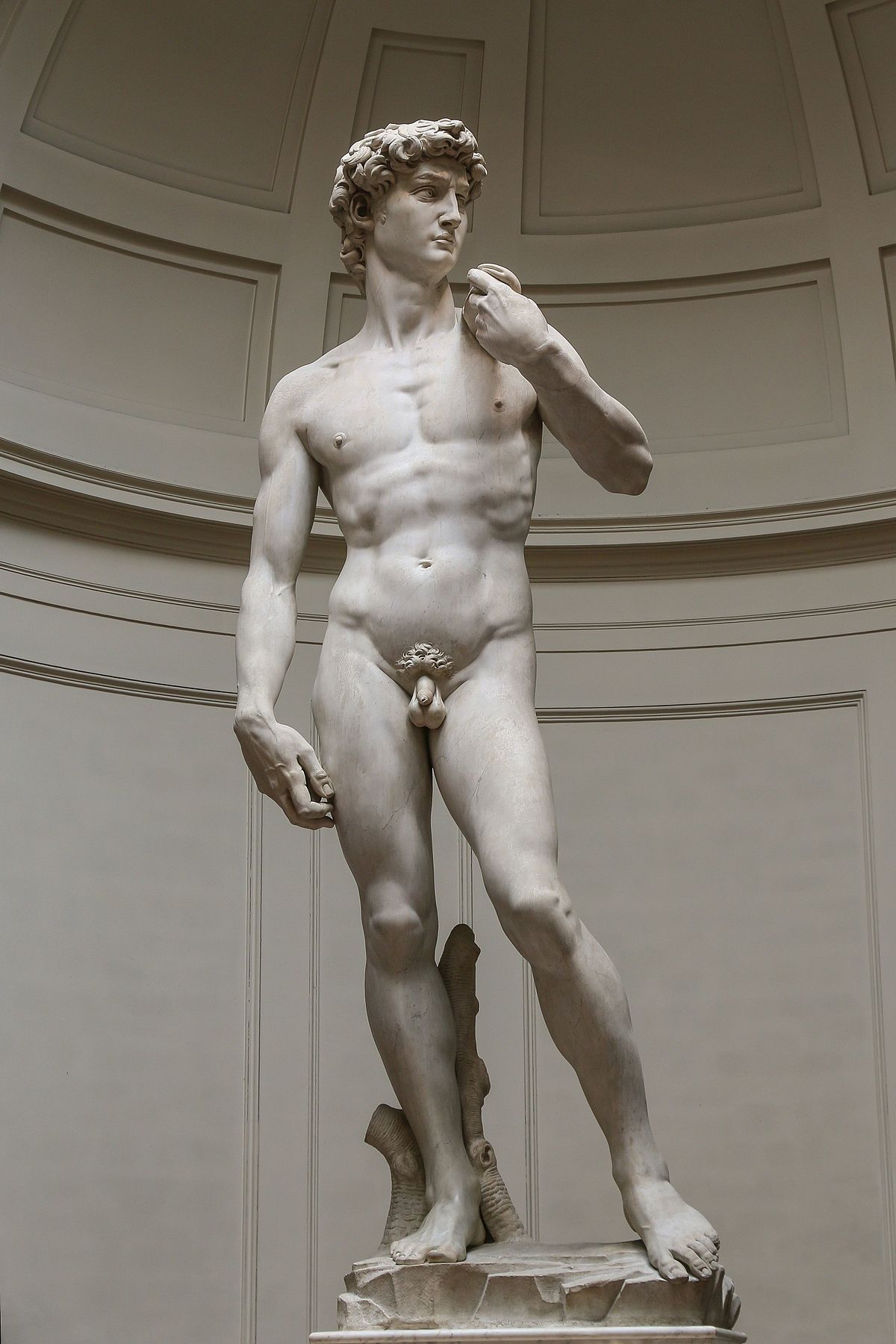
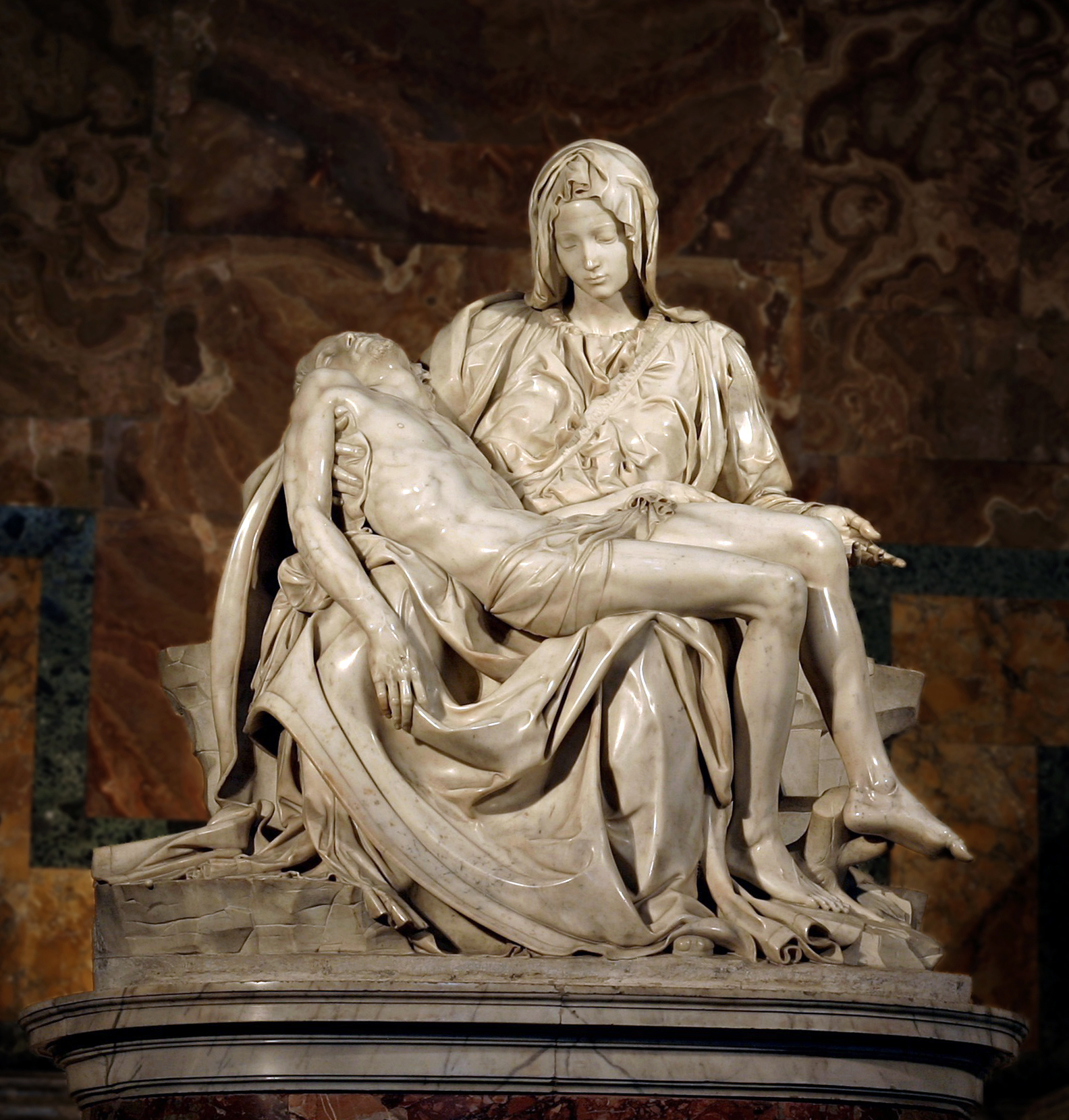
Mikelanđelo Buonaroti verovao je da figura već postoji unutar mermera — zadatak vajara bio je jednostavno da je oslobodi. To uverenje proizvelo je neka od najzadivljujućih dela u istoriji umetnosti. Njegov David, isklesan iz jednog bloka mermera koji su dva ranija vajara napustila, visok je preko četiri metra i prikazuje biblijskog heroja u napetom trenutku pre bitke — mišići napeti, pogled žestok, svaka tetiva prikazana sa anatomskom preciznošću. Završen kada je Mikelanđelo imao samo dvadeset devet godina, kip je objavio novi standard umetničke ambicije. Njegova ranija Pietà, isklesana kada je imao samo dvadeset četiri godine, otkrila je suprotan emocionalni registar: nežnost Bogorodice koja drži svog mrtvog sina, isklesana u mermeru tako uglačanom da deluje kao da diše.
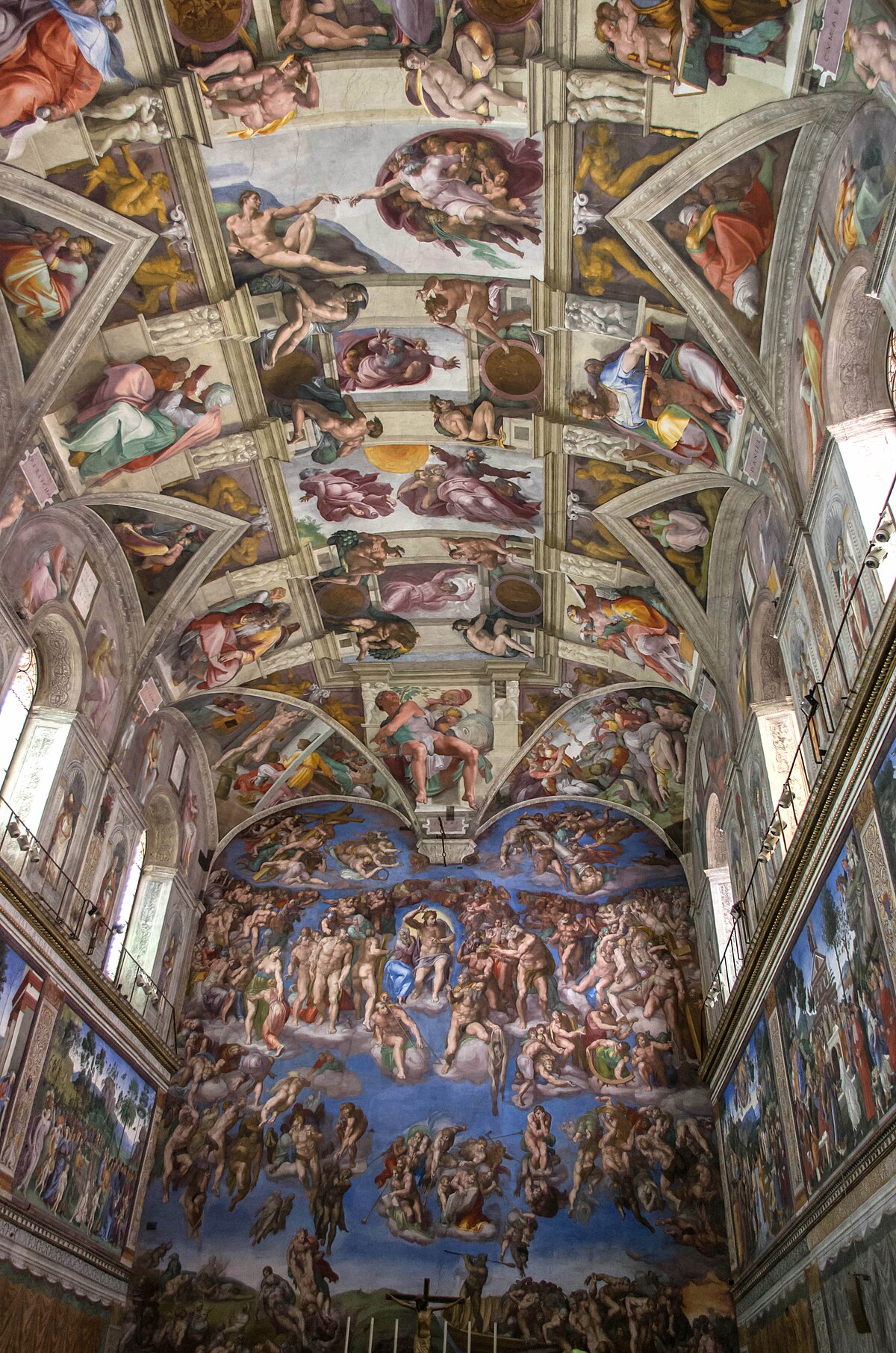
Narudžbina pape Julija II da naslika plafon Sikstinske kapele bila je projekat kome se Mikelanđelo u početku opirao — smatrao je sebe vajarom, ne slikarom. Ipak, tokom četiri mučne godine, radeći uglavnom sam na skelama visoko iznad poda kapele, stvorio je jedno od vrhovnih dostignuća zapadne umetnosti: više od tri stotine figura koje ilustruju Knjigu postanja, kulminišući ikoničnim Stvaranjem Adama, gde se ispruženi prsti Boga i čoveka gotovo dodiruju preko električnog zjapa. Decenijama kasnije vratio se u istu kapelu da naslika Poslednji sud na oltarskom zidu, vrtložnu, zastrašujuću viziju božanskog obračuna.
Mikelanđelov nemirni genije protezao se i na arhitekturu. U kasnijim godinama preuzeo je vođenje projekta Bazilike Svetog Petra u Rimu, zamišljajući veliku rebrastu kupolu koja će definisati siluetu grada vekovima. Poznat po svom vatrenom temperamentu, gorkom rivalstvu sa Leonardom i Rafaelom i žestokoj nezavisnosti, Mikelanđelo je radio gotovo do smrti u osamdeset osmoj godini. Ostavio je za sobom opus — u skulpturi, slikarstvu, arhitekturi i poeziji — koji je postavio merilo za samu umetničku veličinu.