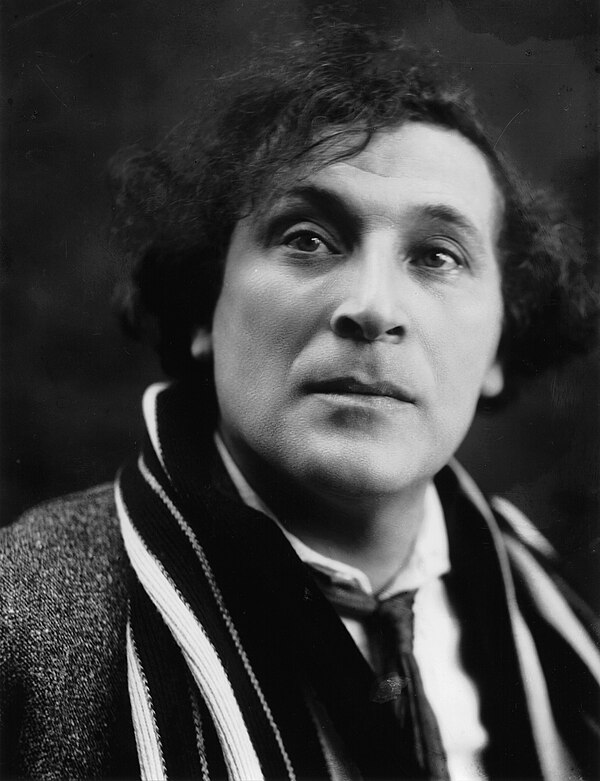
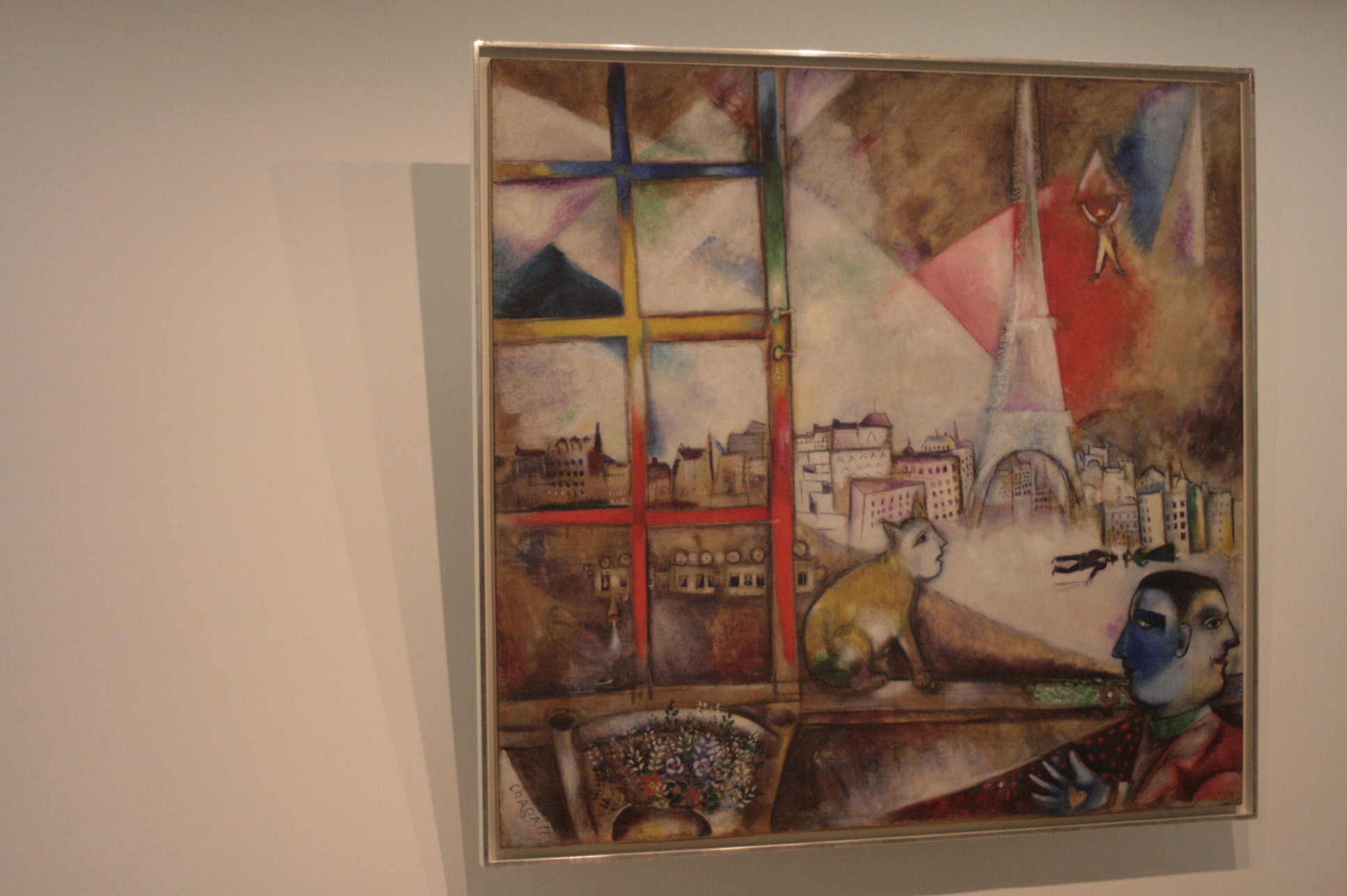
Mark Šagal rođen je kao Mojše Šagal 1887. godine u Vitebsku, pretežno jevrejskom gradu u Ruskom carstvu (danas Belorusija), i postao je jedan od najomiljenijih i najprepoznatljivijih umetnika dvadesetog veka. Njegova umetnost crpi iz narodnih tradicija hasidskog judaizma, boja ruskog ikonopisa i formalnih inovacija kubizma, fovizma i nadrealizma — a ipak ne pripada nijednoj školi, pokoravajući se sopstvenoj snovitoj logici u kojoj ljubavnici lebde iznad krovova, violinisti sviraju na zelenim licima muzičara, a koze lete kroz ljubičasta nebesa.
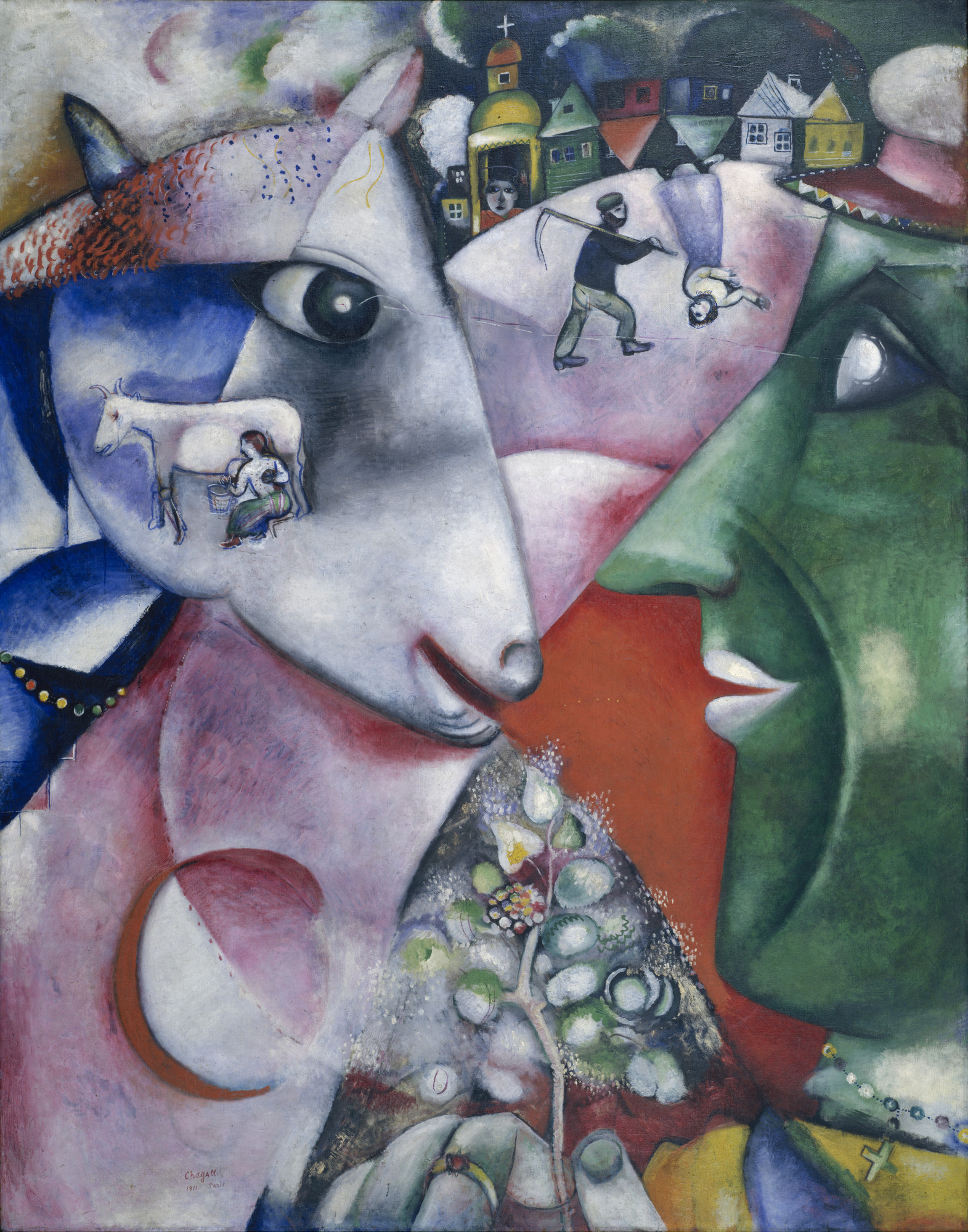
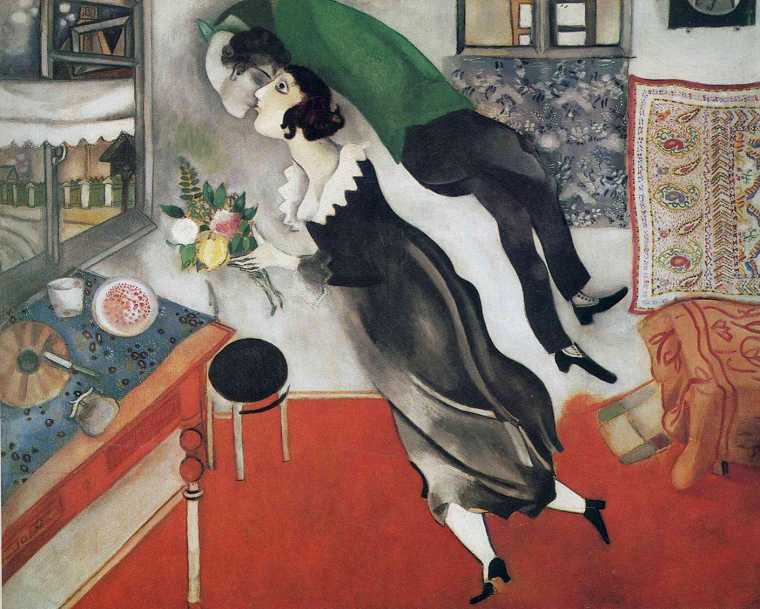
I and the Village (1911), naslikan tokom njegovih prvih godina u Parizu, superponira čoveka i kravu u vrtložnoj kompoziciji presecajućih krugova, sa sićušnim scenama ruskog seoskog života rasejanim poput sećanja po platnu. The Birthday (1915) prikazuje Šagala kako leti kroz sobu da poljubi svoju verenicu Belu, njihova tela prkose gravitaciji sa radosnom lakoćom same ljubavi. Ove slike uspostavile su vizuelni vokabular — lebdeće figure, sjajne boje, seoska sećanja — koji će Šagal istraživati narednih sedam decenija.
Šagalova karijera bila je izuzetno duga i produktivna. Kreirao je vitraže za katedrale i sinagoge širom sveta, naslikao plafon Pariške opere i stvorio značajne cikluse biblijskih slika i litografija. Umro je 1985. godine u devedeset sedmoj godini, kao poslednja preživela velika figura Pariške škole. Njegova umetnost ostaje svedočanstvo o moći sećanja, ljubavi i poetske imaginacije.