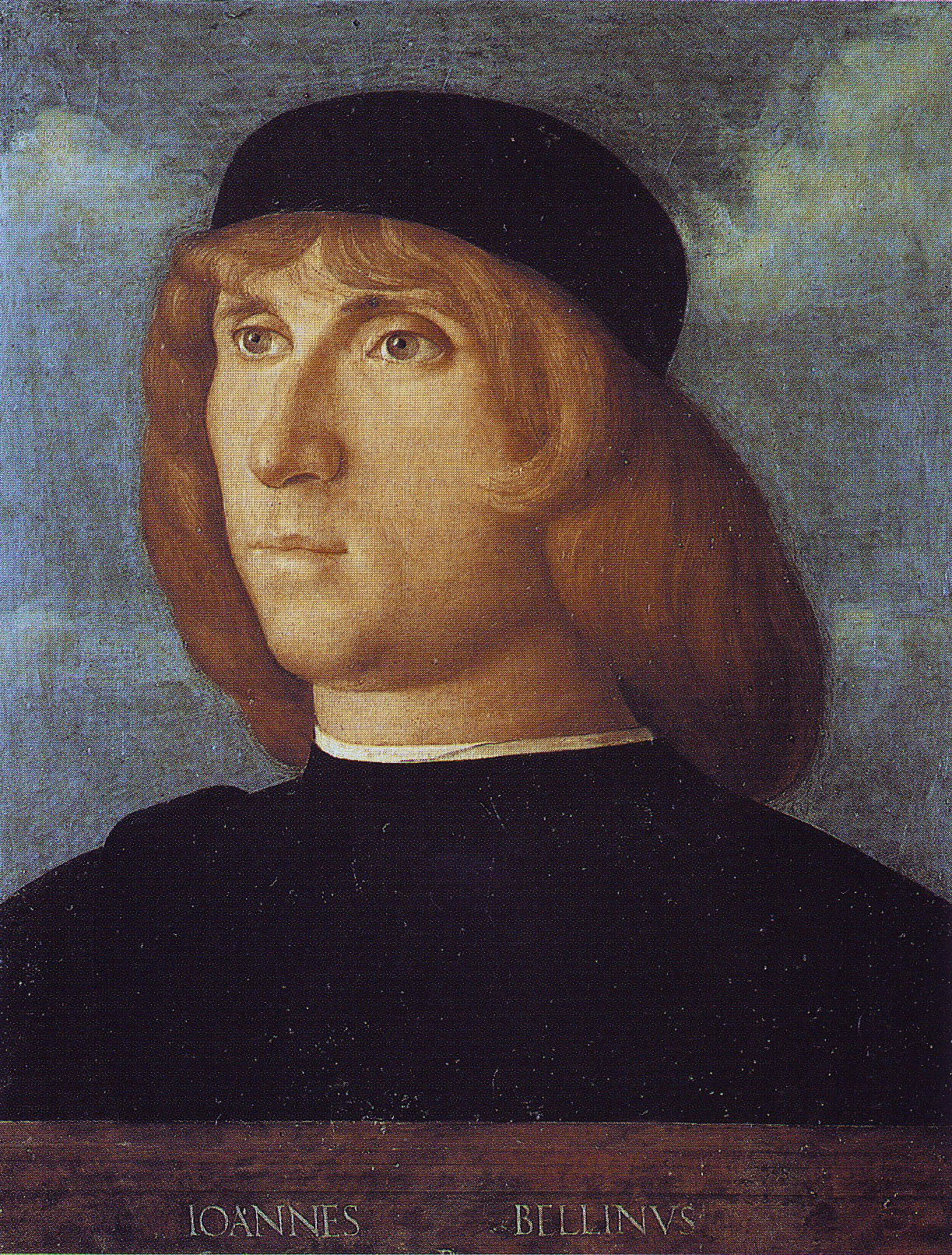
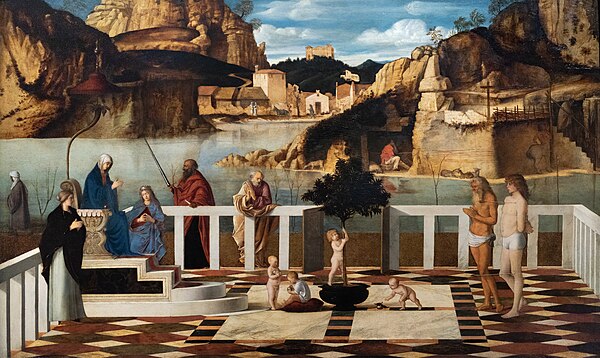
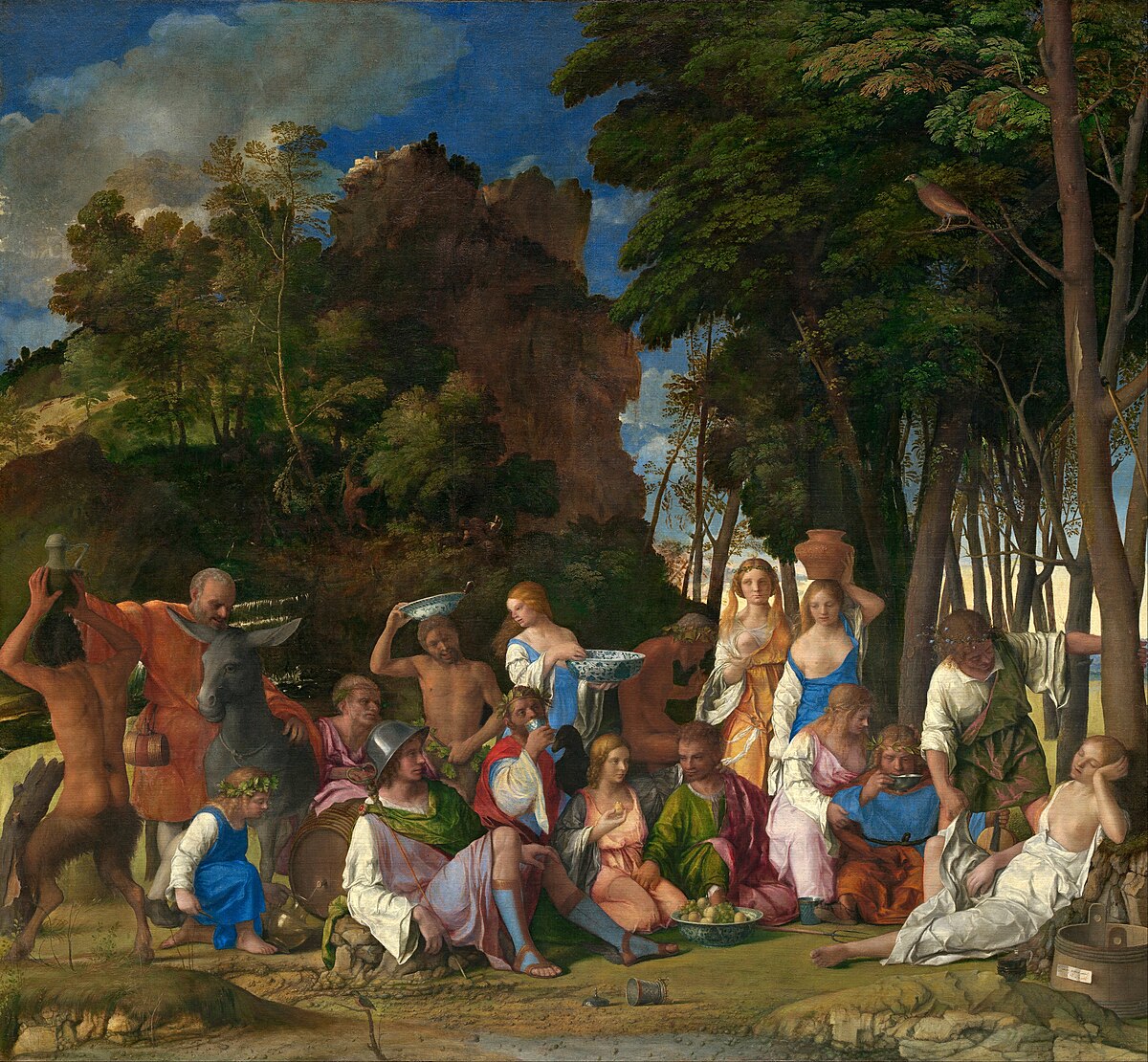
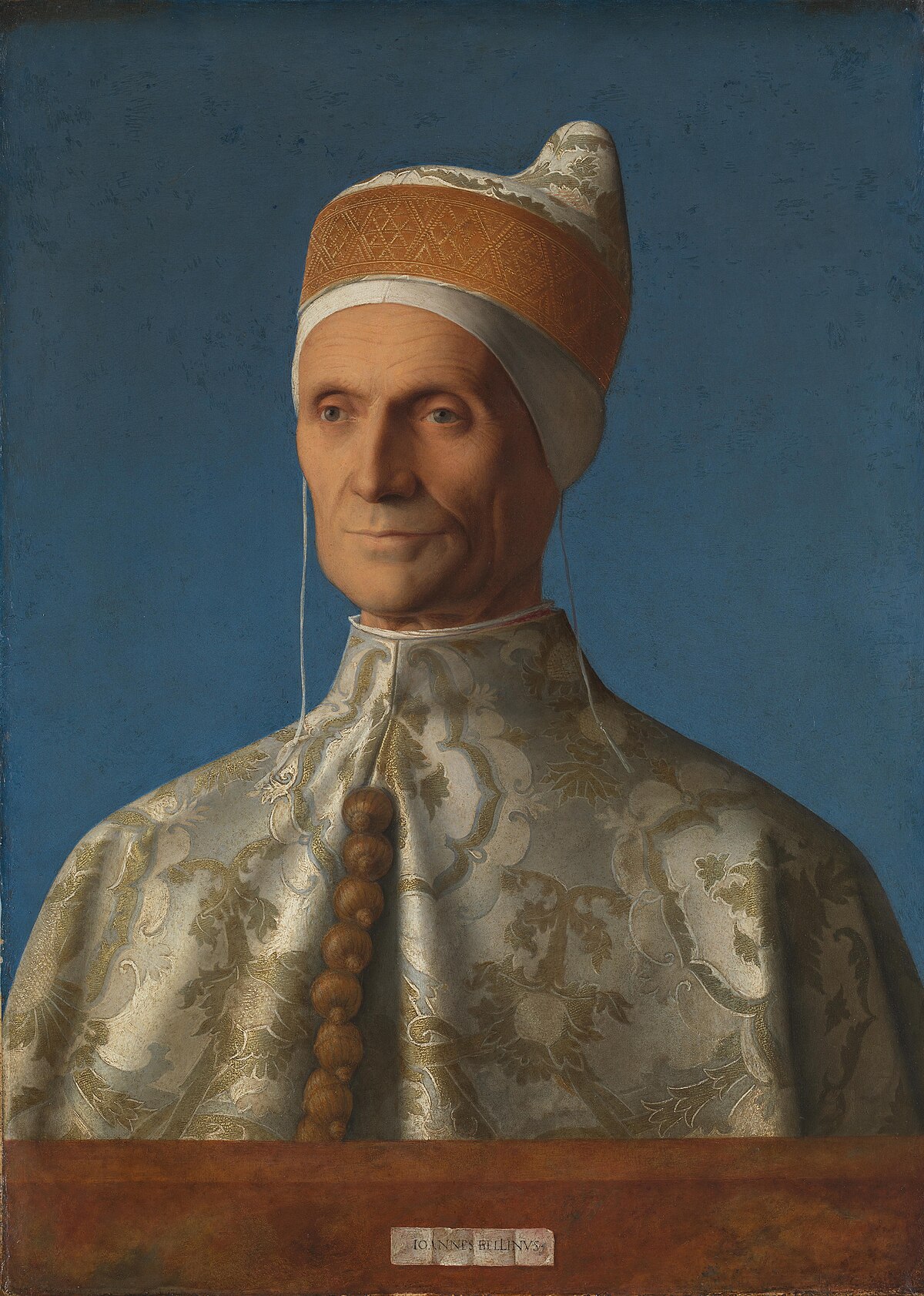
Đovani Belini je bio najvažniji slikar u Veneciji tokom druge polovine petnaestog veka i umetnik koji je gotovo sam uspostavio venecijansku školu kao rivala Firenci i Rimu. Rođen u umetničkoj dinastiji — njegov otac Jakopo i brat Đentile bili su takođe slikari, a šurak mu je bio Andrea Mantenja — Đovani je upijao uticaje sa svih strana ali je iskovao stil koji je bio jedinstven, karakterisan svetlećom bojom, atmosferskom svetlošću i dubokim, kontemplativnim raspoloženjem.
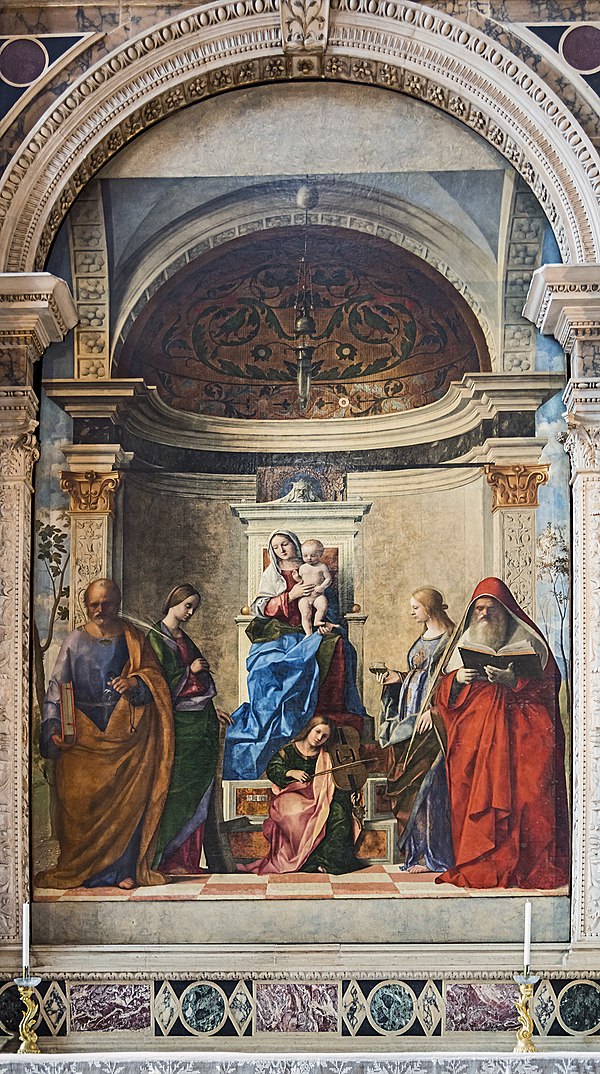
Njegovo usvajanje uljane tehnike, naučeno delimično po uzoru na Antonela da Mesinu (koji je doneo holandske tehnike u Italiju), omogućilo je Beliniju da postigne bogatstvo boje i suptilnost svetlosnih efekata koji su bili nemogući u temperi. Njegove kasne oltarske slike, posebno San Zaccaria Altarpiece (1505), kupaju figure u toploj, zlatnoj svetlosti koja ujedinjuje arhitekturu, pejzaž i ljudsku formu u jednu harmoničnu viziju — razvoj koji je direktno anticipirao dostignuća dva njegova najveća učenika, Đorđonea i Ticijana.
Belini je ostao produktivan do duboke starosti, neprestano obnavljajući svoj stil. Direr, u poseti Veneciji 1506. godine, proglasio ga je još uvek najboljim slikarom u gradu uprkos njegovim poodmaklim godinama. Njegovo nasleđe je celokupna venecijanska tradicija slikarstva zasnovanog na boji koja se proteže od Ticijana preko Veronesea i Tintoreta do Tjepola i dalje.