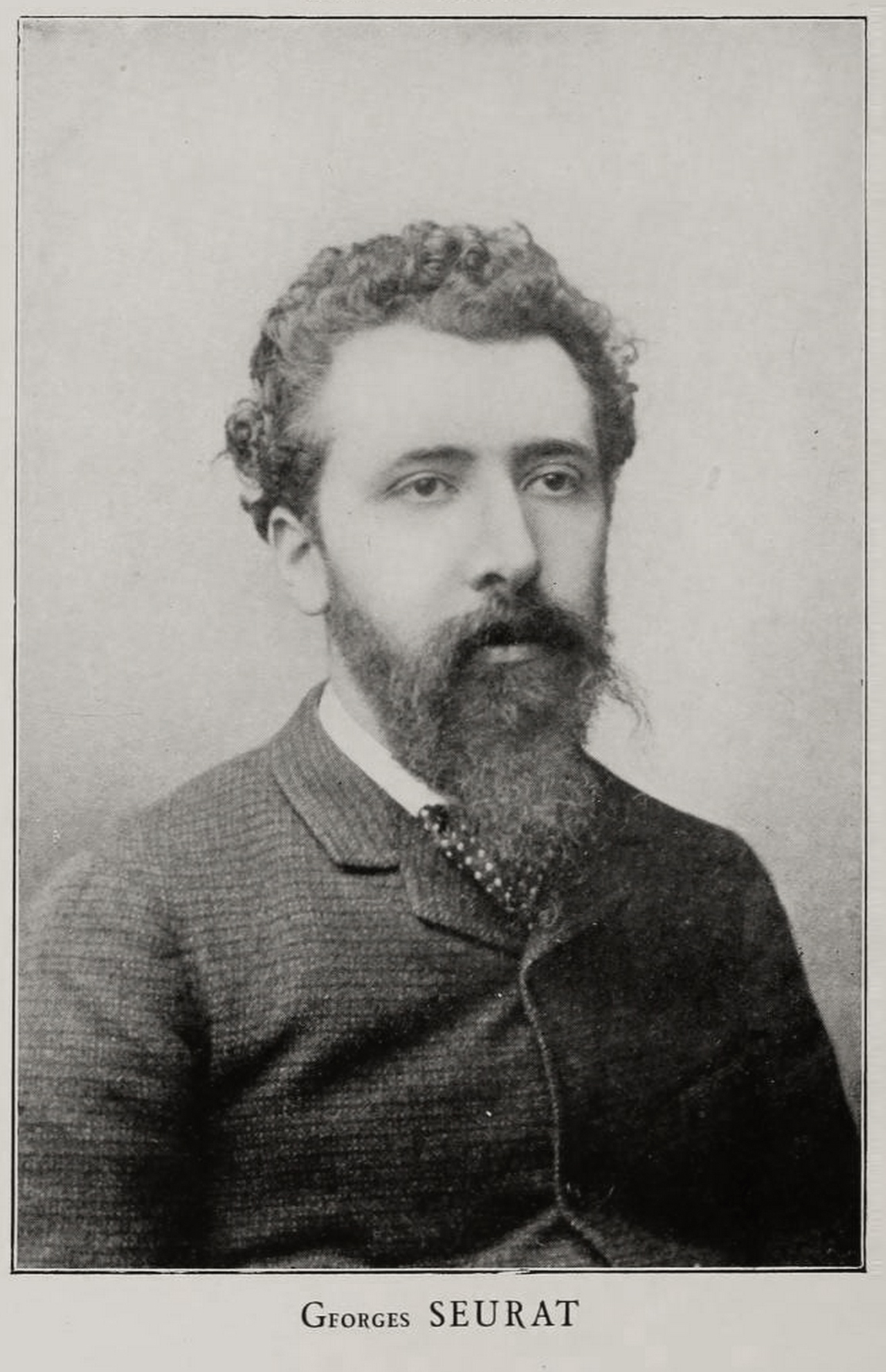
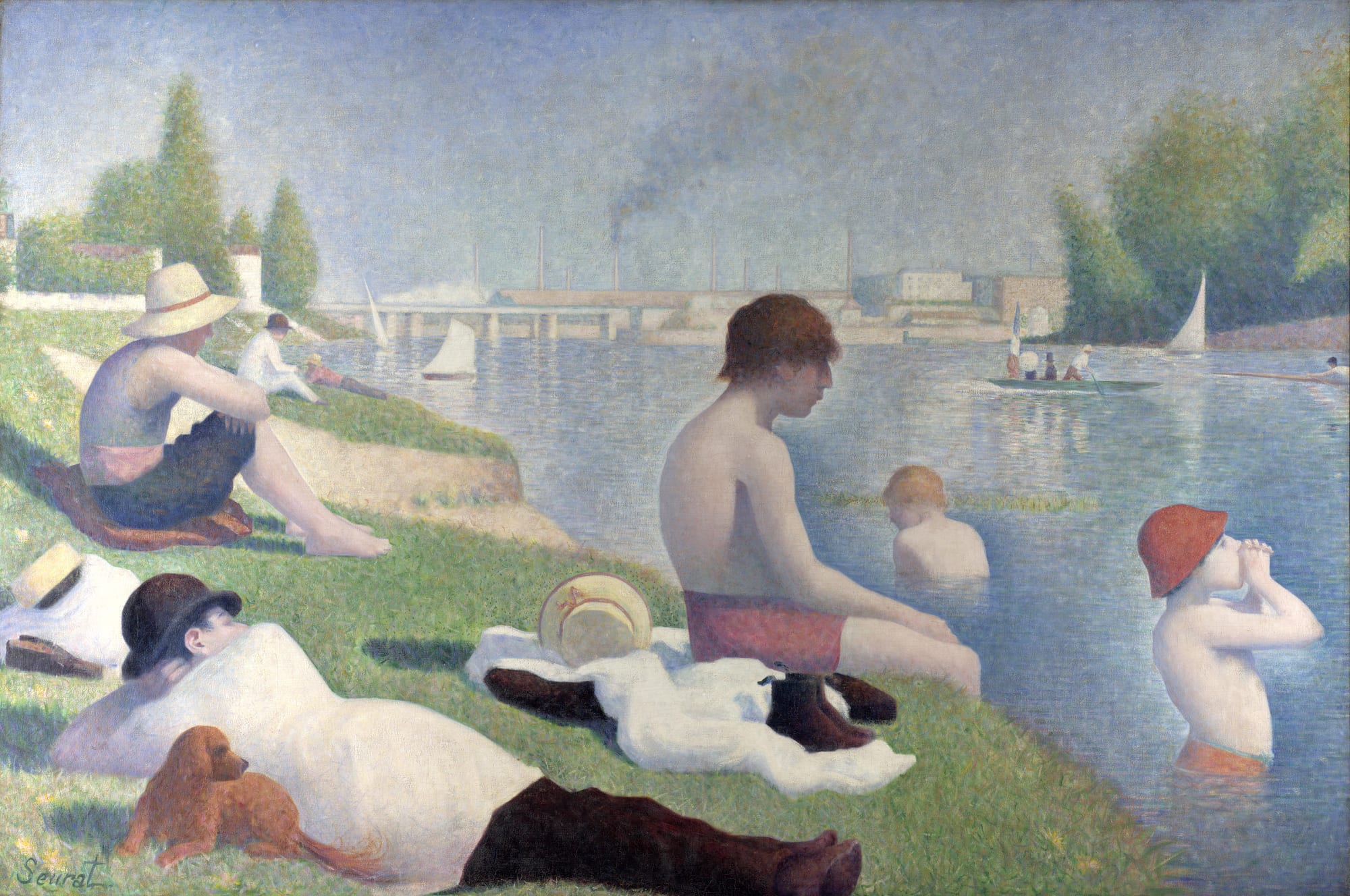
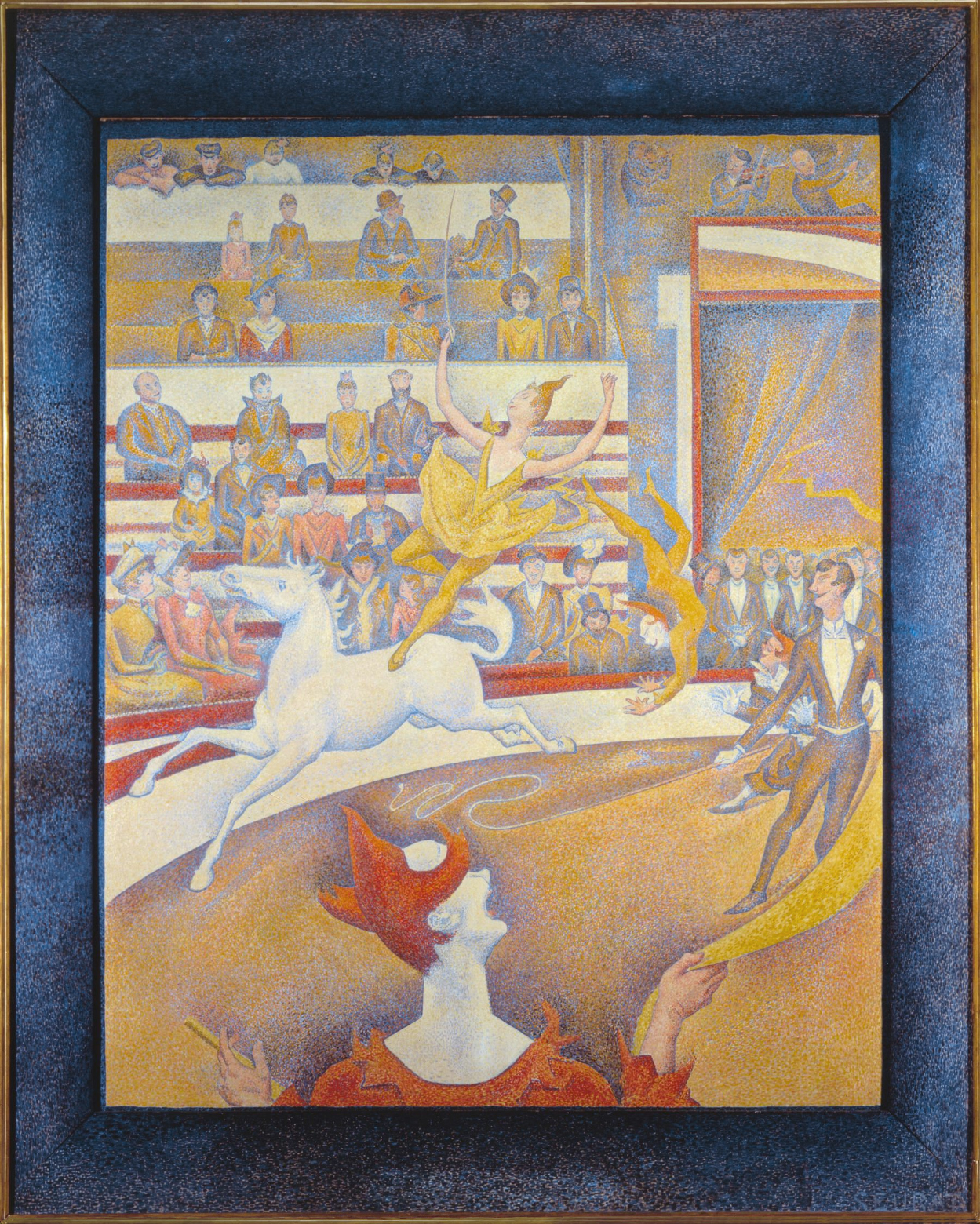
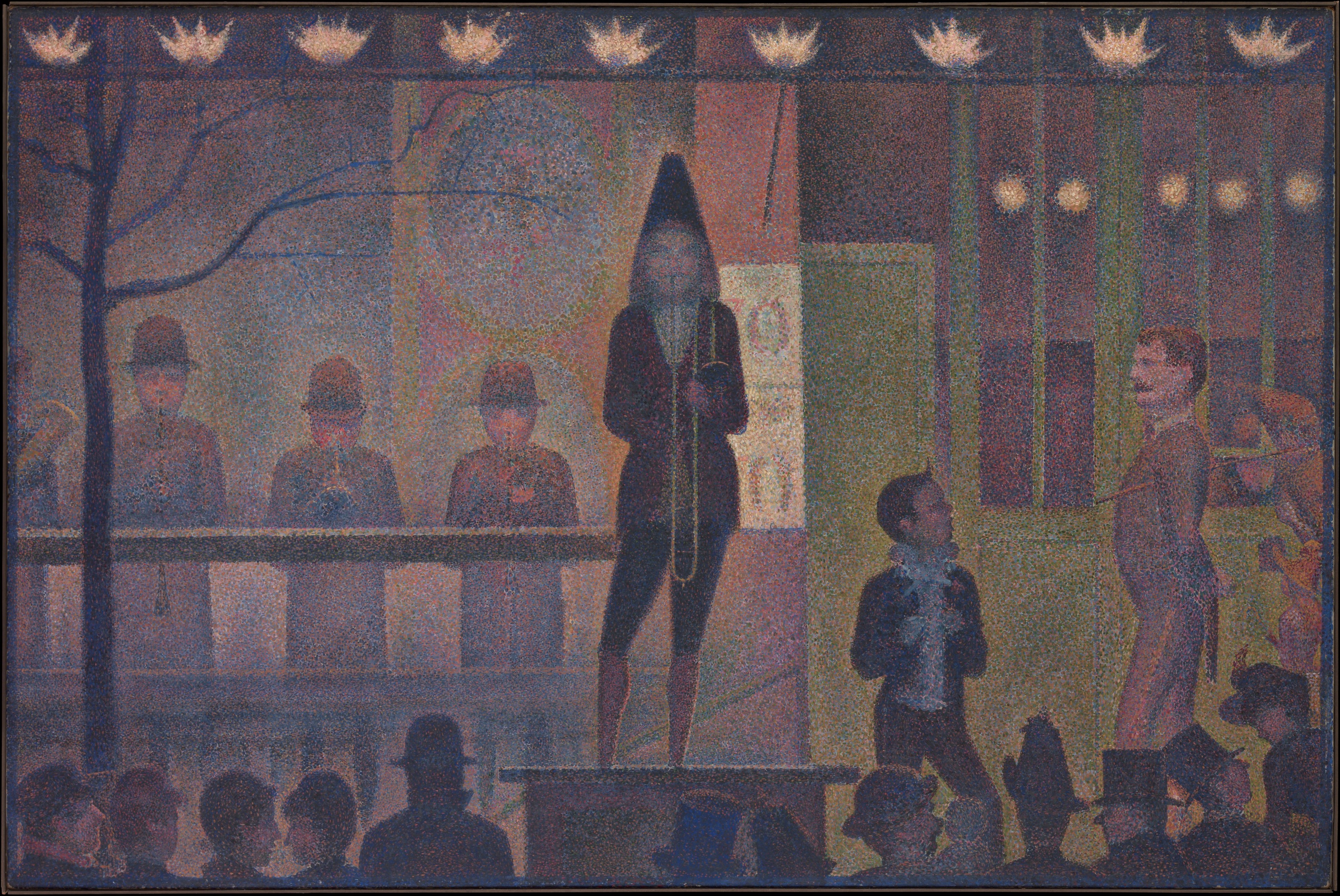
Žorž-Pjer Sera je rođen u Parizu 1859. godine i za tragično kratak život od samo trideset jedne godine stvorio je opus koji je fundamentalno promenio pravac slikarstva. Briljantno nadaren kao crtač — njegovi crteži ugljenom su među najlepšim u devetnaestom veku — Sera se uverio da se intuitivne metode boje impresionista mogu postaviti na rigoroznu naučnu osnovu. Oslanjajući se na teorije boja Mišela Ežena Ševrela, Ogdena Ruda i Šarla Blana, razvio je tehniku koju je nazvao hromoluminarizam (kasnije poznat kao pointilizam ili divizionizam) u kojoj se sićušne tačke čiste boje postavljaju jedna pored druge na platnu, optički se mešajući u oku posmatrača.
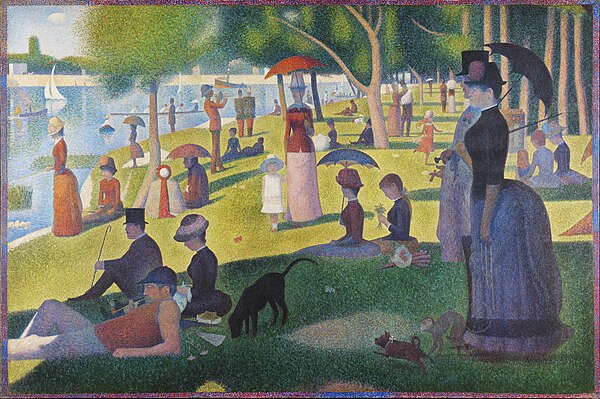
A Sunday Afternoon on the Island of La Grande Jatte (1884–1886), njegovo remek-delo, zahtevalo je dve godine rada i ostaje jedna od najprepoznatljivijih slika u umetnosti. Visoka skoro dva metra i široka preko tri metra, prikazuje Parižane kako se opuštaju u parku pored Sene, zamrznute u stavovima hijeratske mirnoće, naslikane u celosti pažljivo nanesenim tačkama boje. Efekat je istovremeno blistav i neobično snolik, kao da je prolazni trenutak impresionizma kristalizovan u večnu postojanost.
Serina prerana smrt od difterije 1891. godine prekinula je jednu od najoriginalnijih karijera u istoriji umetnosti. Njegov uticaj se prostire kroz Sinjaka i neoimpresioniste do fovista, futurista i dalje.