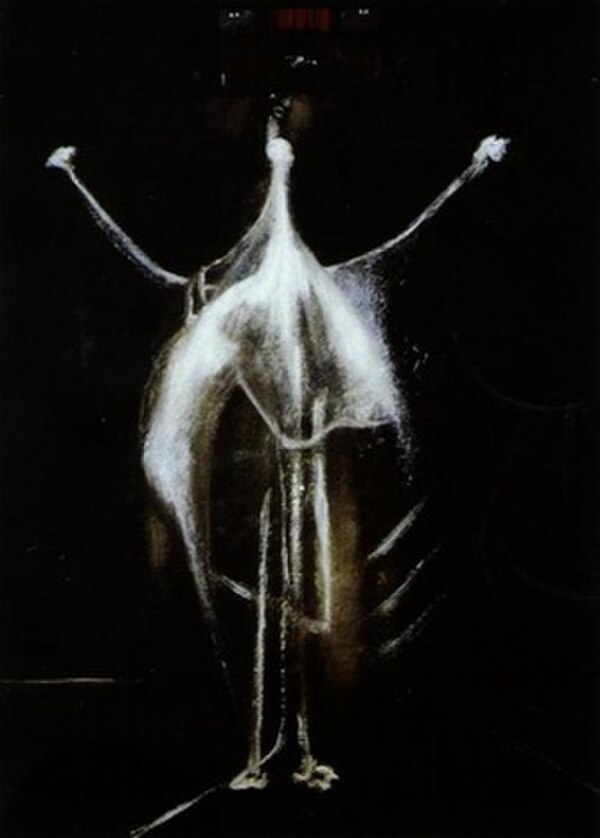
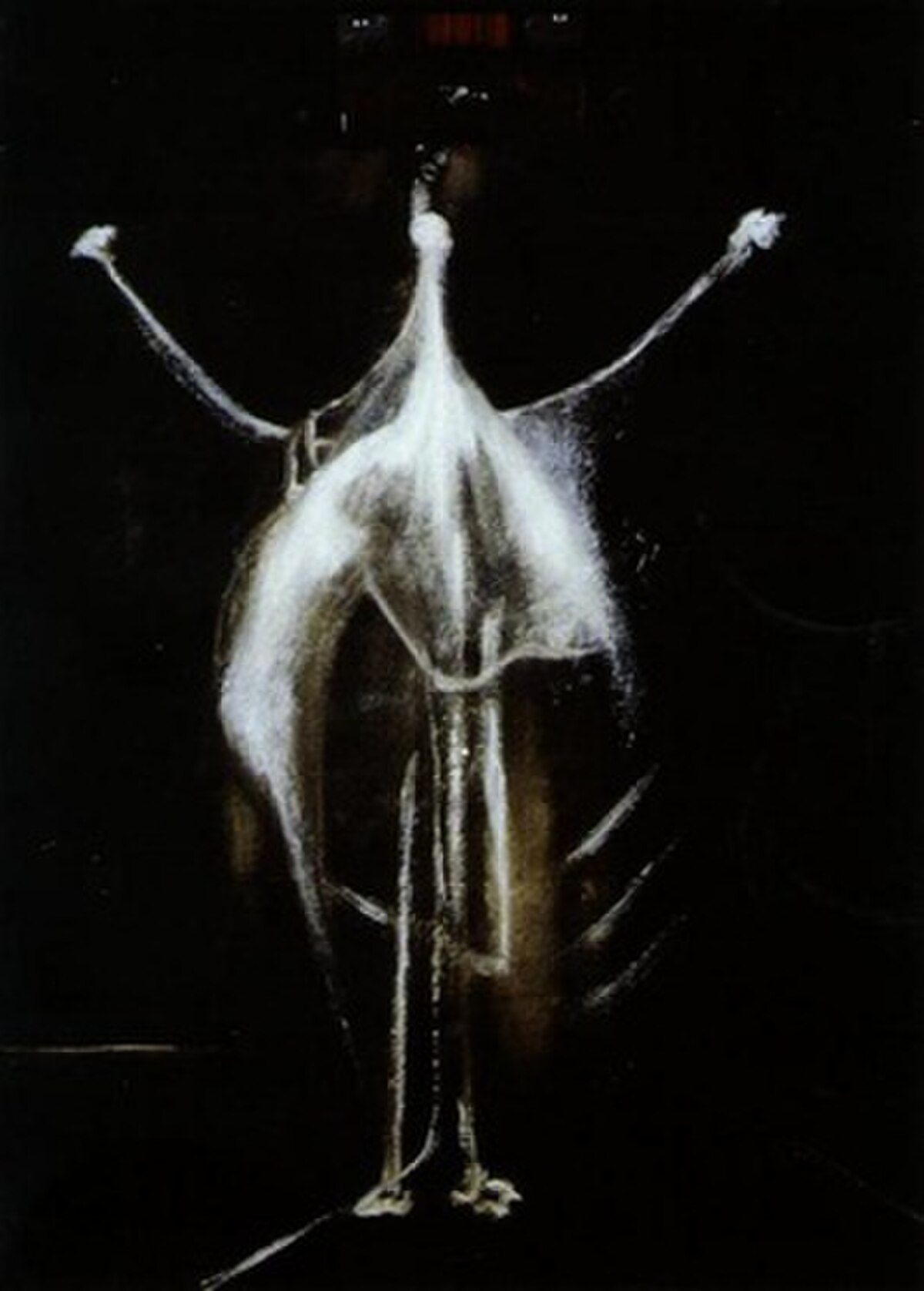
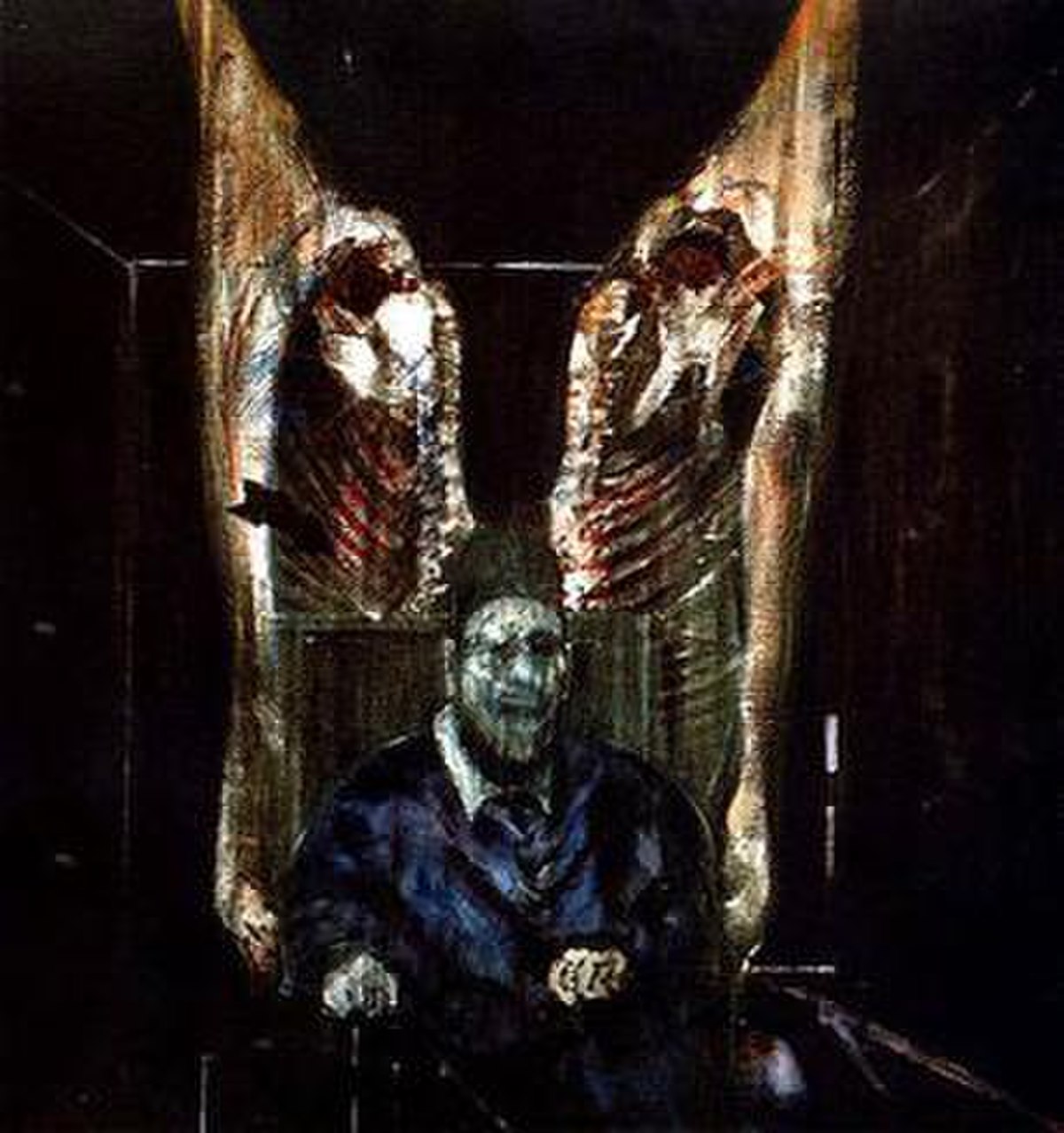
Frensis Bejkon je rođen 1909. godine u Dablinu od engleskih roditelja i odrastao je između Irske i Engleske, uglavnom samouk kao umetnik. Njegova karijera je ozbiljno započela izložbom 1944. godine dela Three Studies for Figures at the Base of a Crucifixion, tri biomorfne figure koje se grče na ravnoj narandžastoj pozadini i koje su pogodile londonski umetnički svet snagom bombe. U sumpornom posleratnom periodu Drugog svetskog rata, Bejkonova vizija ljudskog tela kao mesa — ranjivog, patničkog, iskrivljenog primalnim silama — činila se da hvata nešto suštinsko o modernom stanju.
Njegova najpoznatija dela uzimaju postojeće slike — Velaskezov Portret pape Inoćentija X, Majbridžove fotografije pokreta, novinarske fotografije — i podvrgavaju ih nasilnoj transformaciji. Njegovi vrišteći pape, zarobljeni u providnim kavezima, čija se odežda rastvara u udarce ljubičaste i bele, među najstrašnijim su slikama moderne umetnosti. Njegovi portreti prijatelja i ljubavnika — Džordža Dajera, Lusijana Frojda, Izabel Rostern — uvijaju lica i tela svojih subjekata u iskrivljene forme koje nekako hvataju njihovu suštinu istinitije od bilo koje fotografije.
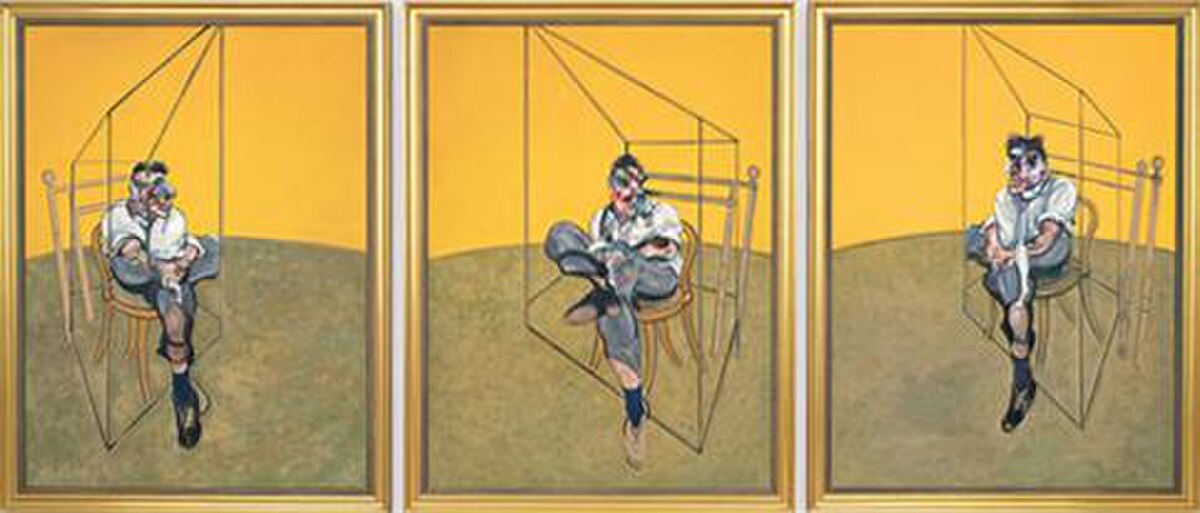
Bejkon je bio paradoks: čovek ogromnog šarma i duhovitosti koji je slikao slike nemilosrdnog užasa; tehnički briljantni slikar koji je tvrdio da radi kroz slučajnost i šansu. Uništio je veliki deo svog ranog rada i bio je notorno omalovažavajući prema sopstvenim dostignućima. Umro je u Madridu 1992. godine, a njegovo delo Three Studies of Lucian Freud (1969) prodato je 2013. za 142,4 miliona dolara, tada najskuplja slika ikada prodata na aukciji.