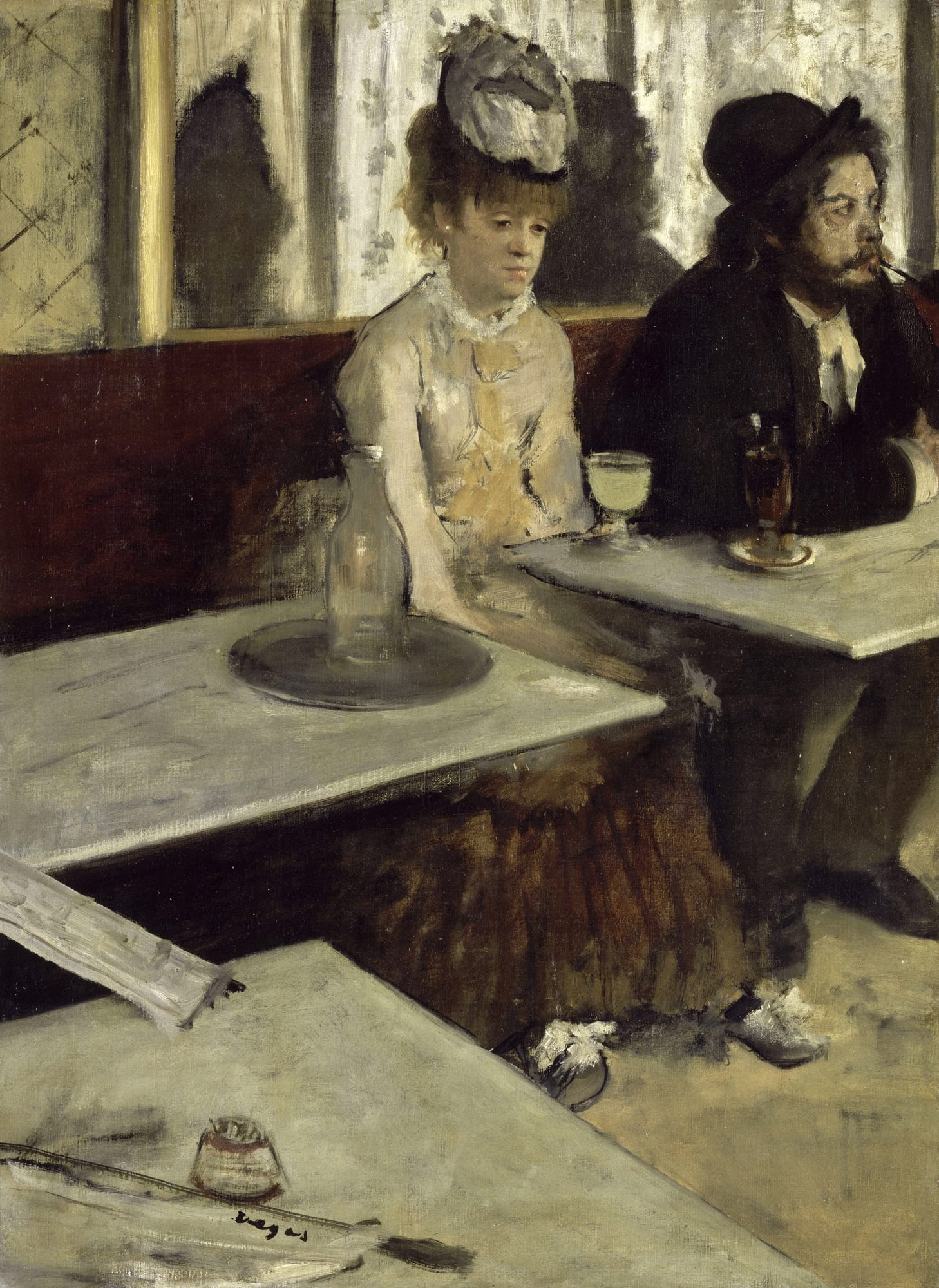
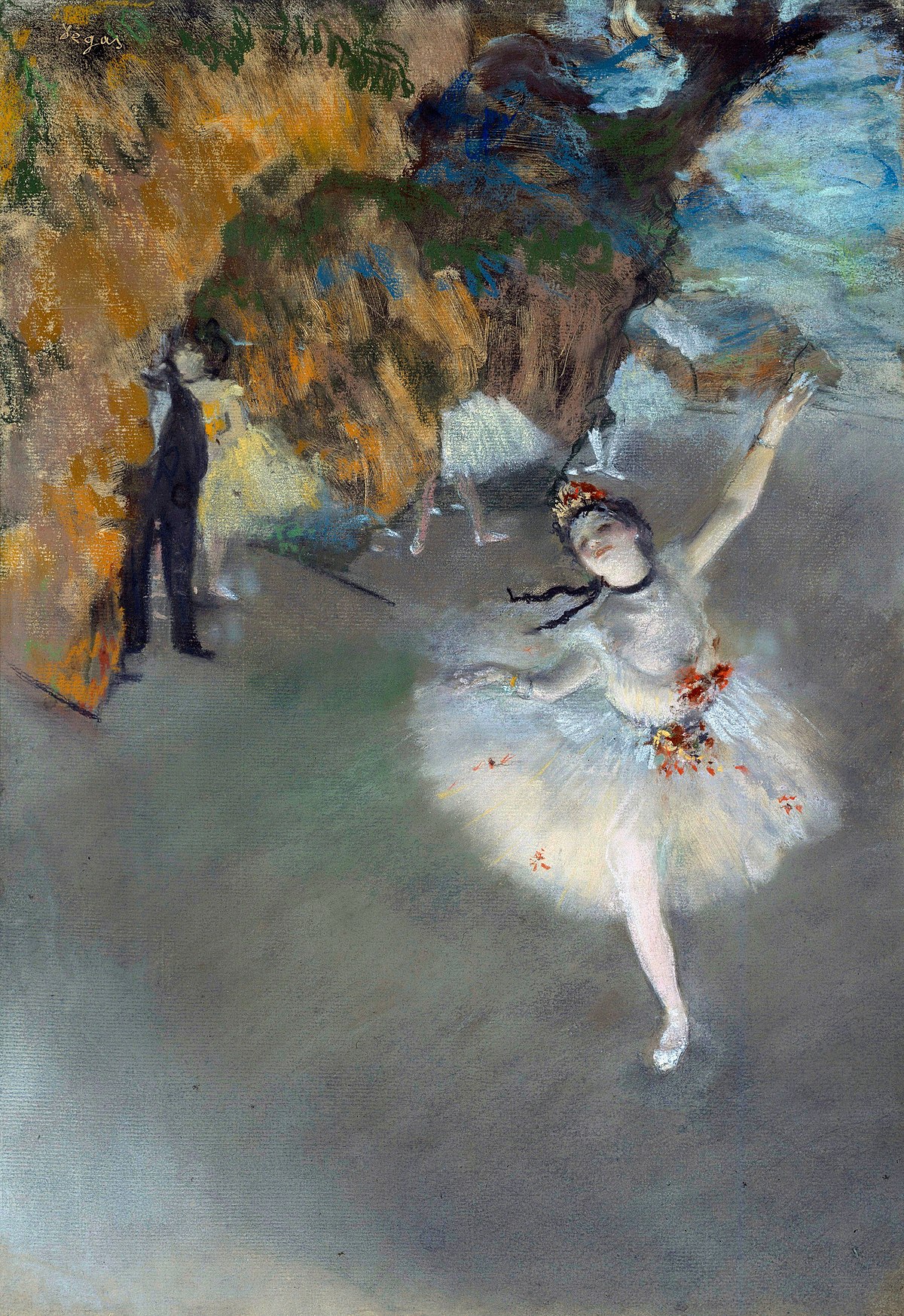
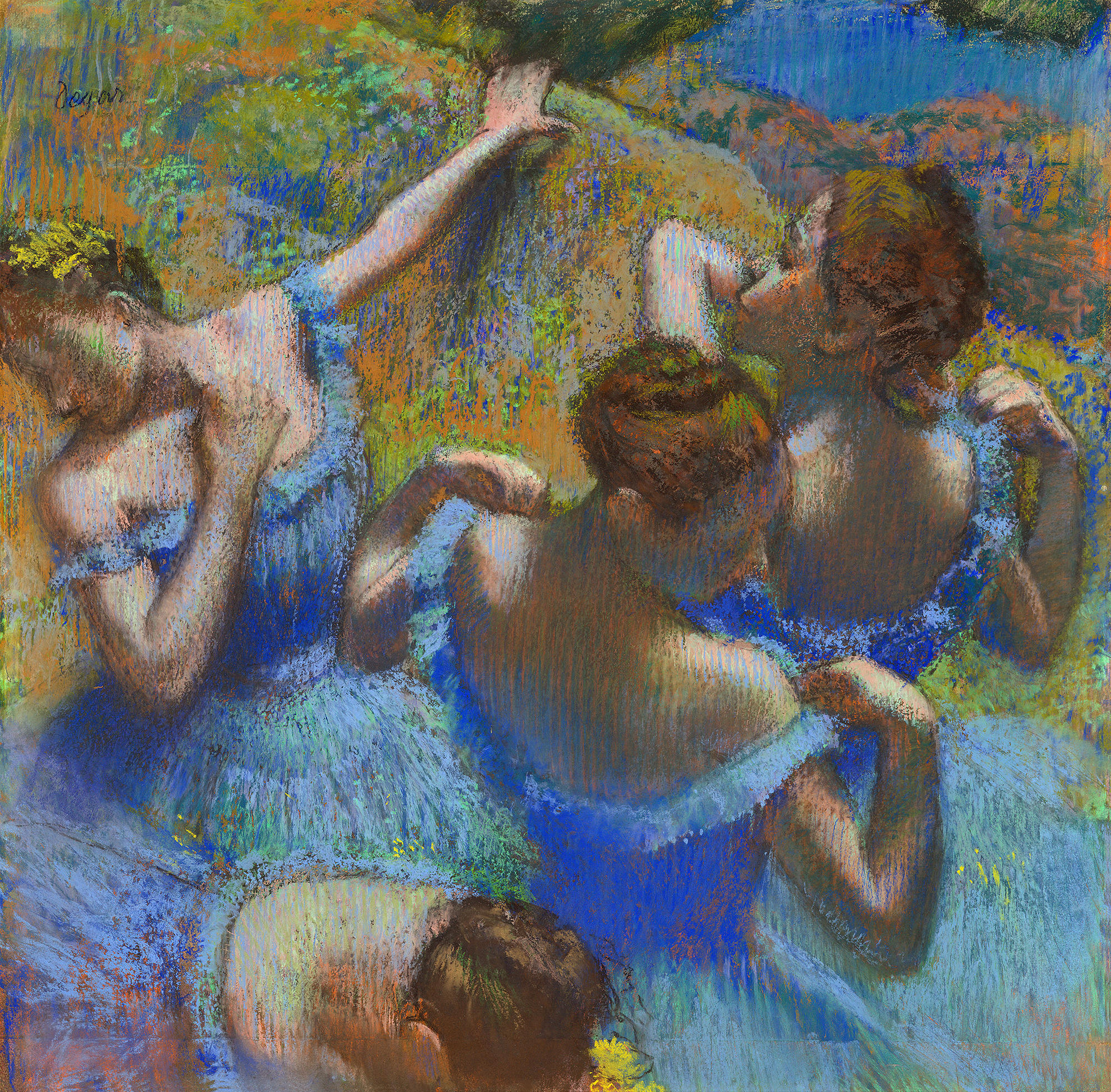
Hilaire-Germain-Edgar De Gas je rođen 1834. u bogatoj pariskoj bankarskoj porodici sa dubokim vezama sa Napuljem, a njegovo privilegovano odrastanje mu je pružilo luksuz da se bavi umetnošću bez finansijskog pritiska. Studirao je na École des Beaux-Arts kod Louisa Lamothea, učenika Ingresa, i ovo klasično obrazovanje usadilo mu je doživotnu posvećenost crtežu koja ga je izdvajala od mnogih njegovih impresionističkih savremenika. Rana putovanja u Italiju između 1856. i 1859. produbila su njegovo poštovanje prema renesansnim majstorima, a njegove početne ambicije bile su u istorijskom slikarstvu. Ipak, do sredine 1860-ih, pod uticajem Manea i realističkog imperativa da se slika moderni život, Degas je usmerio pažnju na hipodrom, kafanu, peračicu i pre svega na balet — teme koje će opsesivno istraživati narednih pet decenija.
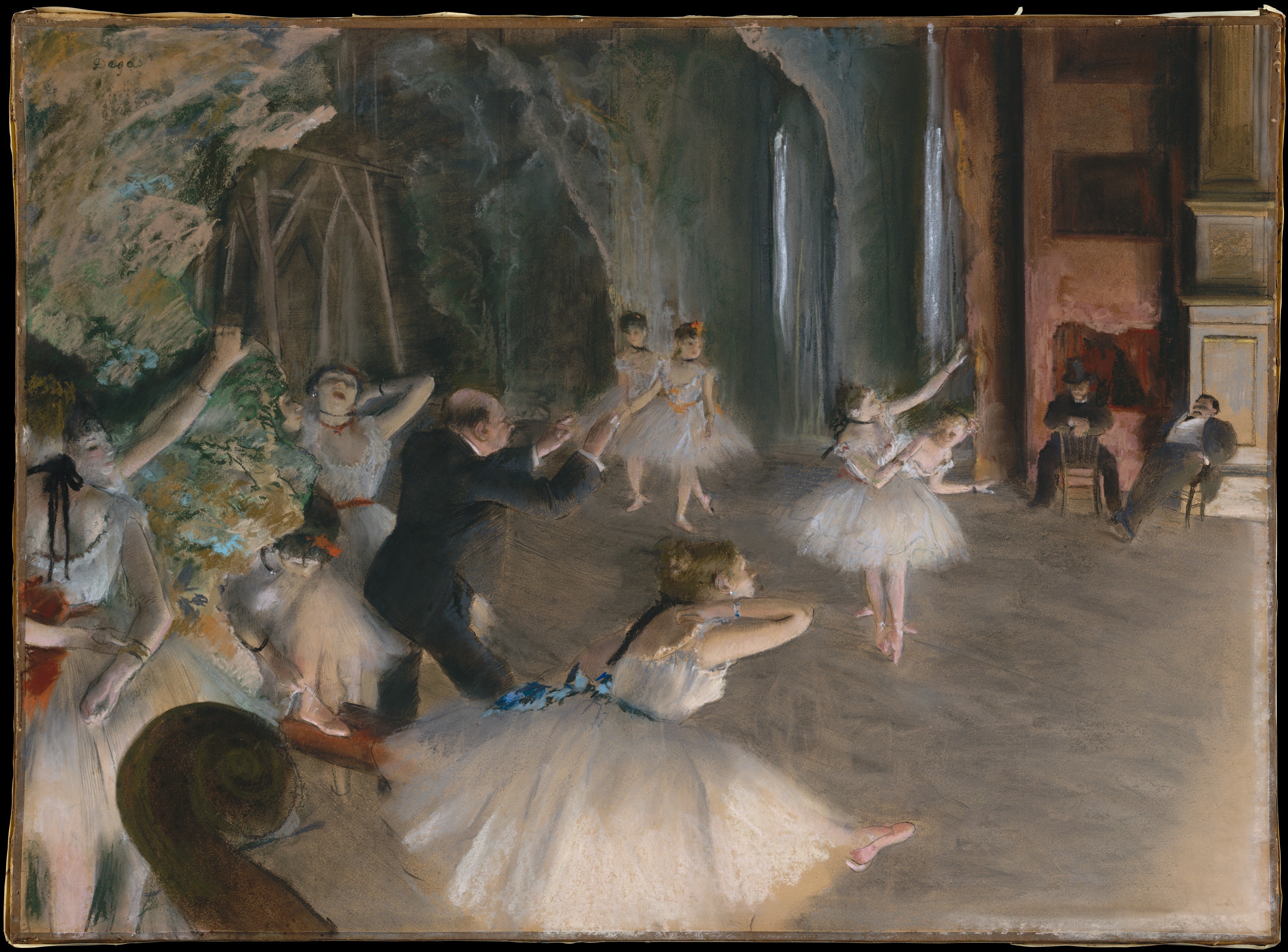
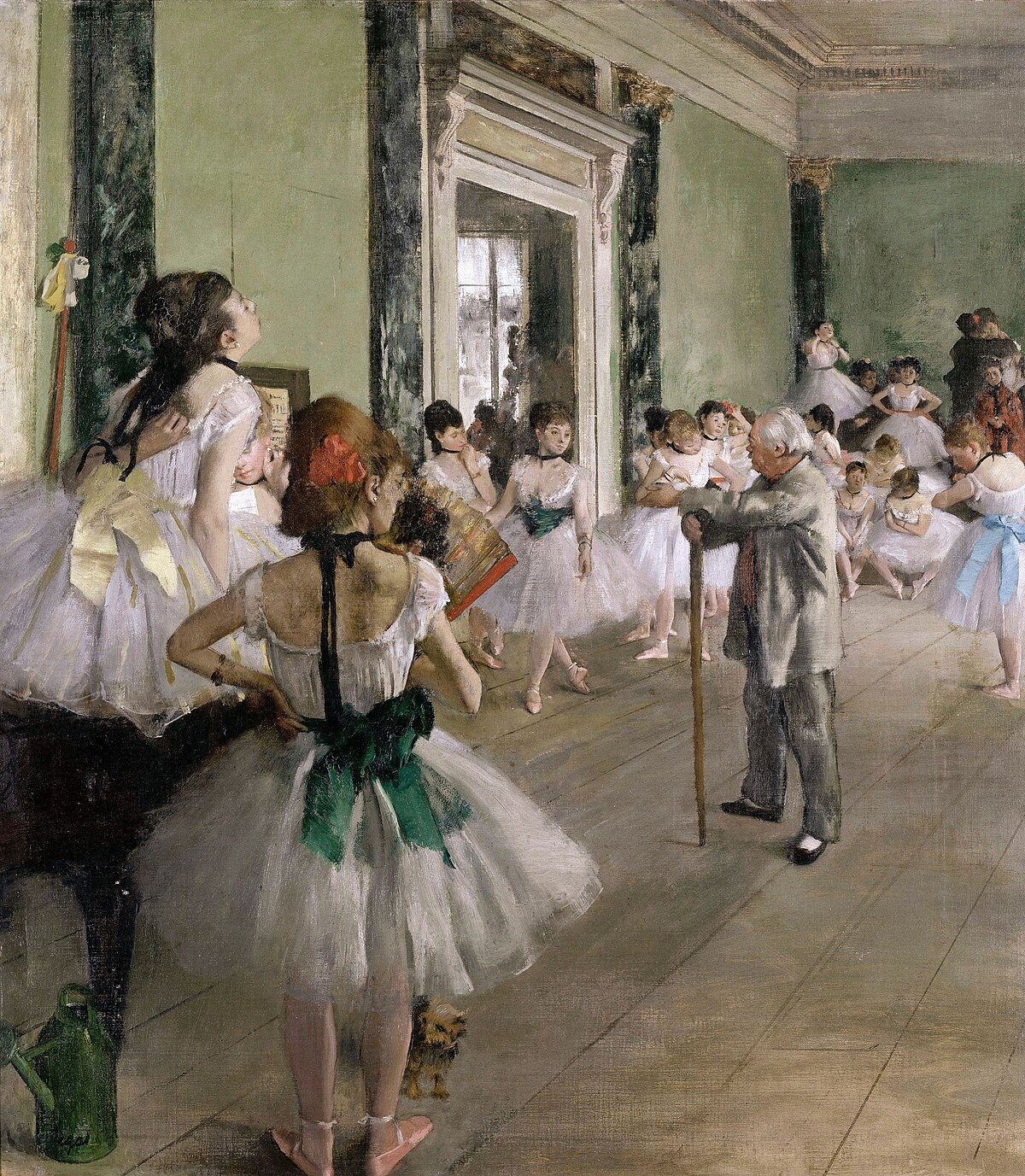
Degas je izlagao na sedam od osam impresionističkih izložbi održanih između 1874. i 1886, čineći ga centralnom figurom pokreta, mada se protivio toj etiketi i radije sebe nazivao „realistom” ili „nezavisnim”. Za razliku od Monea ili Renoira, malo ga je zanimalo plenerno pejzažno slikarstvo ili raspuštanje forme u sunčevoj svetlosti; njegove preokupacije bile su kompoziciona smelost, uhvaćeni gest i iskreno prikazivanje pokreta. Dela poput „The Ballet Class” (1874) i „The Star” (1878) prikazivala su igračice iz neočekivanih uglova — posmatrane iz kulisa, odsečene ivicom slike, uhvaćene usred istezanja na probi — odražavajući uticaj japanskih drvoreza i kompozicionih slučajnosti fotografije. Njegovo prijateljstvo sa fotografom Eadweardom Muybridgeom i sopstveni eksperimenti s kamerom 1890-ih pojačali su njegovu fascinaciju sekvencijalnim pokretom i nekonvencionalnim kadrom, dajući njegovim slikama neposrednost snimka koja je bila revolucionarna za svoje vreme.
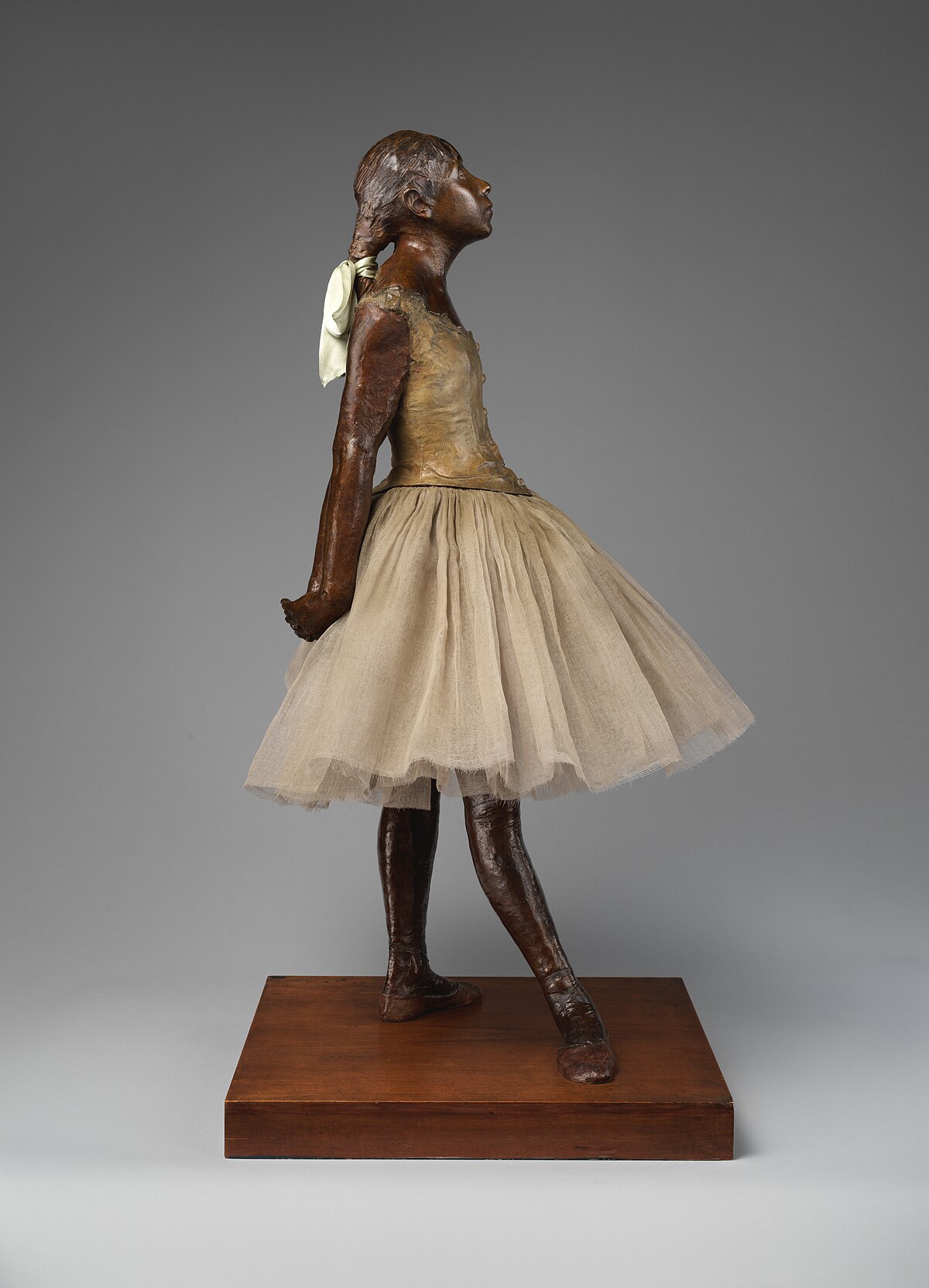
Kako je Degas stario, njegov vid koji je slabio — verovatno uzrokovan bolešću retine pogoršanom tokom službe u Francusko-pruskom ratu — gurao ga je sve više ka pastelu i skulpturi, medijima koji su se oslanjali na dodir i smelu boju, a ne na fini linearni detalj. Njegovi pasteli kupačica i igračica iz 1880-ih i 1890-ih spadaju među njegova najluminoznija i najekspresivnija dela, sa slojevima živopisne krede koji grade površine što treperenja od energije. „The Little Fourteen-Year-Old Dancer” (1881), voštana skulptura obučena u pravi tutu i traku za kosu, šokirala je kritičare koji su njen realizam smatrali uznemiravajuće životnim, ali se danas priznaje kao jedna od najoriginalnijih skulptura devetnaestog veka. Degas je postao povučen i mrzovoljni u poslednjim godinama, a njegovi antidrajfusovski stavovi su narušavali prijateljstva, te je suštinski prestao da radi nakon 1912. Umro je 1917, ostavivši za sobom opus od nekih 1.500 slika, stotina pastela, grafika i preko 150 voštanih skulptura otkrivenih u njegovom ateljeu — ogromno nasleđe koje je dokazalo da se može biti istovremeno rigorozni klasicista i radikalni inovator.