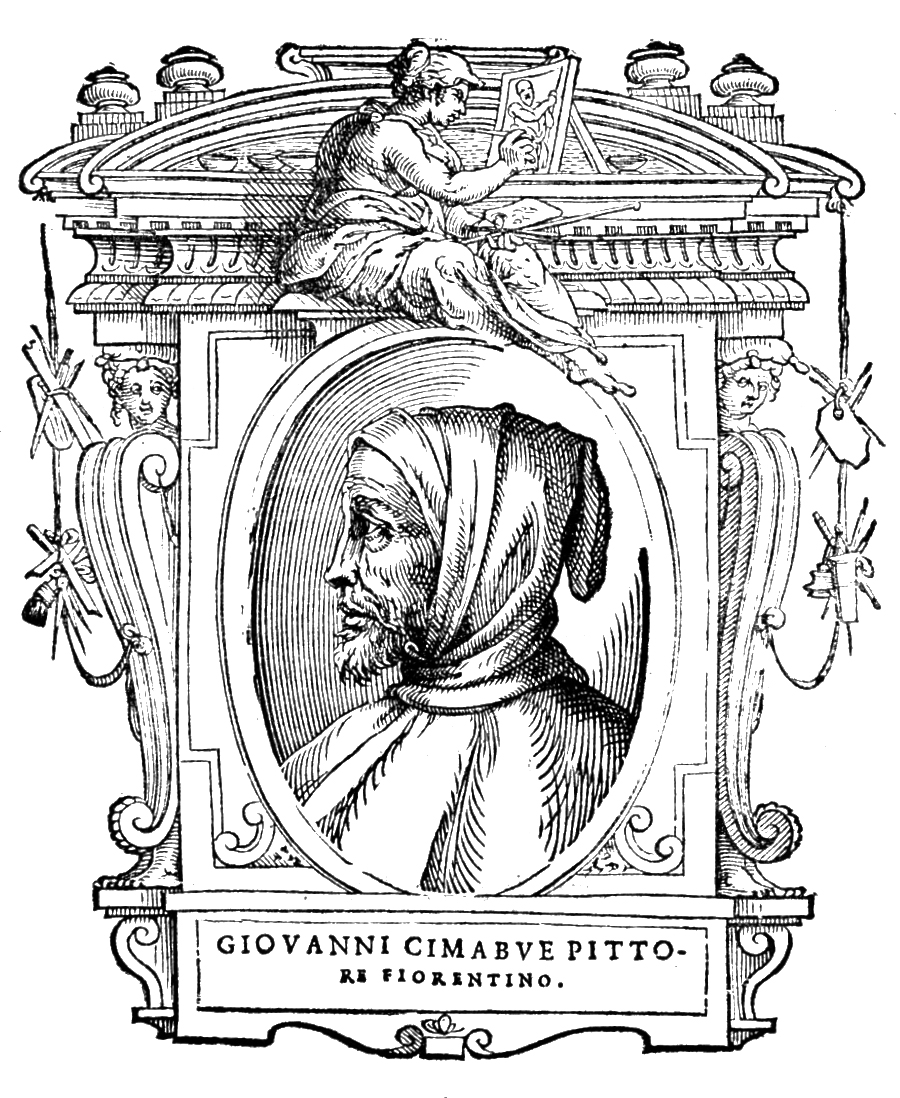
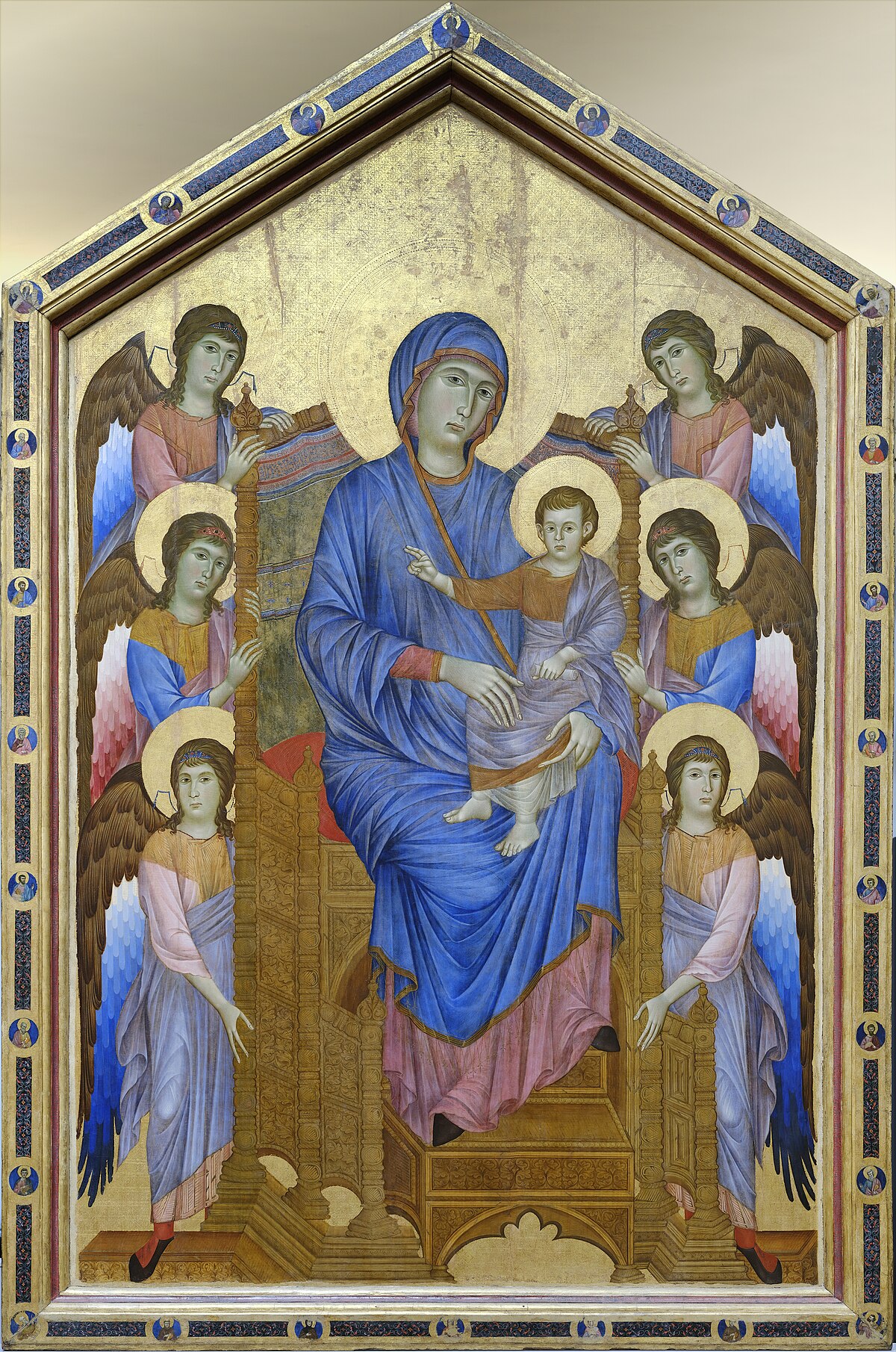
Cenni di Pepo, poznat kao Cimabue, bio je firentinski slikar i mozaičar koji stoji na ključnoj prelomnoj tački između formalnih tradicija vizantijske umetnosti i naturalističke revolucije koja je usledila sa njegovim učenikom Đotom. Aktivan u drugoj polovini trinaestog veka, Cimabue je radio u Firenci, Rimu, Assisiju i Pizi, a Dante ga je u Božanstvenoj komediji prepoznao kao najvećeg slikara svog doba — samo da bi napomenuo da ga je Đoto već zasneo u slavi.
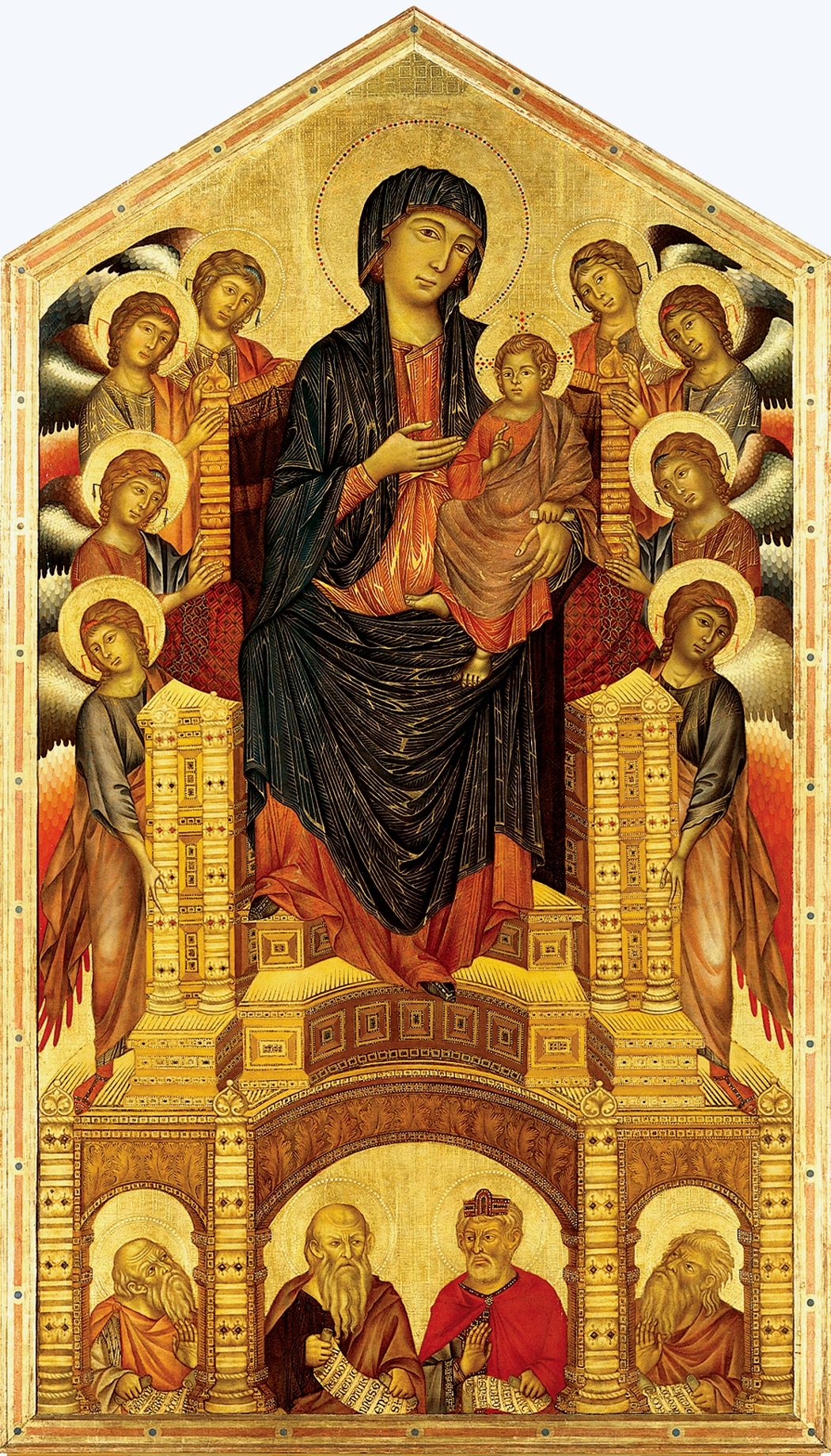
Njegove monumentalne slike Maestà za crkve Santa Trinita u Firenci i San Francesco u Assisiju prikazuju Bogorodicu na prestolu u zlatnom sjaju, okruženu anđelima i svecima. Dok kompozicije prate vizantijske konvencije — hijeratičnu frontalnost, zlatnu pozadinu, izdužene figure — Cimabue je uveo novu čvrstinu i prostornu dubinu. Njegovi anđeli se preklapaju i povlače; njegova draperija pada sa težinom koja sugeriše stvarnu tkaninu; njegova lica pokazuju prve naznake individualnog izraza.
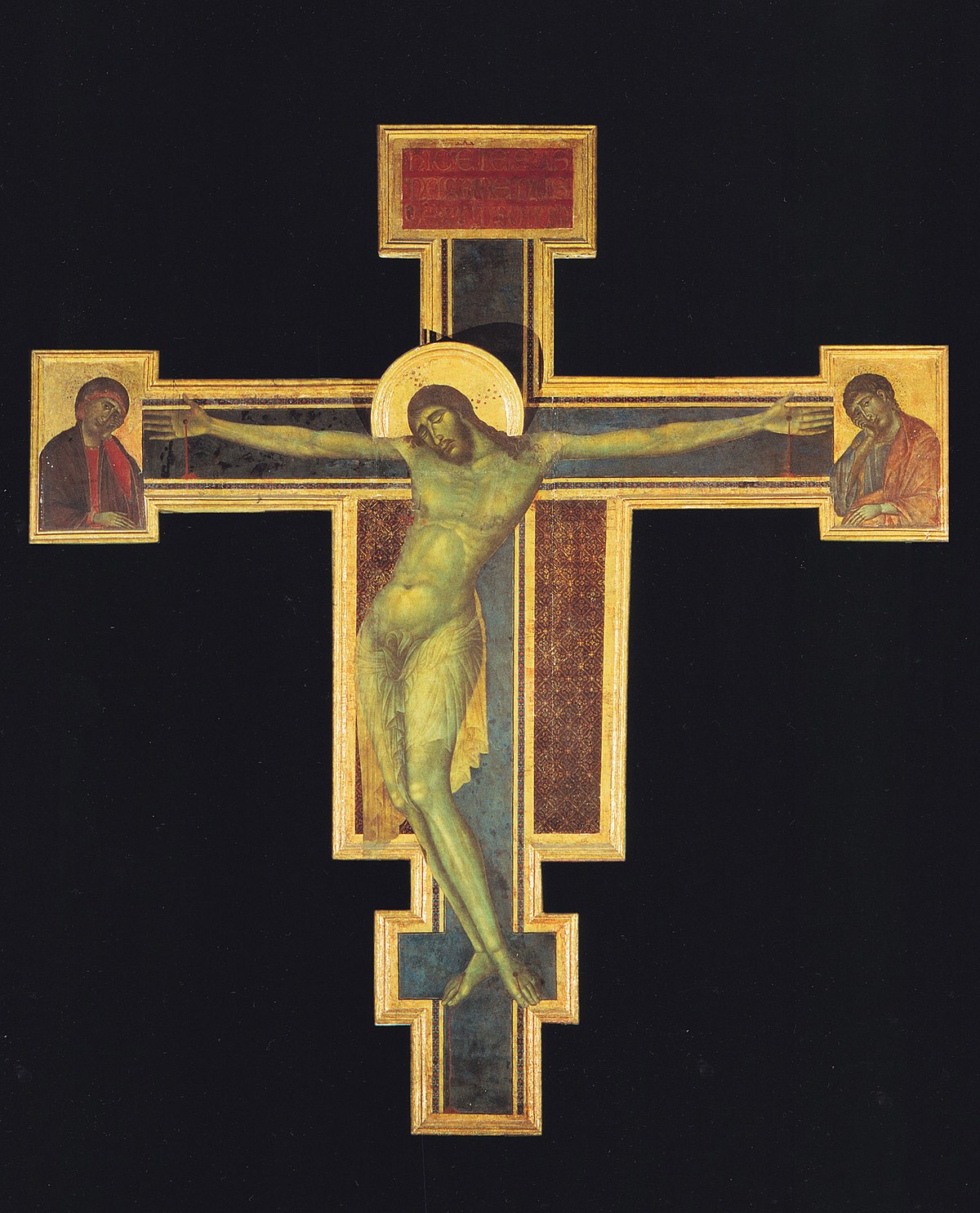
Razorno poplavljivanje 1966. teško je oštetilo njegov veliki naslikani krst u Santa Croce, ali preživeli fragmenti — naročito nežno, ispaćeno lice Hrista — otkrivaju emocionalnu snagu koja je Cimabuea izdvojila od njegovih savremenika. Njegovo nasleđe je neodvojivo od rođenja zapadnog slikarstva: pomerio je granice hiljadugodišnje tradicije do tačke odakle je mogla da iznikne nova umetnost.