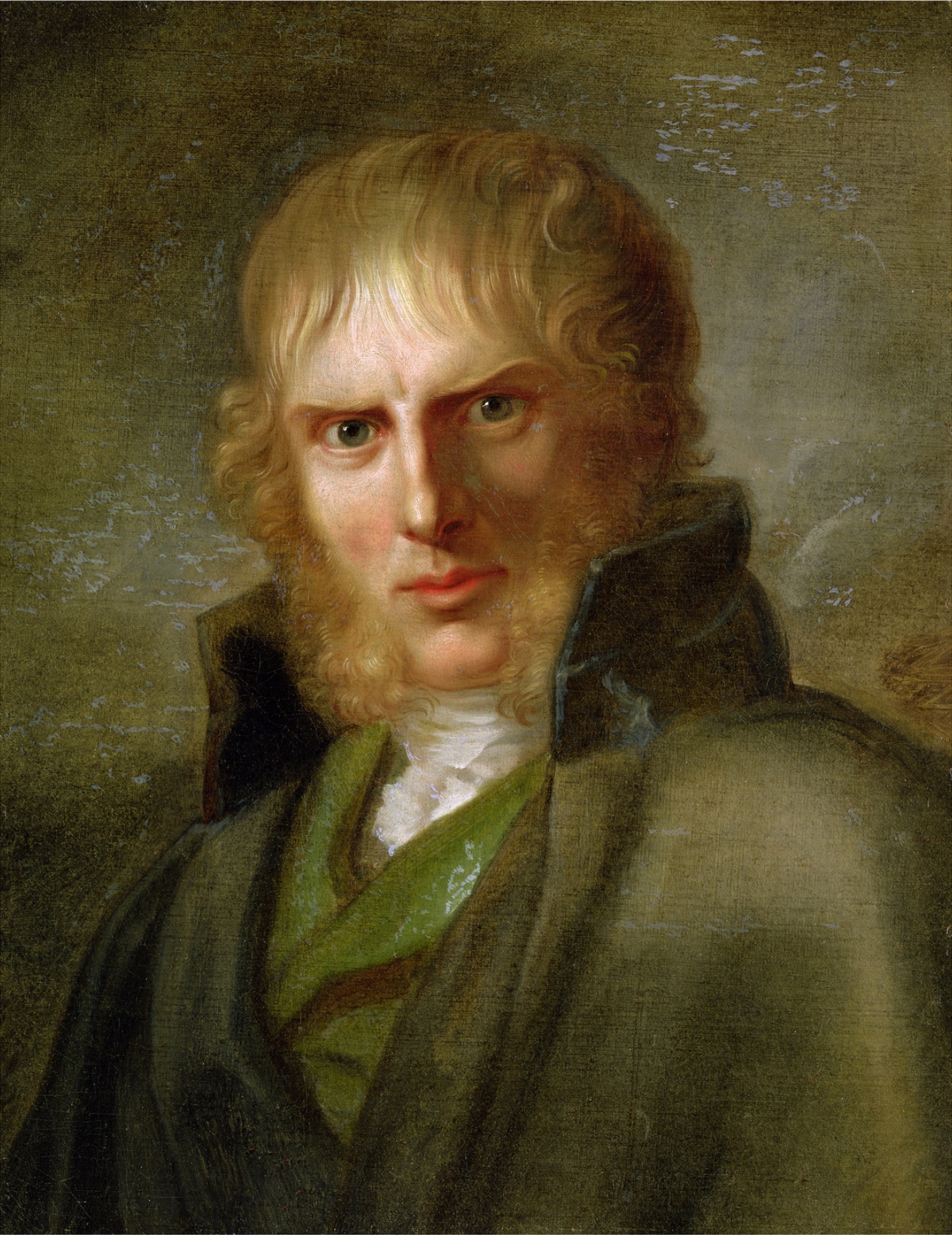
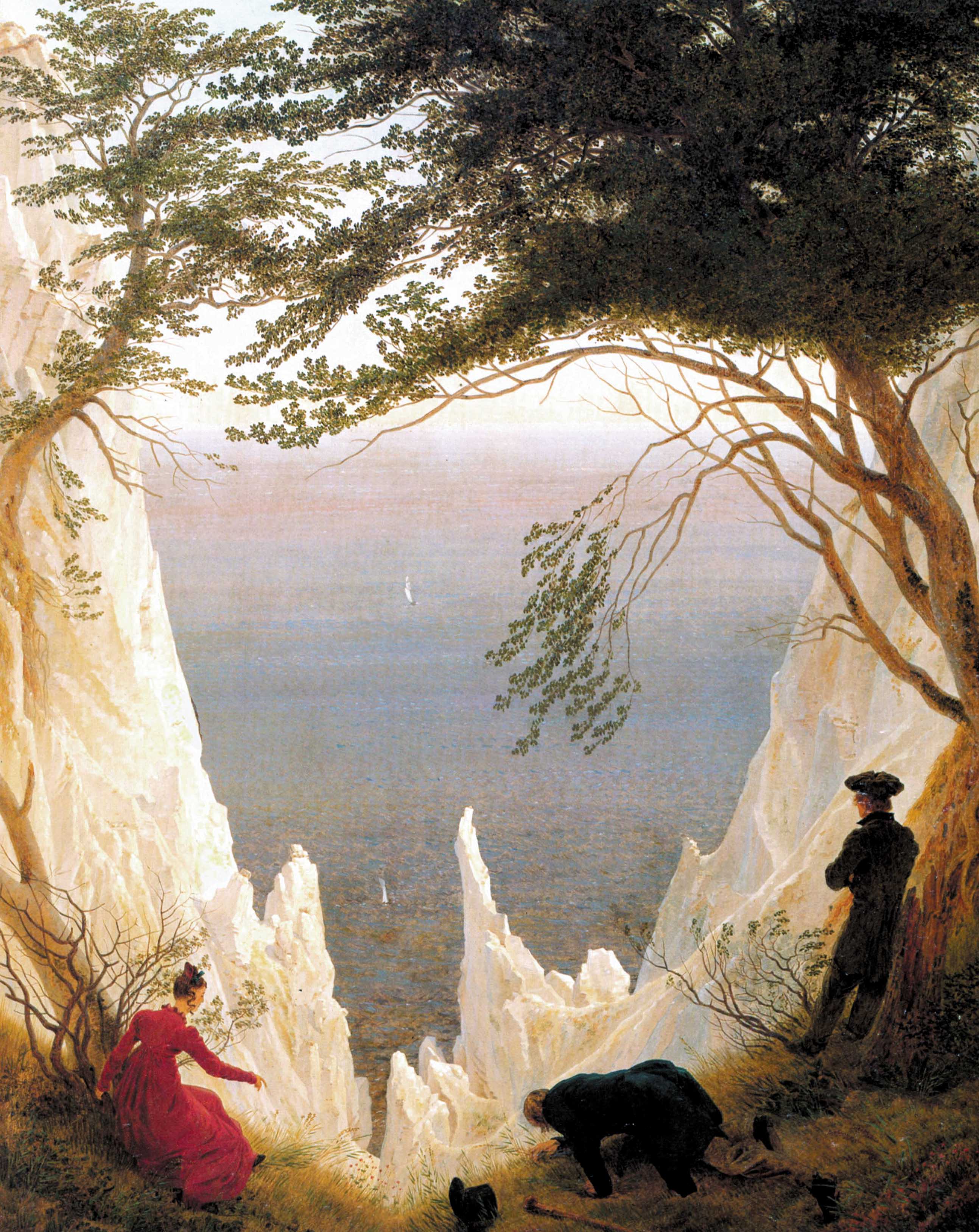
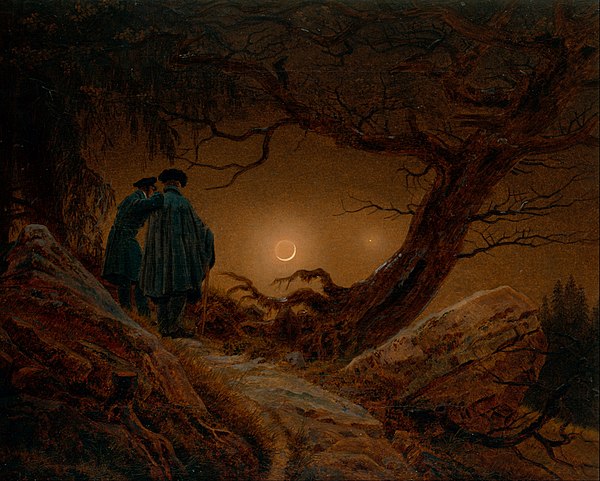
Caspar David Friedrich je rođen 1774. u baltičkoj luci Greifswaldu u Švedskoj Pomeraniji i postao je definišući slikar nemačkog romantizma — umetnik koji je transformisao pejzaž u sredstvo za duhovnu meditaciju. Obeležen ranom tragedijom (njegov brat se udavio spasavajući ga iz tankog leda kada je Friedrich imao trinaest godina), studirao je na Kopenhagenskoj akademiji pre nego što se nastanio u Drezdenu, gde je proveo veći deo svog tihog, povučenog života.
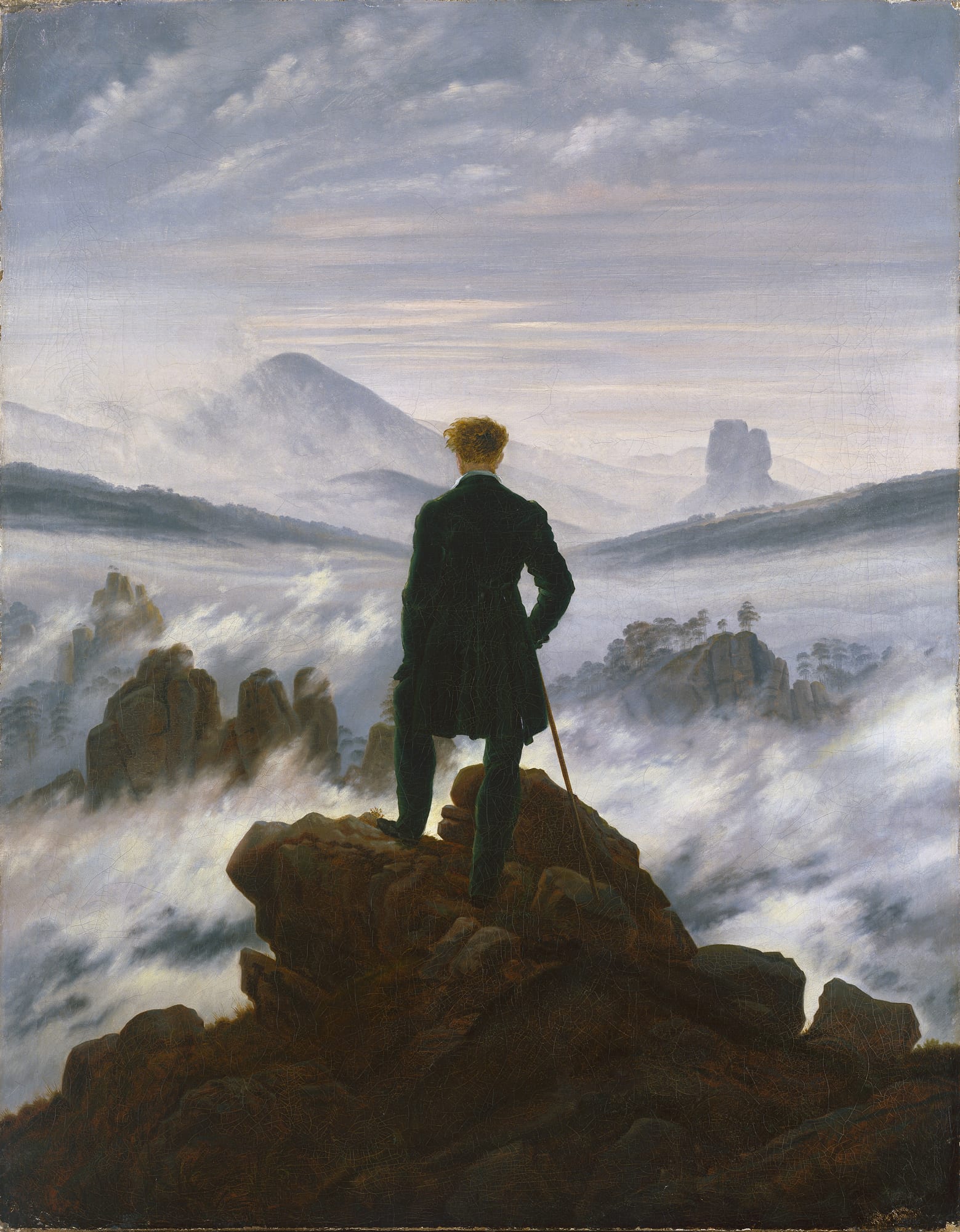
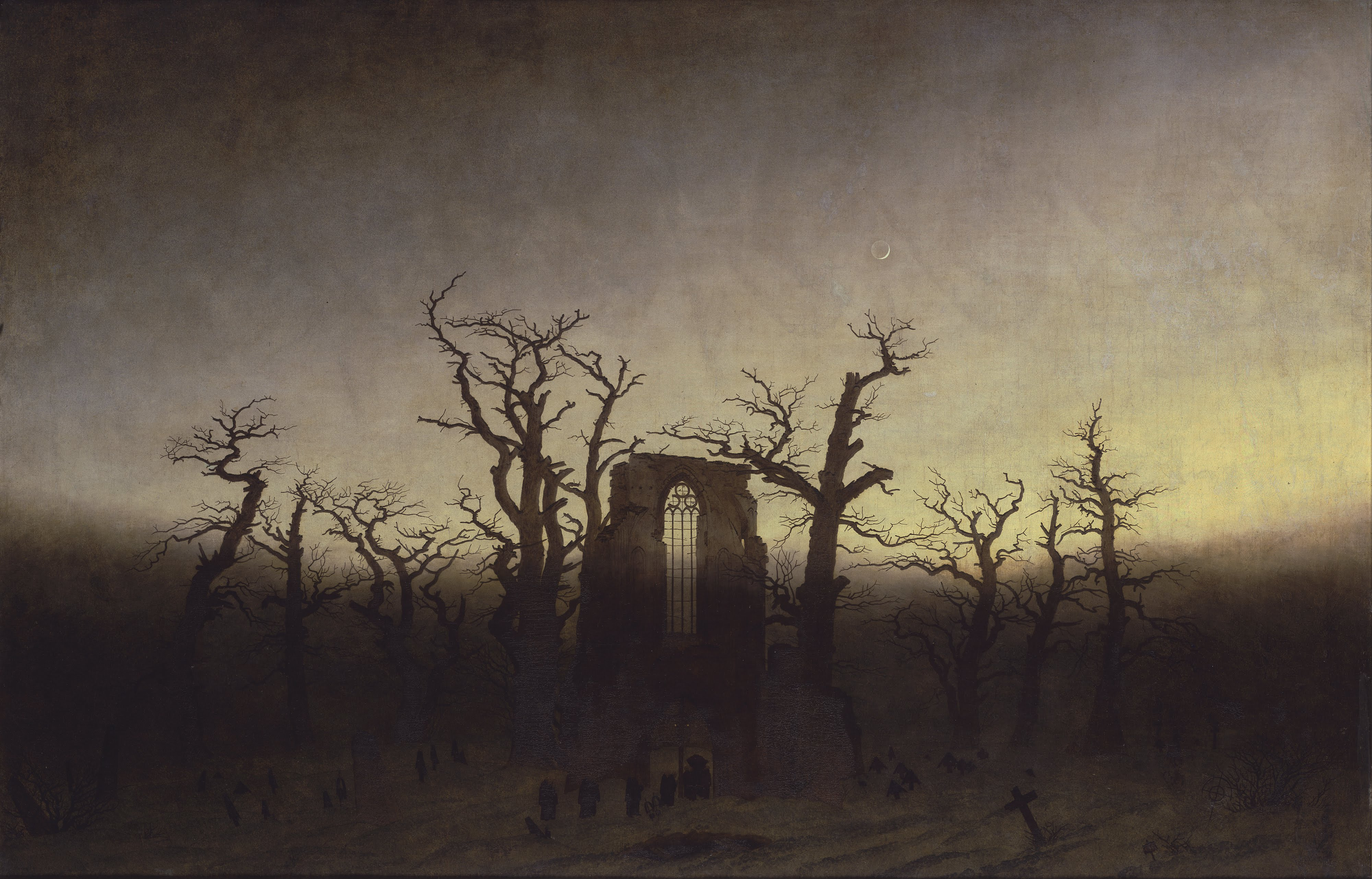
Friedrichove slike obično prikazuju usamljene figure — ili parove kontemplativnih posmatrača — koji zure u ogromne, često maglom obavijene pejzaže planina, šuma i mora. Wanderer above the Sea of Fog (oko 1818), koja prikazuje čoveka kako stoji na vrhu stenovitog vrha nadgledajući more oblaka, postala je ikonična slika romantičarskog individualizma i sublimnog. The Abbey in the Oakwood (1810) prikazuje ruševine gotičke crkve na zimskom groblju, sa skeletnim hrastovima čiji se ogranci pružaju ka bledom nebu — meditacija o smrtnosti, veri i prolaznosti vremena.
Friedrich je verovao da pejzažno slikarstvo treba da izrazi unutrašnja duhovna stanja, a ne samo da beleži spoljašnji izgled. „Umetnik ne treba samo da slika ono što vidi ispred sebe, već i ono što vidi u sebi”, napisao je. Njegov uticaj je opao nakon smrti i bio je uglavnom zaboravljen sve do početka dvadesetog veka, kada su nadrealisti i egzistencijalisti ponovo otkrili njegov rad. Danas je priznat kao jedan od najdubljih i najoriginalnijih slikara devetnaestog veka.