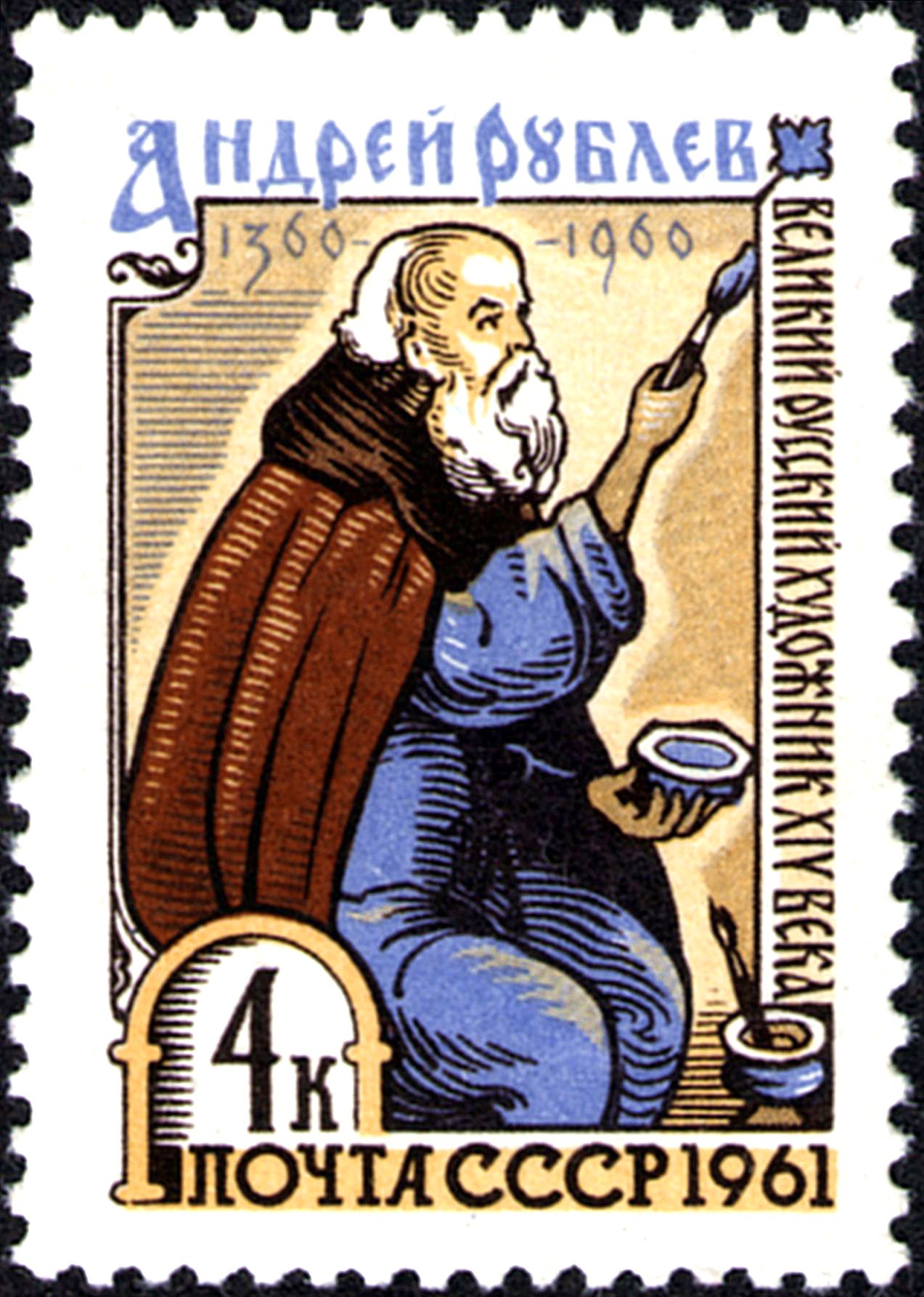
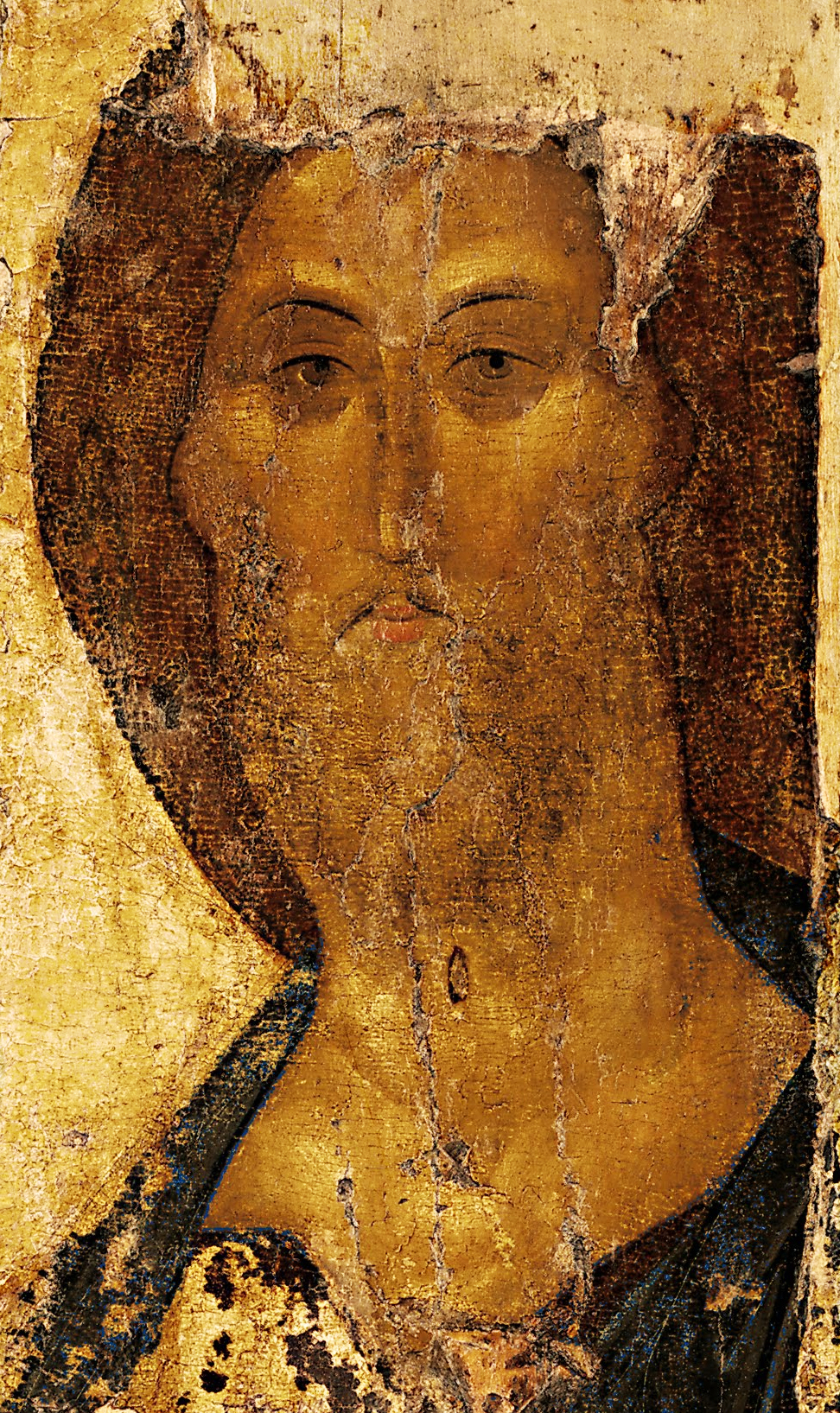
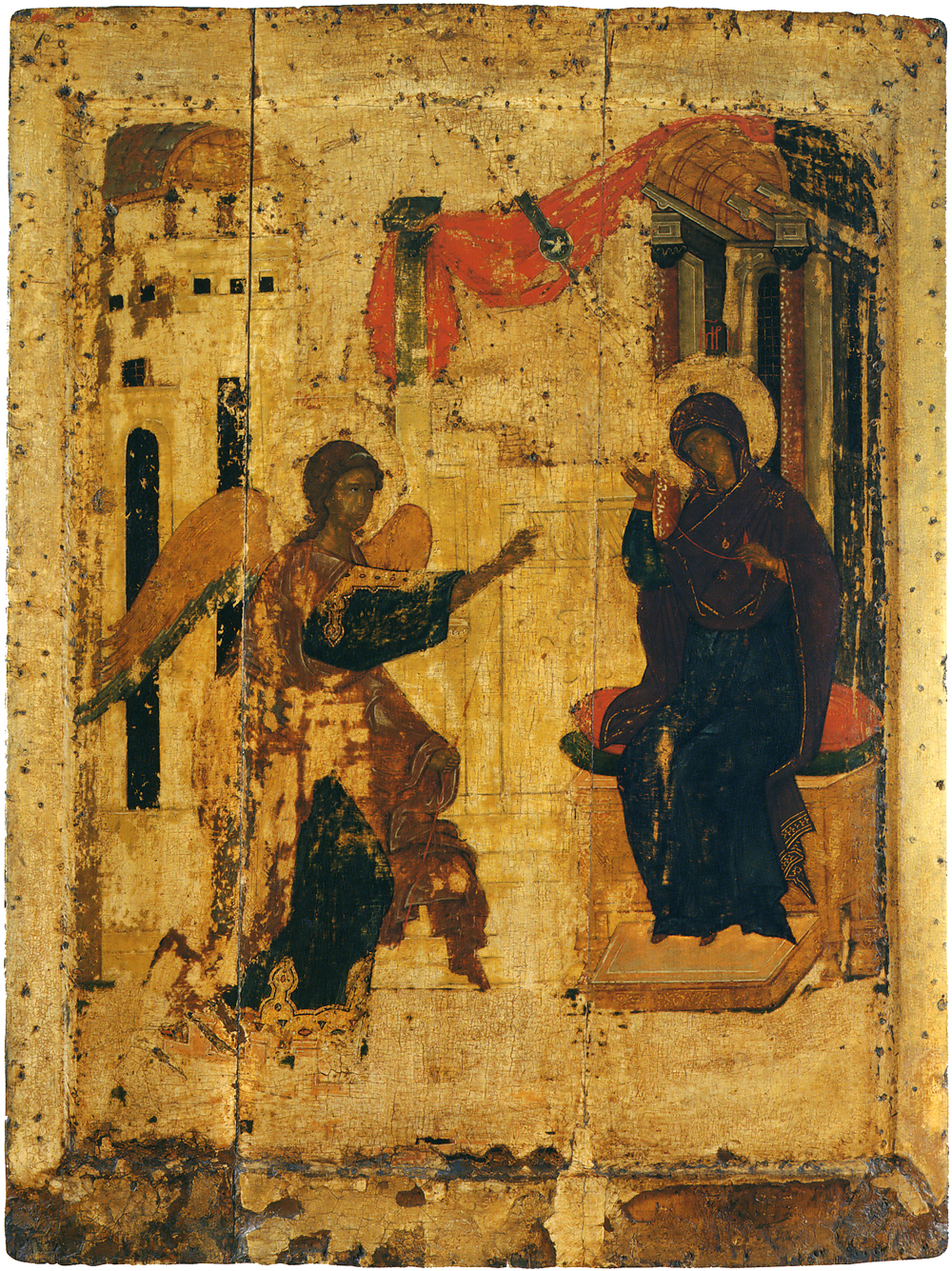
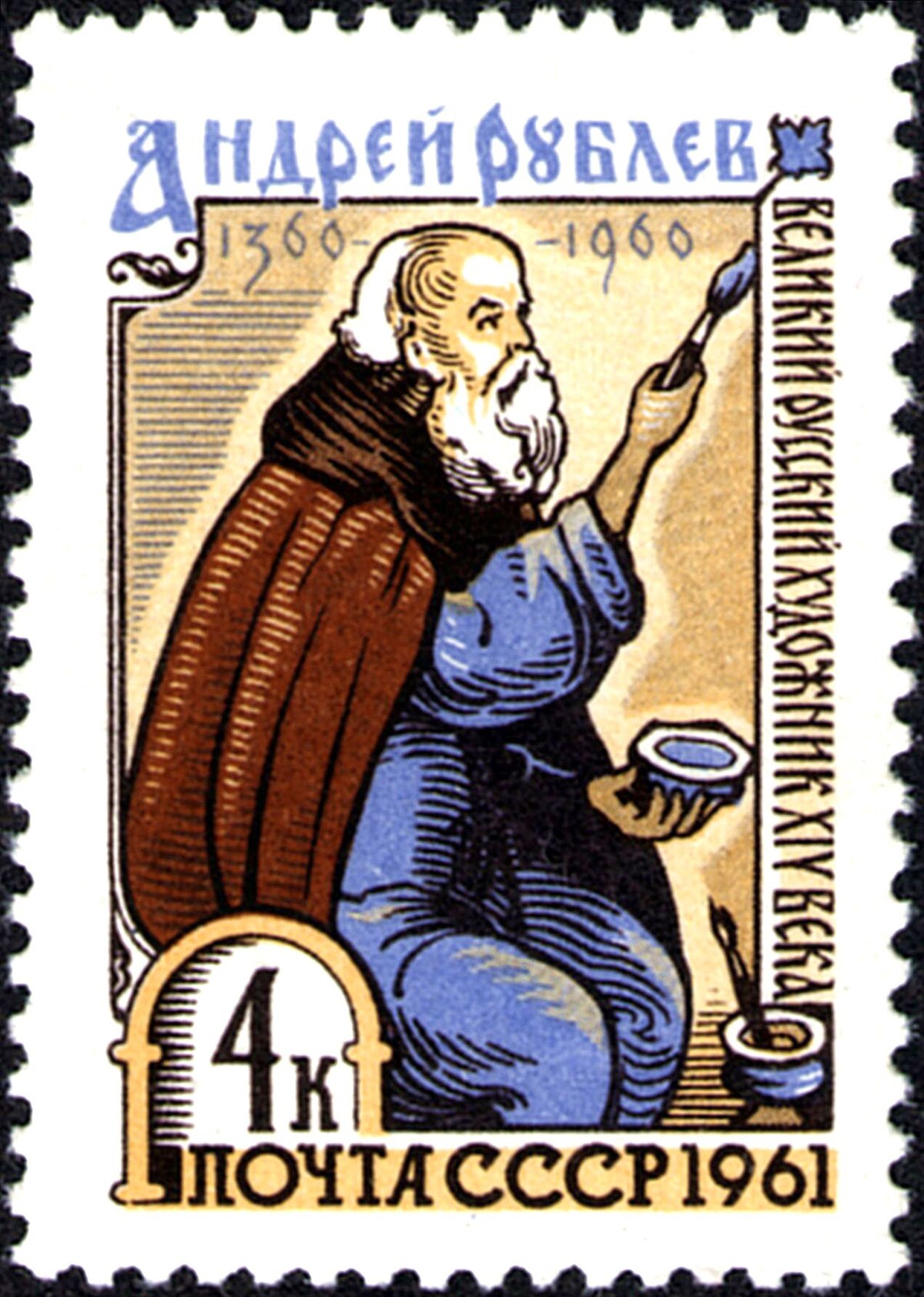
Andrej Rubljov bio je ruski monah i ikonopisac čija dela se smatraju najfinijim dostignućima ruske srednjovekovne umetnosti. Malo se zna o njegovom ranom životu; verovatno je učio u manastiru Trojice-Svetog Sergija blizu Moskve i bio pod uticajem vizantijskog majstora Teofana Grka, sa kojim je sarađivao na freskama Blagoveštenske saborne crkve u Moskovskom Kremlju oko 1405. godine. Početkom petnaestog veka Rubljov je razvio stil koji je, mada ukobrenjen u vizantijskoj tradiciji, bio sasvim njegov — obeležen luminoznom, harmoničnom bojom, gracioznim linearnim ritmovima i dubokim duhovnim spokojstvom.
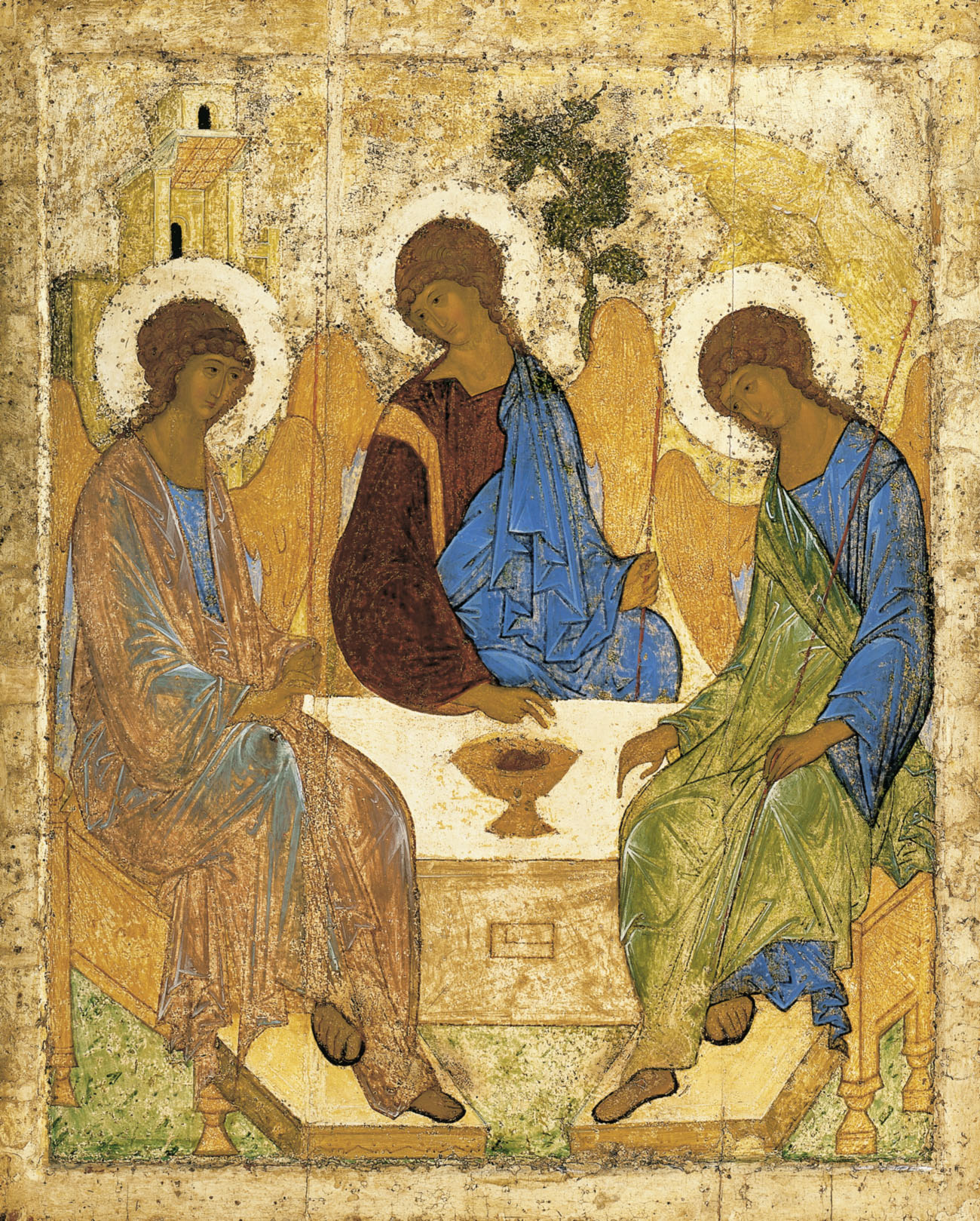
Njegovo remek-delo, ikona Trinity (oko 1411–1427), prikazuje tri anđela koji su posetili Avrama kod Mamrija, raspoređena oko stola-kaleža u kompoziciji izvanredne geometrijske elegancije. Figure se nežno naginju jedna ka drugoj u tihom zajedništvu koje prenosi misteriju Svetog Trojstva sa nežnošću i jasnoćom neprevaziđenom u hrišćanskoj umetnosti. Paleta ikone — nežno plava, zlatna i ružičasta — stvara osećaj nezemaljskog svetla koje emanira iz samog srca slike.
Stoglavi sabor 1551. godine doneo je odluku da sve buduće ikone Trojice moraju slediti Rubljovov model, čime je učvrstio njegov status vrhovnog autoriteta u ruskoj sakralnoj umetnosti. Godine 1988. Ruska pravoslavna crkva ga je kanonizovala kao sveca, priznavši ono što su generacije vernika oduvek osećale: da Rubljovove ikone nisu samo slike, već prozori u božansko.