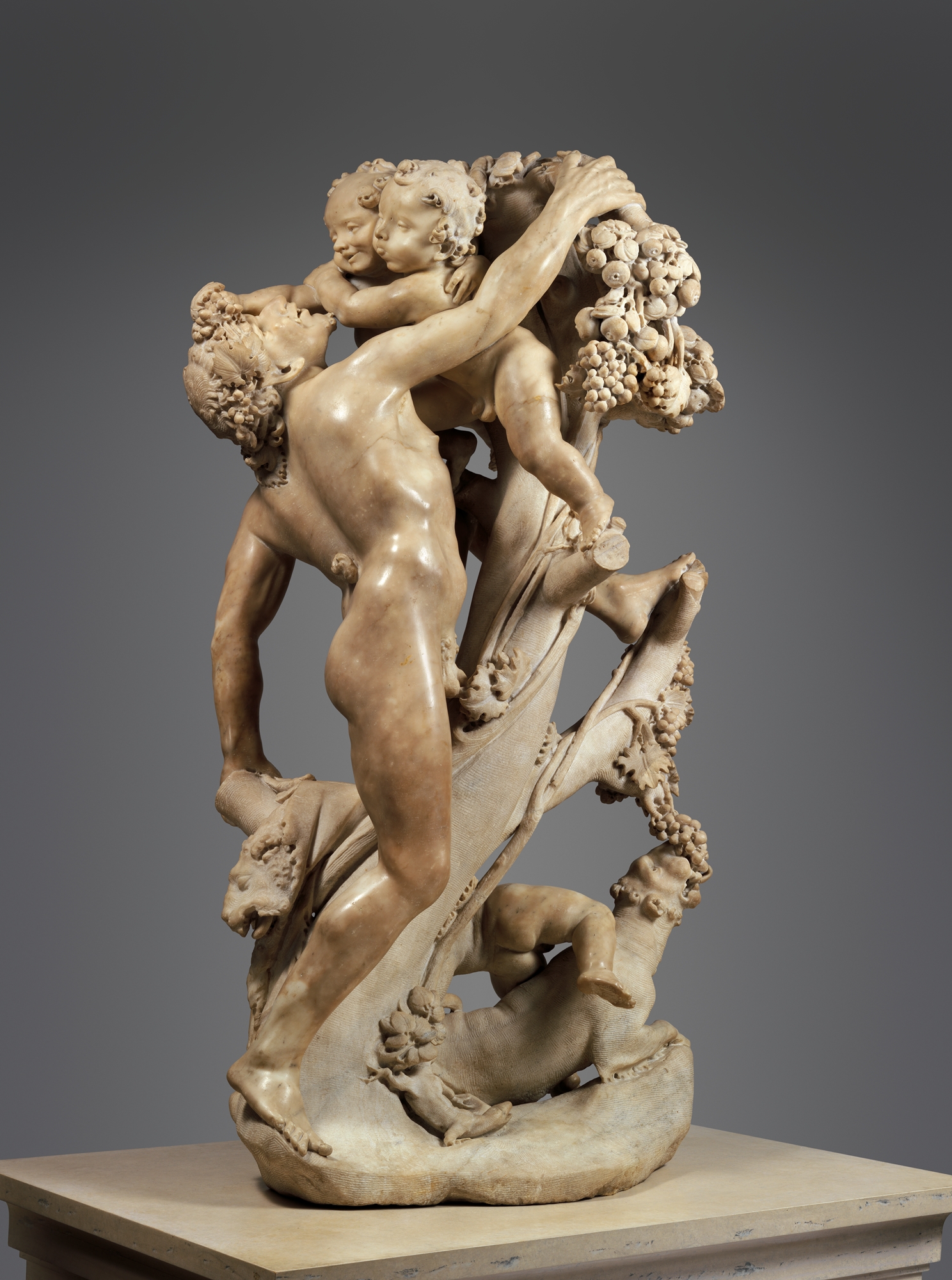
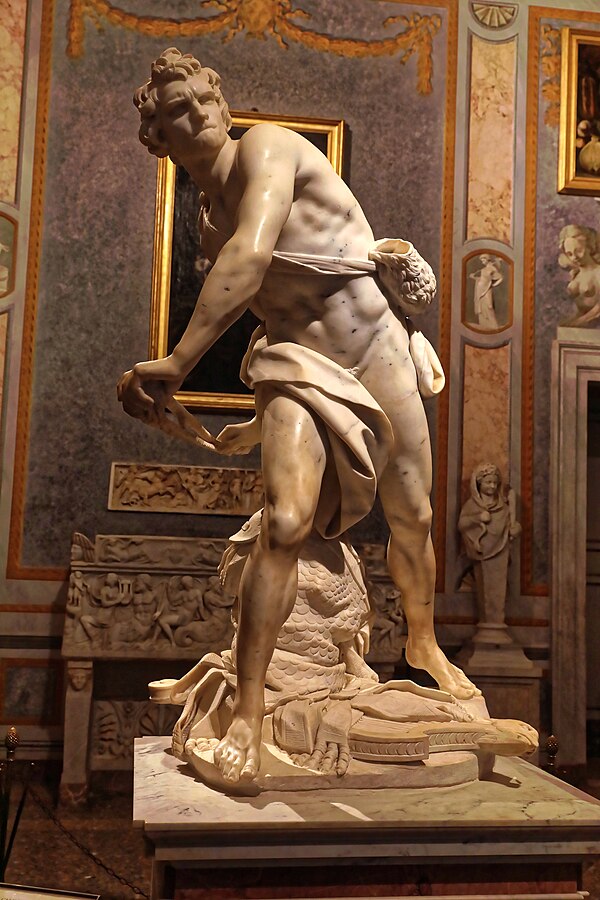
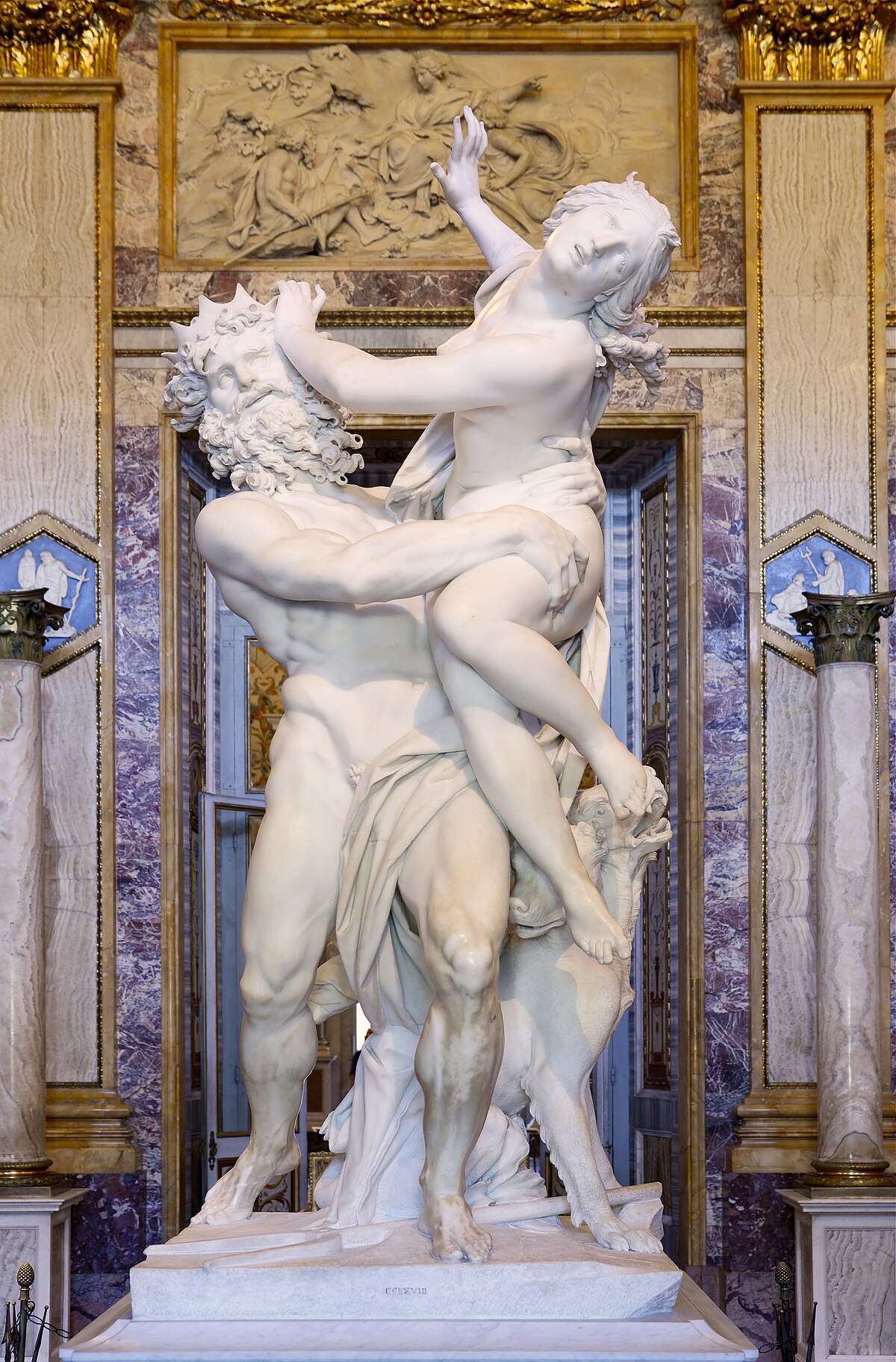
Gian Lorenzo Bernini je rođen 7. decembra 1598. u Napulju, kao sin manirističkog vajara Pietra Berninija, koji je preselio porodicu u Rim oko 1605. da bi radio na papskim narudžbinama. Talenat mladog Berninija prepoznat je gotovo odmah: već u ranim tinejdžerskim godinama klesao je dela zapanjujuće tehničke virtuoznosti, a prema legendi, papa Pavle V je, videvši dečakovu veštinu, predvideo da će postati „Mikelanđelo svog doba”. Pod pokroviteljstvom kardinala Scipionea Borghesea, Bernini je između 1618. i 1625. proizveo niz mermernih grupa u prirodnoj veličini — „The Rape of Proserpina”, „David” i „Apollo and Daphne” — koje su razbile svaku konvenciju renesansne skulpture. Dok su Mikelanđelove figure bile sadržane unutar bloka, Berninijeve su eksplodirale prema spolja u prostor posmatrača; dok je klasična skulptura zamrzavala jedan idealni trenutak, Bernini je hvatao trenutak transformacije — Dafnini prsti koji puštaju lovorove listove, njeni nožni prsti koji se ukorenjuju u koru drveta — sa virtuoznošću koja je hladni mermer činila nalik živom mesu, lepršavoj kosi i šuštavom lišću.
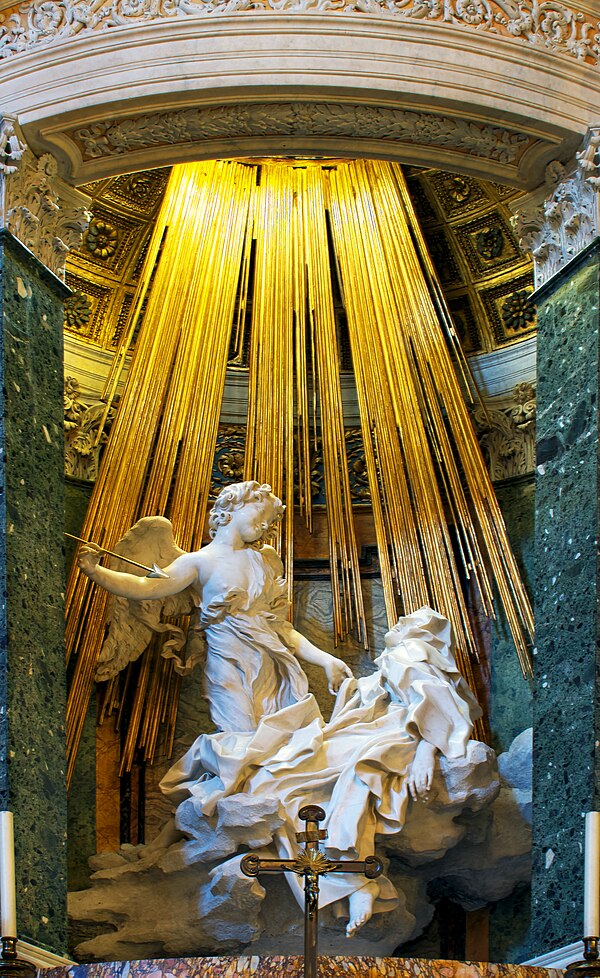
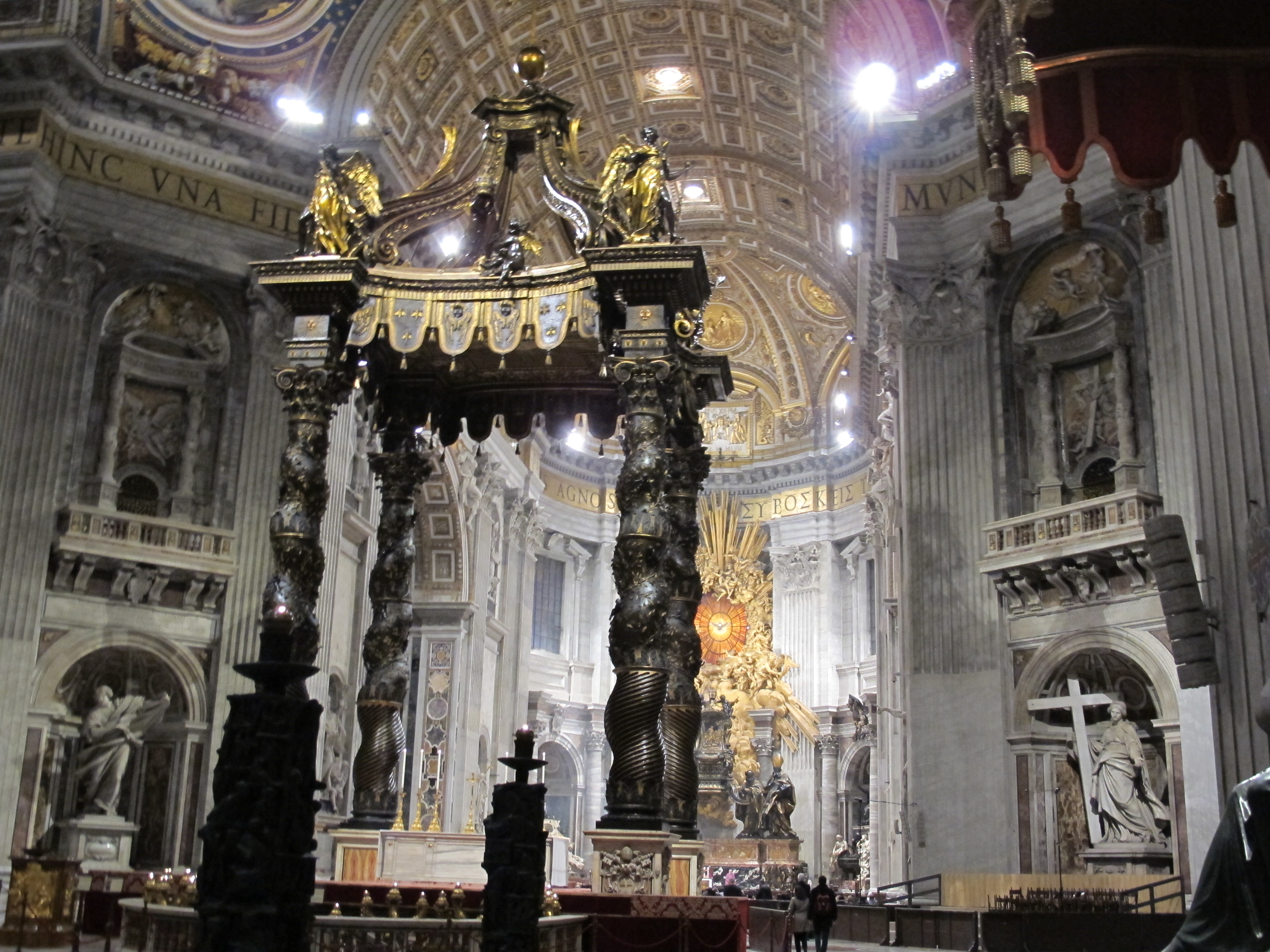
Uspon Maffea Barberinija na papski presto kao Urbana VIII 1623. inaugurisao je Berninijevu gotovo šestodecenijsku dominaciju nad umetničkim životom Rima. Projektovao je masivni bronzani „Baldacchino” (1624–1633) ispod kupole bazilike Svetog Petra, baldahin od devedeset pet stopa sa uvijenim Solomonovim stubovima koji je uspostavio vizualno sidro najveće crkve u hrišćanstvu. Stvorio je „Cathedra Petri” (Stolica Svetog Petra, 1657–1666) u apsidi bazilike, ekstravagantan multimedijalni ansambl od pozlaćene bronze, štuka, mermera i vitraža koji spaja skulpturu, arhitekturu i teatralno osvetljenje u jedno zastrašujuće iskustvo. Za kapelu Cornaro u crkvi Santa Maria della Vittoria, zamislio je „The Ecstasy of Saint Teresa” (1647–1652), u kojoj svetica pada u nesvest na oblaku od mermera dok se nasmejani anđeo sprema da joj probode srce zlatnom strelom — delo zapanjujućeg emocionalnog i čulnog intenziteta, uokvireno arhitektonskim okruženjem koje uključuje isklesane posmatrače u pozorišnim ložama, pretvarajući kapelu u svetu pozornicu.
Bernini nije bio samo vajar već i arhitekta, slikar, dramski pisac, scenograf i urbanista izvanrednog raspona. Njegova arhitektonska remek-dela uključuju ovalnu kolonadu trga Svetog Petra (1656–1667), čiji su rašireni krakovi zamišljeni, kako je rekao, da obgrle vernike poput ruku Crkve, i draguljastu crkvu Sant’Andrea al Quirinale (1658–1670). Nakratko je pao u nemilost pod papom Inocentom X, koji je preferirao rivala arhitektu Francesca Borrominija, ali je povratio prevlast pod Aleksandrom VII, za koga je stvorio „Scala Regia” u Vatikanu i brojne fontane i trgove koji nastavlja da definišu urbani karakter Rima. Njegov jedini veliki poduhvat u inostranstvu — putovanje u Pariz 1665. na poziv Luja XIV da redizajnira Luvr — završio se obostranim razočarenjem, jer je francuski ukus smatrao njegovu raskoš preteranom, mada je mermerna bista Luja XIV koju je izradio tokom posete smatrana jednom od najfinijih portretnih skulptura ikada napravljenih. Bernini je radio do kraja svog dugog života, umrevši 28. novembra 1680, u osamdeset prvoj godini. Više nego bilo koji drugi pojedinac, oblikovao je vizualni identitet baroknog Rima, a njegovo stapanje arhitekture, skulpture, slikarstva i dramskog osvetljenja u jedinstvena teatralna okruženja uspostavilo je model za javnu umetnost i spektakl koji traje do danas.